ACTRIMS 2026: Vidofludimus calcium targets key MS mechanisms, data show
Experimental oral therapy reduced brain lesions linked to acute inflammation
Written by |
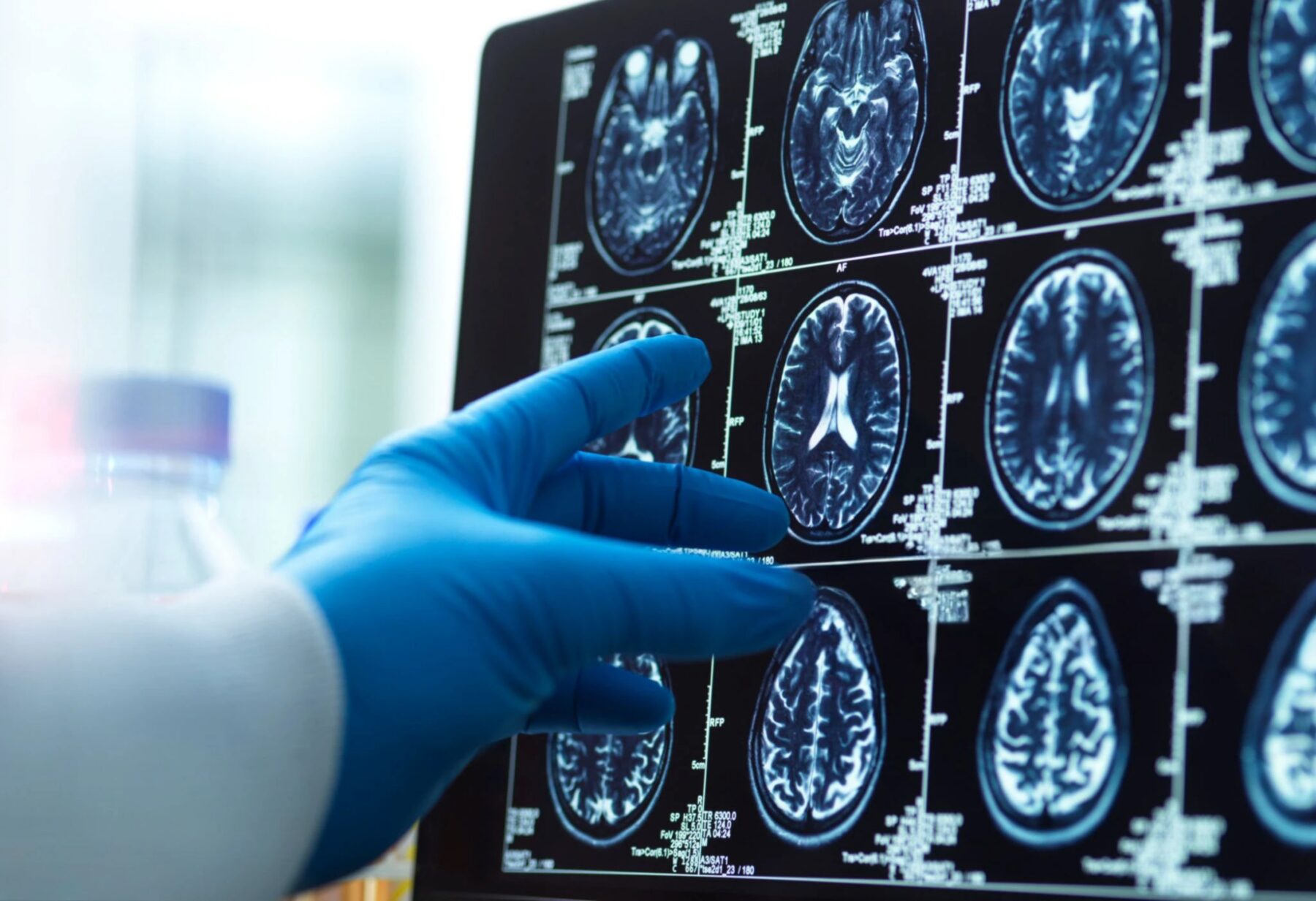
A doctor's gloved hand points to one of many images on a brain scan. (Photo from iStock)
- Vidofludimus calcium, an oral therapy for MS, targets key mechanisms underlying disease progression.
- Phase 2 trial data show it reduced acute and chronic brain lesions in progressive MS.
- The therapy also decreased signs of Epstein-Barr virus reactivation in patients.
Immunic Therapeutics‘ experimental oral therapy vidofludimus calcium can target key mechanisms underlying disease progression in multiple sclerosis (MS), including acute and chronic inflammation, as well as Epstein-Barr virus (EBV) reactivation, according to new trial data.
The Phase 2 CALLIPER trial (NCT05054140) investigated vidofludimus calcium against a placebo in people with progressive forms of MS.
Immunic presented the findings in two separate posters at the Americas Committee for Treatment and Research in Multiple Sclerosis (ACTRIMS) Forum 2026, held last week in San Diego and online.
“Together, our two poster presentations at the prestigious ACTRIMS Forum further underscore the unique mechanism of action of vidofludimus calcium and its potential in [progressive MS],” Daniel Vitt, PhD, CEO of Immunic, said in a company press release. “The findings further reinforce our belief that vidofludimus calcium has the potential to address underlying mechanisms of disease progression in [MS] patients.”

Vidofludimus calcium could target relapsing, progressive forms of MS
Vidofludimus calcium is designed to control immune cells that cause inflammatory damage in MS by inhibiting a protein called DHODH. It also has direct neuroprotective effects by activating the Nurr1 protein, and there’s evidence that it can interfere with virus-infected cells, potentially preventing EBV reactivation.
Immunic believes the experimental therapy is suited to not only address relapsing forms of the disease, which are closely linked to acute inflammation, but also progressive MS, where gradual disability worsening is driven by chronic, low-grade inflammation and nerve cell death.
CALLIPER tested vidofludimus calcium against a placebo in 467 adults with progressive forms of MS, including 152 people with primary progressive MS and 315 people with secondary progressive MS.
Previously, Immunic shared data showing that vidofludimus calcium slowed disability worsening relative to a placebo. This was seen even in patients without signs of active inflammation, supporting the idea that therapy may act on more than inflammation alone.
At ACTRIMS, the researchers reported the therapy’s impact on other key drivers of disease progression.

Drug may reduce lesions with active and smoldering inflammation
In a first poster, titled “Effect of Vidofludimus Calcium, a Novel Nurr1 Activator and Selective DHODH Inhibitor, on MRI Outcomes in Progressive Multiple Sclerosis: Data from the Phase 2 CALLIPER Trial,” scientists showed that vidofludimus calcium was associated with reductions in certain brain lesions compared with a placebo.
These included lesions linked to the acute inflammatory processes that drive MS relapses — including lesions with active inflammation and new or enlarging brain lesions — and those associated with the smoldering inflammation believed to drive progressive MS.
Among patients on vidofludimus calcium, the proportion of patients with active inflammatory lesions consistently decreased over time, from 16.4% at the study’s start to 7% after about 1.5 years to 0% after about 2.5 years. In the placebo group, inflammatory lesion rates dropped from 16.4% to 11.7% after 1.5 years and to 2.9% after about 2.5 years.
Similarly, the volume of new and enlarging lesions decreased continuously in the vidofludimus calcium group over about two years, whereas it increased consistently in the placebo group. At 1.5 years, 18.5% of people on vidofludimus calcium had new or enlarging brain lesions, compared with 30% of those given a placebo.
The treatment also reduced the number of slowly expanding lesions after two years. These are slow-growing lesions that are increasingly recognized as a marker of the chronic inflammation within the brain and spinal cord that characterizes progressive MS.
“These new MRI results from our Phase 2 CALLIPER trial show evidence that vidofludimus calcium reduces radiographic hallmarks of both [acute and chronic] inflammation in patients with [progressive MS],” said Andreas Muehler, MD, chief medical officer for Immunic.
Therapy may be able to prevent EBV reactivation
In the second poster, titled “Effect of Vidofludimus Calcium, a Novel Nurr1 Activator and DHODH Inhibitor, on the Anti-EBV T-cell Receptor Repertoire in Progressive Multiple Sclerosis: Data from the Phase 2 CALLIPER Trial,” the researchers showed that vidofludimus calcium may be able to prevent EBV reactivation.
EBV infection is considered necessary for MS to develop, though it is not sufficient on its own to cause the disease. After the initial infection, the virus persists in a latent state within immune B-cells, but it can sometimes reactivate.
Although this is still being investigated, emerging evidence suggests that EBV reactivation and the resulting immune response are linked to inflammatory disease activity in MS and may contribute to disease progression.
To better understand how vidofludimus calcium may affect EBV reactivation, the researchers examined a subset of 87 CALLIPER participants with available data. Specific molecular fingerprints in immune T-cells assessed EBV reactivation.
These findings from a subset of the Phase 2 CALLIPER trial participants strengthen our hypothesis that the broad-spectrum antiviral effects of vidofludimus calcium can lead to lower EBV reactivations, potentially addressing MS disease progression related to ongoing EBV reactivations.
Results showed that signs of EBV reactivation seemed to decline over time in people on vidofludimus calcium, but remained stable in people given a placebo — a statistically significant difference.
On the other hand, immune responses against the influenza virus didn’t differ between groups, suggesting that the response was specific to EBV.
“These findings from a subset of the Phase 2 CALLIPER trial participants strengthen our hypothesis that the broad-spectrum antiviral effects of vidofludimus calcium can lead to lower EBV reactivations, potentially addressing MS disease progression related to ongoing EBV reactivations,” Muehler said. “The findings warrant further investigation of the possible correlations between clinical outcomes of the CALLIPER trial and the anti-EBV T-cell response in patients.”
The Multiple Sclerosis News Today team is providing virtual coverage of the ACTRIMS Forum 2026 from Feb. 5-7. Go here to see the latest stories from the conference.