Certain diets may help reduce inflammation in MS, new review finds
Benefits seen mainly in one key marker, highlighting need for more study
Written by |
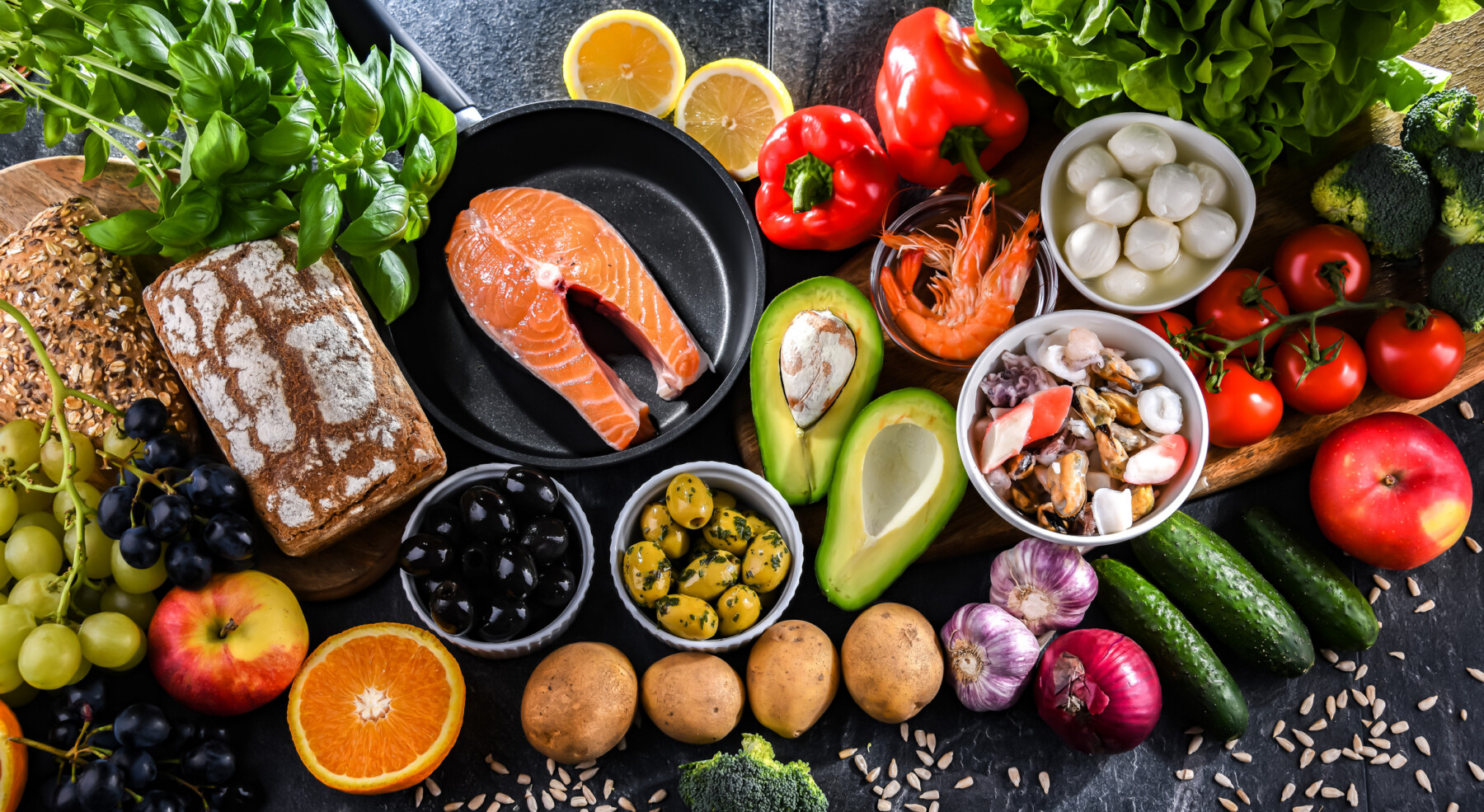
Food products representing the Mediterranean diet. (Photo from iStock)
- Modified Mediterranean-style and Paleolithic diets may lower inflammation in MS.
- A review of 13 trials found some diets reduced C-reactive protein (CRP), a key inflammation marker.
- More research is needed to confirm these findings and understand diet’s full impact on MS.
Following specific diets may help reduce inflammation in people with multiple sclerosis (MS), but more research is needed, according to a new review paper.
Researchers analyzed data from 13 randomized clinical trials and found some evidence that certain diets, including modified Mediterranean-style and Paleolithic diets, were linked to lower levels of a key inflammation marker in some studies. However, the trials were generally small, lasted for short durations, had widely variable designs, and did not all yield the same results.
The study, “The Effect of Dietary Interventions on Peripheral Markers of Inflammation Among People with Multiple Sclerosis: A Systematic Review and Meta-Analysis of Randomized Controlled Trials,” was published in Multiple Sclerosis and Related Disorders.

How diet may influence inflammation in MS
MS is a chronic disease in which immune-driven inflammation damages nerve fibers and surrounding tissue in the brain and spinal cord. What a person eats can influence overall health, and some studies suggest certain diets may help reduce inflammation linked to MS.
This type of research is complex, however, and there currently is not enough strong evidence to recommend any specific diet as best for people with MS.
In this study, researchers wanted to assess how specific dietary interventions affect inflammation in people with MS. To do this, they conducted a review of scientific literature, focusing on randomized controlled trials — studies in which participants were randomly assigned to follow a specific diet or continue their usual diet or another comparison diet, allowing researchers to compare outcomes between groups.
“Given the growing body of research on dietary interventions in MS, the strong interest among [people with MS] in adopting dietary changes, along with the current knowledge gap in understanding the mechanisms of the effect of dietary interventions, this study aimed to systematically review and integrate existing evidence on the effect of dietary interventions compared to control diet on [blood] biomarkers of inflammation in [people with] MS,” the scientists wrote.
Review examines 13 trials of diets in people with MS
The review covered 13 trials that tested a variety of diets, including intermittent fasting, Mediterranean-style diets, Paleolithic diets, ketogenic diets, reduced-calorie diets, and a traditional Iranian diet, among others.
Most of these studies were small and fairly short — the largest included 180 participants, and the longest lasted about 72 weeks, or roughly 1.5 years. Differences in study design, diet approaches, and measurement methods also made it difficult to directly compare results, the researchers said.
The studies evaluated several inflammatory markers. The most common, assessed in seven of the 13 studies, was C-reactive protein (CRP), a well-established marker that reflects inflammation throughout the body.
In five studies, CRP levels decreased more in participants who followed specific diets — including modified Mediterranean-style and Paleolithic diets, a very low-fat, plant-based diet, an anti-inflammatory diet, and intermittent calorie restriction — compared with those following control or comparison diets.
The researchers noted that results varied across trials, but the largest reductions in CRP were generally seen in studies lasting six months or longer. This suggests “that both diet type and intervention duration contribute to the anti-inflammatory effects observed,” they said.
Evidence limited beyond one key inflammation marker
For other inflammatory markers, the researchers did not find consistent patterns across trials. However, they noted that limited data were available for each marker, making it difficult to conduct statistically meaningful tests. More studies are needed to better understand how diet affects inflammation in MS.
“Moving forward, studies should investigate dietary strategies tailored to maximize anti-inflammatory potential and evaluate them using harmonized protocols, standardized biomarker assays, and longer follow-up,” the scientists concluded.
Future studies “should measure a broad panel of inflammatory markers … and correlate them to patient-reported and clinical outcomes for better understand their contribution to disease progression,” they added.