
Brain inflammation may help repair myelin, animal study shows
Findings could guide future repair-focused treatments for MS
Written by |
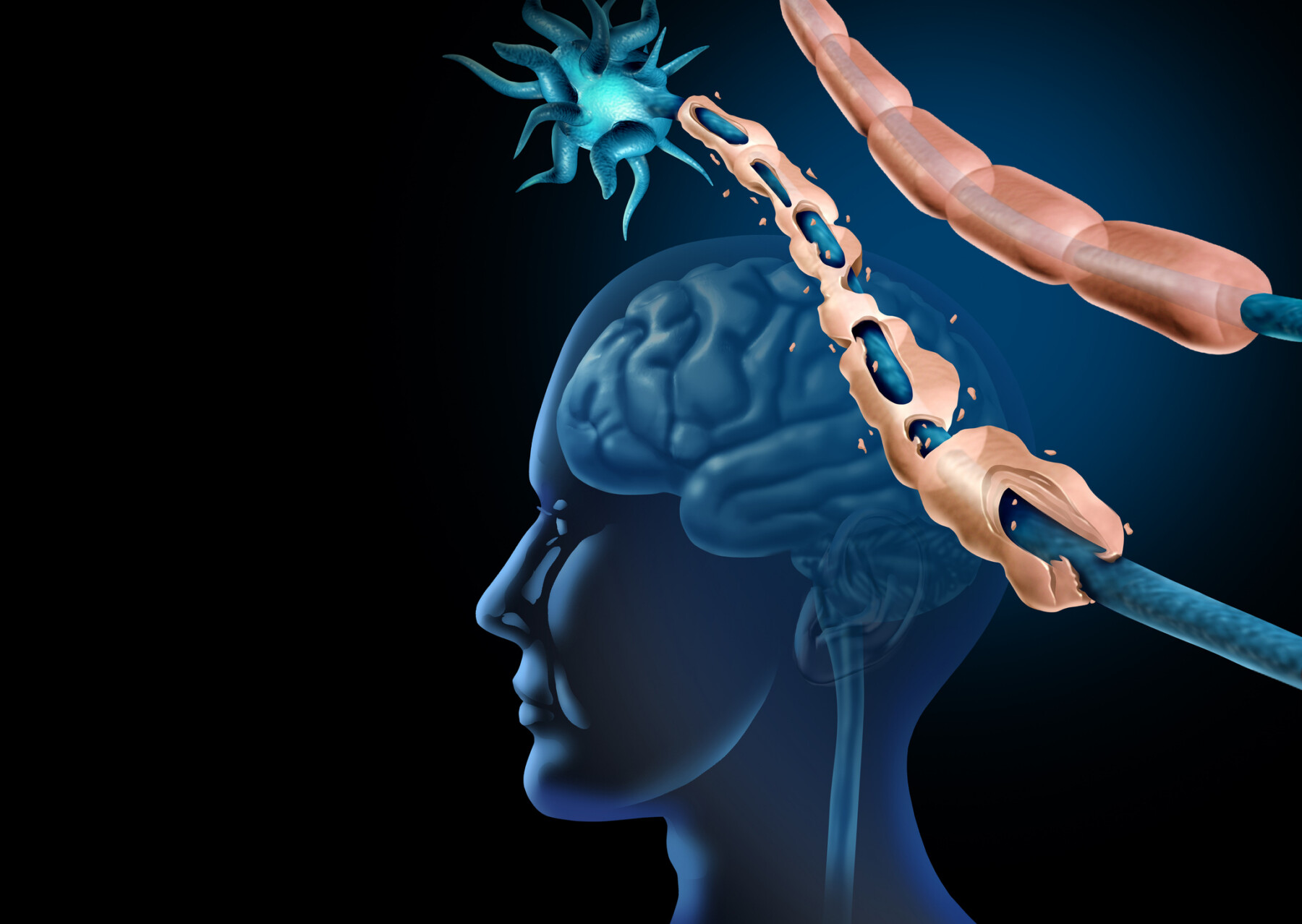
Damage to the myelin sheath, the protective coating surrounding nerve fibers, is at the core of multiple sclerosis. (Image from iStock)
- Short-lived grey matter inflammation may help support myelin repair, an animal study suggests.
- White matter myelin damage triggered temporary grey matter inflammation that faded after repair.
- Failed myelin repair may contribute to chronic grey matter inflammation, pointing to future treatment strategies.
Brain inflammation is often viewed as harmful in neurological diseases such as multiple sclerosis (MS), but a new animal study suggests that certain short-lived forms of inflammation may be needed to help the brain repair myelin.
This finding may have important implications for understanding the biology of MS — an immune-mediated disease marked by damage to myelin, the protective coating around nerve fibers — and other neurological diseases.
Of particular note, the data suggest that brain inflammation may normally resolve once myelin is repaired. As such, treatments designed to promote myelin repair may help prevent or limit chronic brain inflammation in MS and other disorders.

Failed myelin repair may fuel chronic inflammation
“Our findings suggest that chronic neuroinflammation, implicated in MS progression and other age-related neurodegenerative disorders can be secondary to failed myelin regeneration, implying that myelin regenerative therapies could therefore be widely applicable across neurodegenerative disorders,” researchers wrote in the study, “Focal white matter lesions drive grey matter inflammation and synapse loss,” published in Nature.
Brain tissue can be broadly divided into two types: grey matter, which contains the main bodies of nerve cells, and white matter, which contains the long projections nerve cells use to communicate with other parts of the brain. White matter gets its name from the myelin sheath, a whitish covering that surrounds nerve fibers and helps them send electrical signals.
MS is an inflammatory disorder in which the immune system attacks and damages myelin. Although it is primarily thought of as a disease of white matter, grey matter is also affected. In particular, grey matter in MS is often marked by loss of connections between nerve cells and microgliosis, a type of brain inflammation caused by activation of microglia, the resident immune cells of the brain.
Grey matter abnormalities in MS have often been viewed as separate from, or independent of, white matter myelin damage. But this new study suggests the two processes may be deeply interconnected.
“We found that a focal lesion in white matter is not just a local event. It can trigger a coordinated response in connected grey matter, and that response is not simply damage. It is part of the brain’s attempt to repair itself,” Ragnhildur Thóra Káradóttir, PhD, co-author of the study at the University of Cambridge, said in a university news story.
Brain inflammation fades after myelin is repaired
Using animal models, the researchers induced localized damage to myelin in a specific white matter circuit and followed what happened over time. This damage led to lower activity in connected nerve cells in the grey matter. It also triggered microgliosis and loss of connections between nerve cells in grey matter regions linked to the white matter injury. These changes were temporary, and once myelin was regenerated, the grey matter inflammation subsided.
In fact, the researchers found that myelin repair in the white matter depended on grey matter inflammation in the models studied. When the researchers blocked microgliosis, myelin regeneration was impaired.
Based on their models, the researchers believe that microglia in grey matter trigger an inflammatory response to help myelin repair, temporarily decreasing the activity of nearby nerve cells — somewhat like traffic slowing near a construction zone.
Normally, once myelin repair is complete, microglia stop their inflammatory response. But in diseases such as MS, where myelin may not be repaired properly, grey matter may remain in a state of chronic inflammation and reduced activity as microglia remain activated when myelin regeneration fails.
“Critically, failure of myelin regeneration leads to chronic microgliosis in the grey matter. This highlights the importance of considering the grey matter microglial response when designing myelin regenerative therapies,” the researchers concluded.



Jyoti Arora
Right now I am on wheelchair so not able to stand
Anthony b Dubey
Does this study direct us to the understanding that a period of unconstrained dietary intake of glucose rich foods, festing, followed by a period of the opposite, a period of relative fasting is the way to go for best myelin production. Since the first period produces more new myelin cells and the second brings them to full maturity.