Isoniazid for tremors in multiple sclerosis
 Fact-checked by
What is isoniazid for MS?
Isoniazid is an antibiotic medication approved in the U.S. to treat or prevent the bacterial infection tuberculosis, but it is sometimes used off-label to manage tremors in people with multiple sclerosis (MS).
MS is an autoimmune disease that damages the brain and spinal cord, causing a variety of symptoms. Some people experience tremors — involuntary trembling or shaking — when damage affects the nerve pathways that control movement.
Isoniazid has been found to have a modest therapeutic effect for easing MS-related tremors in some people. Researchers have mainly studied the therapy in action tremors, which occur when a person voluntarily holds a position or moves. These include postural and cerebellar tremors, which stem from dysfunction in the cerebellum, a brain region involved in movement.
Researchers do not fully understand how the medication exerts anti-tremor effects, but some believe it might do so by slowing the breakdown of signaling molecules involved in movement control. Others suggest that it boosts signaling of a molecule called GABA in certain movement-related brain regions.
The medication was previously sold in the U.S. under brand names including Nydrazid and Laniazid, which have since been discontinued. Generic versions remain available as oral tablets, oral solutions, and injections.
Therapy snapshot
Scroll horizontally to view all columns -->
| Treatment name | Isoniazid |
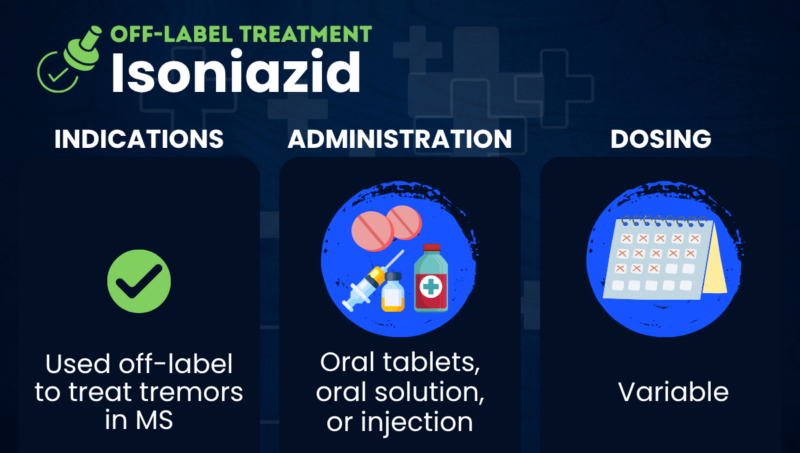
| Usage | Used off-label to treat tremors in MS |
| Administration | Tablet, oral solution, injection |
Who can take isoniazid?
Because isoniazid is an off-label MS tremor treatment — meaning it is not specifically approved by U.S. regulators for the neurodegenerative disease — there aren’t specific guidelines around the use of the medication in this population.
For its approved indication as an antibiotic, isoniazid is contraindicated or not recommended for people with:
- severe immune reactions to isoniazid, including drug-induced liver inflammation (hepatitis)
- a history of liver injury after using isoniazid
- a history of severe adverse reactions to the medication, including fever, chills, or arthritis
- an active acute liver disease
Isoniazid carries a black box warning about its potential to trigger serious hepatitis. This risk may be higher in certain groups, including:
- adults 35 and older
- people who consume alcohol daily
- women, particularly in the period after giving birth
- people with chronic liver disease
- people who use injectable drugs
These individuals may require additional monitoring or clinical precautions while taking isoniazid.
How is isoniazid administered?
Isoniazid is available in three forms:
Because MS is an off-label indication, clinicians lack a standardized dosing regimen for this patient population. In early clinical trials, participants took the medication orally every day at various doses.
When used to treat tuberculosis, the injectable formulation is reserved for cases where oral treatment is not possible.
Potential side effects of isoniazid
No robust data are available to establish a side effect profile for isoniazid specifically in people with MS. For its tuberculosis indication, the most common side effects include:
- peripheral neuropathy, a type of nerve damage that can cause tingling, numbness, or other abnormal sensations in the hands and feet
- liver injury
To mitigate the risk of peripheral neuropathy reported in high-dose trials, doctors sometimes prescribe isoniazid for MS tremors alongside pyridoxine (vitamin B6).
The boxed warning for isoniazid’s liver side effects notes that treatment should be promptly discontinued if signs of liver damage emerge at any time.
Rare but potentially serious side effects of isoniazid can include:
- severe cutaneous adverse reactions: a group of serious and sometimes life-threatening reactions that primarily involve the skin
- cerebellar syndrome: symptoms related to damage in the cerebellum, including abnormal motor coordination, which may resemble or worsen certain MS symptoms
Multiple Sclerosis News Today is strictly a news and information website about the disease. It does not provide medical advice, diagnosis, or treatment. This content is not intended to be a substitute for professional medical advice, diagnosis, or treatment. Always seek the advice of your physician or other qualified health provider with any questions you may have regarding a medical condition. Never disregard professional medical advice or delay in seeking it because of something you have read on this website.