Sharing the lessons I’ve learned while living with MS
Written by |
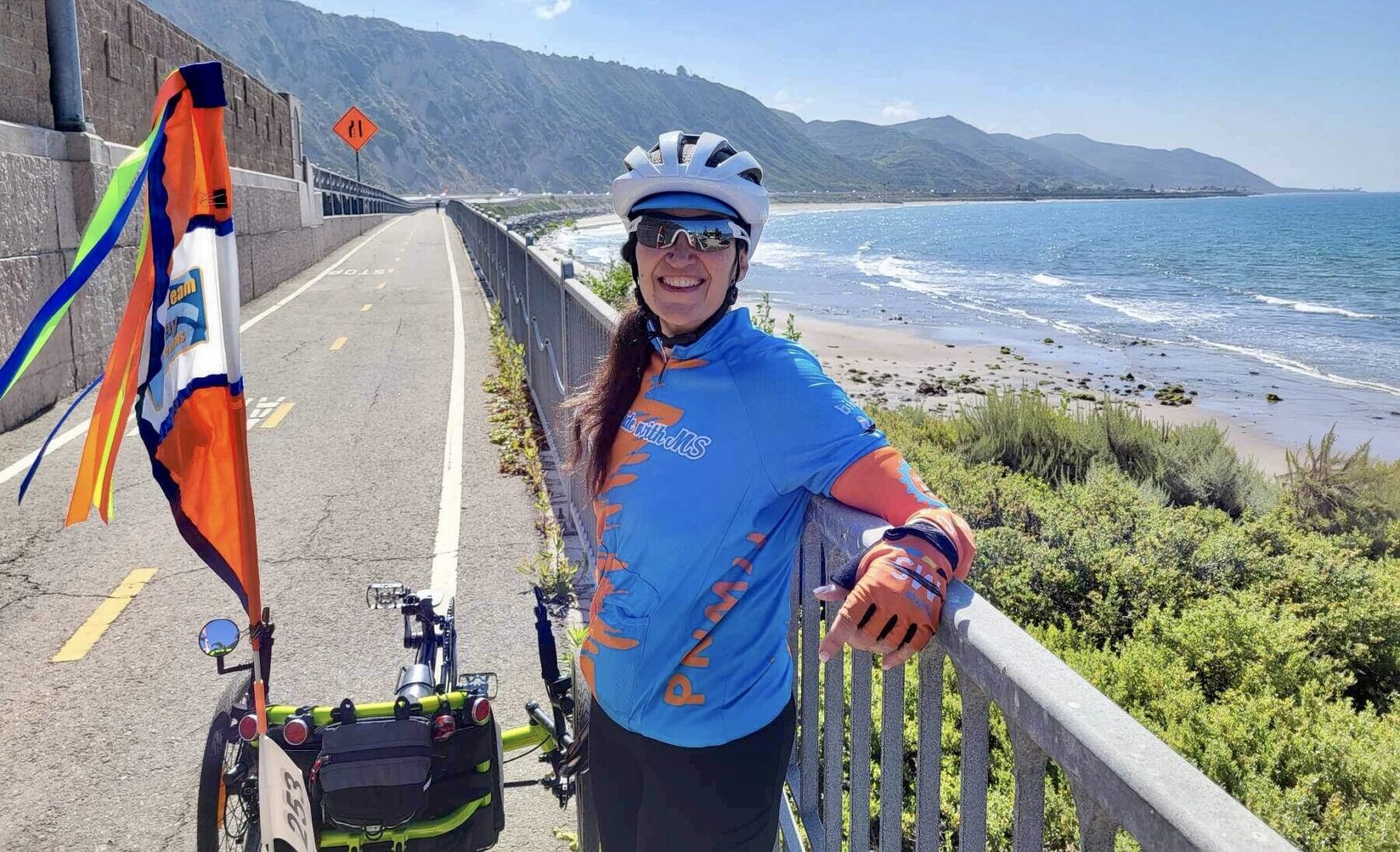
Karen Matingou pauses for a postcard-worthy photo during the Bike MS: Los Angeles Coastal Challenge 2023. (Photos courtesy of Karen Matingou)
In recognition of Multiple Sclerosis Awareness Month in March, the MS Awareness Month campaign features a series of stories highlighting the real-life experiences of people affected by MS, written in their own words. Follow us on Facebook, Instagram, X, and Pinterest for more stories like this, using the hashtag #MSAwarenessMonth, or read the full series.
My journey began in early 2017, when I was 48 years old. I didn’t know anything about multiple sclerosis (MS) or how deeply the disease would eventually shape my life. I was simply trying to stay active and enjoy time with my family.
On April 8, 2017, we participated in Walk MS: San Diego. I had no idea that what I learned that day would change the course of my life.
As I listened to people speak about the warning signs of MS — balance issues, numbness, tingling, vision problems, and strange electrical shock sensations — I felt an uncomfortable recognition. These symptoms matched what I had quietly been dealing with. For a month, I had been dismissing them, convincing myself I was imagining things.
Eventually, I confided in my sister about what was going on, and then scheduled an appointment with a neurologist. The neurologist, however, said I had carpal tunnel syndrome, but I knew in my gut that was wrong.
Lesson learned: We know our bodies. Don’t settle for an answer that doesn’t make sense.
My primary care doctor urged me to get a second opinion. In October 2017, a new neurologist listened, took me seriously, and ordered extensive testing, including MRI scans of my brain and spine, a lumbar puncture, and blood work to rule out other conditions. The results were clear: I had 15 oligoclonal bands in my cerebrospinal fluid, which confirmed I had MS. In January 2018, I received the formal diagnosis of relapsing-remitting MS.
The news was devastating. For weeks, I kept it to myself and didn’t tell my husband, son, parents, or sister. I cycled through every stage of grief before finally reaching acceptance.
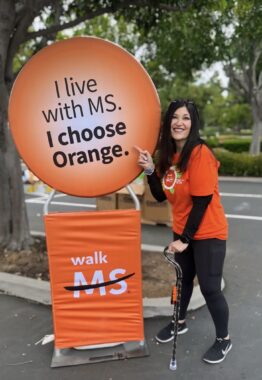
Walk MS: Carlsbad 2024 was one of the many ways Karen Matingou advocates for greater awareness about MS and more research.
Lesson learned: Feel your emotions, but don’t get stuck in them.
When I finally told my 13-year-old son, I promised him I would face MS with strength, discipline, and a warrior mindset. I wanted him to see that setbacks are part of life, but so is getting back up.
Lesson learned: When life knocks you down, rise again.
Just weeks after my diagnosis, I signed up for Bike MS: Bay to Bay. I didn’t own a bike and hadn’t ridden in decades, but I refused to let MS dictate my limits. Angels showed up everywhere: a friend who promised to ride beside me, a trainer who helped me with balance, someone who gifted me a bike, and cycling mentors who taught and encouraged me. Their support helped me ride 100 miles and become a “top fundraiser,” “most inspirational rider,” and a committed advocate for the National MS Society.
But MS is unpredictable. Years later, new symptoms — including right-side weakness, balance issues, and speech challenges — forced me off a two-wheeled bike and made even walking difficult. Eventually, I was told I had transitioned to primary progressive MS.
I felt myself shrinking physically and emotionally. Then hope returned. The organization Meat Fight approved me for a recumbent trike, and a friend invited me to ride the final leg of his 1,800-mile journey — on a tandem. That invitation reignited my belief that I could still show up, still participate, and still fight.
Lesson learned: Ask not “what can’t I do” but “what can I do?”
I may be the only person with MS who has ridden Bike MS on a single bike, a recumbent trike, a tandem, and a triplet — with more modalities planned. I’ve walked at Walk MS and will add Challenge Walk MS this year with the help of my exoskeleton. I serve on the Bike MS committee and the I Ride with MS subcommittee, and I volunteer as a mentor with MSFriends. I am even a clinical trial participant, committed to helping find a cure.
Sometimes we are the wind, and sometimes we are the sail. On this journey, I have learned I am both.