
FDA Warns of Risks Linked to Gadolinium-based Contrast Agents Used in MRI Scans
Written by |
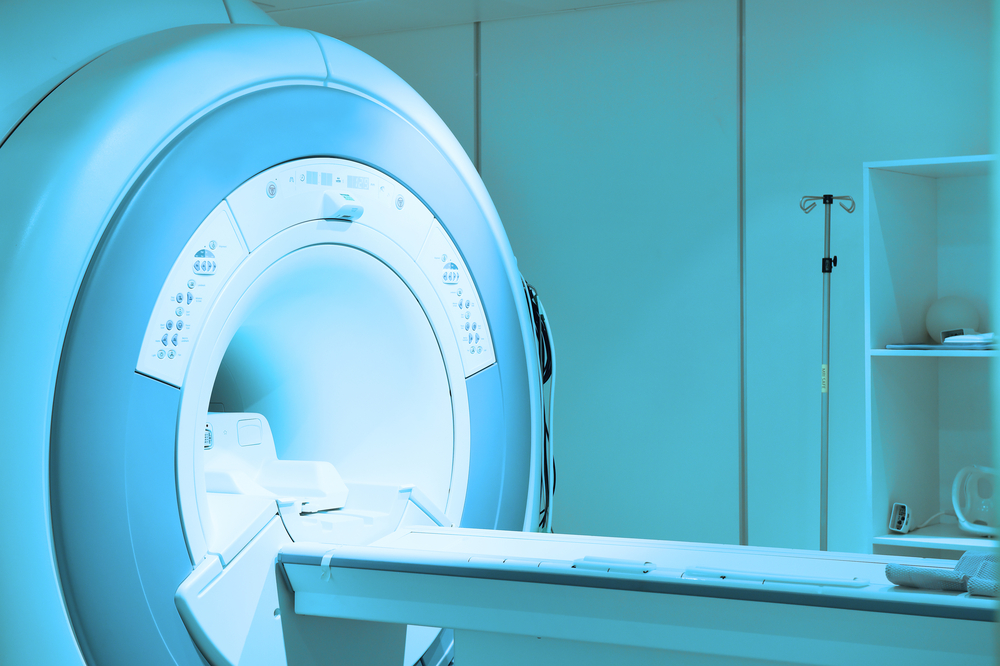
The U.S. Food and Drug Administration (FDA) has updated a safety bulletin about gadolinium-based contrast agents (GBCAs), after studies raised new concerns about them.
Doctors often use GBCAs to diagnose multiple sclerosis (MS), monitor disease activity and verify the effectiveness of MS therapies. Gadolinium is a metal ion, or electrically charged molecule, that is infused in the vein during MRI scans.
“Research suggests that small amounts of GBCAs may be deposited in certain areas of the brain in some people who have received multiple doses of GBCAs. These deposits were identified years after the administration of the contrast agent, indicating that the contrast agent was not completely eliminated from the body,” said a Jan. 2 announcement by the National Multiple Sclerosis Society (NMSS). “While there is currently no indication that these deposits are harmful, the FDA has advised healthcare providers and patients against unnecessary use of gadolinium for routine MRI scans.”
GBCAs enable better imaging of active inflammation in brain scans. Yet the FDA says more research is necessary to establish if some contrast agents are more prone to cause deposits than others.
Meanwhile, the NMSS is working with the FDA to help determine the best way to clarify these concerns. To do that, it invited a group of experts, MS healthcare providers and other experts to make recommendations, so that MS patients and healthcare providers can be better informed.
Until further information on the safety of these deposits is available, the FDA urges patients to talk to their healthcare providers about GBCAs, and to report any perceived side effects related to GBCAs to the FDA MedWatch program.
Healthcare providers are also asked to reassess the use of gadolinium for routine MRI scans, and to limit these agents to cases in which the additional information from the contrast agent is considered medically necessary.
To date, FDA-approved GBCAs include Dotarem (gadoterate meglumine), Eovist (gadoxetate disodium), Gadavist (gadobutrol), Magnevist (gadopentetate dimeglumine), MultiHance (gadobenate dimeglumine), Omniscan (gadodiamide), OptiMARK (gadoversetamide) and ProHance (gadoteridol).

Eleanor Quail
I have had multiple MRIs yearly with and without contrast since 2003. Now I read that this MAY cause a problem. My question is, what is the alternative or remedy to this?
Thanks for your comments and suggestions.
Lisa
Check out.. Facebook. Gadolinium toxicity and Research group. I am poisoned by MRI contrast and so are a lot of other people.
Cheryl Halsey
I had only 1 brain MRI with Doteram in April. I began having horrible symptoms 24hrs after MRI. Burning around my head,pins and needles feeling around my body,bone pain in my hip. All symptoms have continued as well as started having hair loss and vision problems that began about a month after MRI.
Monika
Hi, has anyone successfully detoxed this stuff? My friend is showing awful toxicity symptoms from it. Thank you!