Amitriptyline for multiple sclerosis
 Fact-checked by
 What is amitriptyline for MS?
Amitriptyline is an oral therapy that’s approved in the U.S. to treat depression, which is sometimes also used off-label for the management of neuropathic pain, or pain related to nerve damage, in people with multiple sclerosis (MS).
In MS, nerve cells in the brain and spinal cord that are involved in perceiving physical sensations can become damaged, leading to abnormal sensations such as burning or stabbing, numbness, and tingling that characterize neuropathic pain.
Belonging to a class of medications called tricyclic antidepressants, amitriptyline increases levels of the nervous system signaling chemicals serotonin and norepinephrine. In turn, these two neurotransmitters are thought to exert an inhibitory effect on pain-signaling pathways that contribute to neuropathic pain in MS.
Brand-name amitriptyline products that were previously sold in the U.S. have been discontinued, but generic versions remain available.
Therapy snapshot
| Treatment name | Amitriptyline |
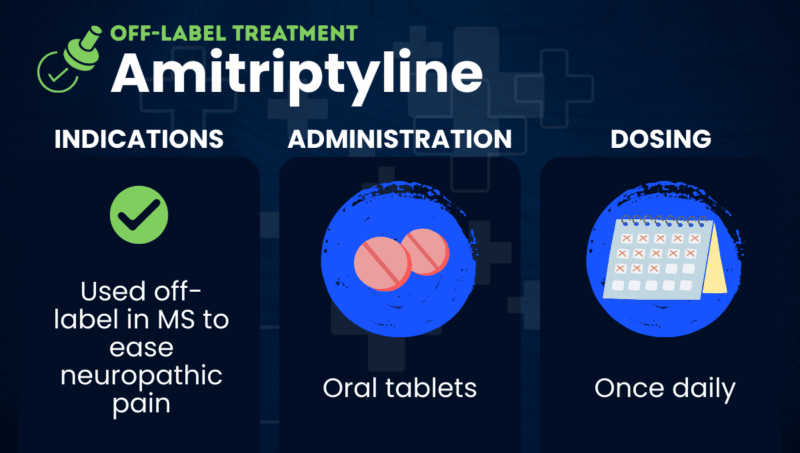
| Usage | Used off-label in MS to ease neuropathic pain |
| Administration | Oral tablets |
Who can take amitriptyline?
International guidelines recommend amitriptyline as a first-line treatment option for neuropathic pain. For this reason, amitriptyline is commonly prescribed as a first-line option to manage continuous neuropathic pain in people with MS, although it’s not formally approved for the indication.
A person’s physician will determine whether amitriptyline is appropriate based on their symptoms and the potential for intolerable side effects or safety issues.
According to the label for its approved indications, amitriptyline should not be used:
- by anyone with a history of immune reactions to the therapy or any of its ingredients
- at the same time as monoamine oxidase inhibitors, another class of antidepressants, or the heartburn medication cisapride
- people in the acute recovery phase after a heart attack
Although not specifically contraindicated, amitriptyline is generally not recommended for children younger than 12.
How is amitriptyline administered?
Amitriptyline is available in oral tablet form, typically taken once daily before bedtime. Because it is not specifically approved for MS in the U.S., there is no standard dosing regimen.
The general treatment strategy is to start at a low dose and gradually increase it to a dose that yields maximum clinical benefit without intolerable side effects. In general, the dose of amitriptyline needed for chronic pain is substantially lower than that used for depression, and may range from around 25 mg to 150 mg per day.
Amitriptyline side effects
Common side effects of amitriptyline at the doses used for its approved indications include:
- weight gain
- constipation
- dry eyes
- dizziness
- drowsiness
- headache
Amitriptyline comes with a boxed warning for the risk of worsening depression and/or emergence of suicidal thoughts and behavior for children, adolescents, and young adults with major depressive disorder. All patients should be monitored closely for changes in behavior when using amitriptyline.
The medication can interact with alcohol and other medications. Patients should talk with their doctors about all prescribed or non-prescribed substances they are using before initiating amitriptyline.
Multiple Sclerosis News Today is strictly a news and information website about the disease. It does not provide medical advice, diagnosis, or treatment. This content is not intended to be a substitute for professional medical advice, diagnosis, or treatment. Always seek the advice of your physician or other qualified health provider with any questions you may have regarding a medical condition. Never disregard professional medical advice or delay in seeking it because of something you have read on this website.