Lipoic acid for multiple sclerosis
 Fact-checked by
 What is lipoic acid for MS?
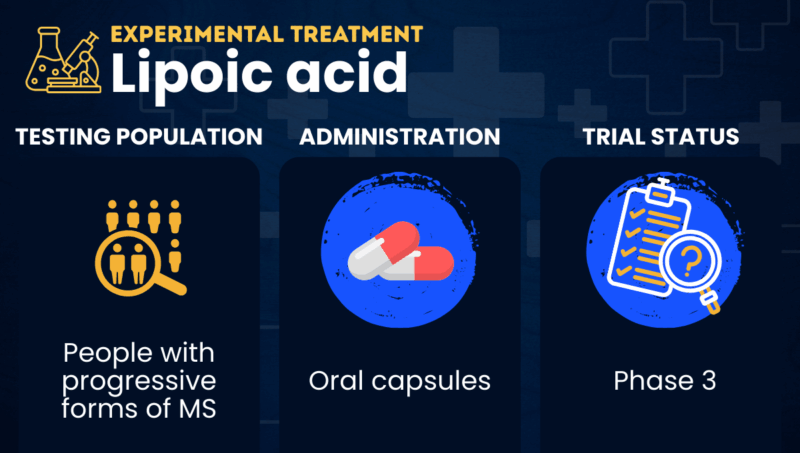
Lipoic acid is a powerful antioxidant molecule that is currently being investigated as a potential treatment for progressive forms of multiple sclerosis (MS), although previous clinical trials have also explored its use in relapsing forms of the disease.
The compound is naturally produced in the body and found in small amounts in foods such as broccoli and spinach. But it is also available as an over-the-counter dietary supplement. Taken as capsules, lipoic acid is expected to reduce nerve cell damage and potentially slow MS progression through a range of mechanisms.
In MS, a type of cell damage called oxidative stress is a major driver of disease progression. By working as an antioxidant, lipoic acid can eliminate the harmful oxygen-containing molecules that cause oxidative stress.
In addition, the medication also has been shown to lower several markers of inflammation and reduce the number of inflammatory immune cells that enter the brain and spinal cord to cause damage.
Therapy snapshot
| Treatment name: | Lipoic acid |
| Administration: | Oral capsules |
| Clinical testing: | Completed multiple Phase 2 and Phase 2/3 trials in MS; a mega trial is ongoing |
How will lipoic acid be administered in MS?
In MS clinical trials, lipoic acid has been taken in the form of oral capsules. Patients took a daily dose of 1,200 mg, which is higher than the doses usually used when the compound is taken as a supplement.
While some benefits have been observed in early clinical trials testing the 1,200 mg dose, it’s too early to know whether this will be the recommended dose if and when lipoic acid receives regulatory approval for MS.
Lipoic acid in MS clinical trials
Early trials of lipoic acid showed that the treatment was well tolerated in MS patients, and that a daily 1,200 mg dose lowered markers of inflammation associated with immune cell migration into the brain and spinal cord. The therapy’s efficacy and longer-term safety were then studied in several MS clinical trials:
- A Phase 2/3 trial (IRCT138812222602N2) tested 12 weeks of treatment with lipoic acid or a placebo in 52 adults with relapsing-remitting MS (RRMS). Results indicated that the therapy increased the body’s ability to deal with oxidative stress and decreased markers of inflammation. However, disability outcomes, as assessed via the Expanded Disability Status Scale (EDSS), did not differ between patients given supplements or the placebo.
- A Phase 2/3 trial (NCT01188811) tested lipoic acid against a placebo in 51 people with nonactive secondary progressive MS (SPMS), who had experienced continued disability progression without relapses in the prior five years. The trial met its main goal, which was to show that lipoic acid could significantly prevent the loss of brain volume (brain atrophy) after two years. Patients given a placebo lost, on average, 0.65% of their brain volume per year, compared with 0.21% per year with lipoic acid. Participants treated with lipoic acid also tended to have better walking function, though the difference was not statistically significant.
- A Phase 2 study called LAPMS (NCT03161028) tested lipoic acid against a placebo in 115 people with primary progressive MS (PPMS) and SPMS. The study failed to meet its main goal of showing that lipoic acid could improve walking speed, as measured via the Timed 25-Foot Walk (T25FW), after two years. Other measures of mobility, and assessments of disability and cognition, also did not show a difference between groups. Notably, patients given lipoic acid had relatively stable brain volume, while it tended to decrease in the placebo group, but the difference was not statistically significant.
Lipoic acid is now being tested in people with PPMS and SPMS as part of an ongoing Phase 3 mega trial in the U.K. called OCTOPUS — or PLATYPUS in Australia. The trial is investigating multiple treatments simultaneously against a shared placebo group. Lipoic acid and metformin were the first two therapies selected for the trial, but new therapies may be added as the trial progresses.
Lipoic acid side effects
The most common side effects associated with lipoic acid in MS clinical trials include:
- reactions affecting the skin, such as rash
- gastrointestinal problems, including nausea, vomiting, and abdominal pain
- kidney problems
Multiple Sclerosis News Today is strictly a news and information website about the disease. It does not provide medical advice, diagnosis, or treatment. This content is not intended to be a substitute for professional medical advice, diagnosis, or treatment. Always seek the advice of your physician or other qualified health provider with any questions you may have regarding a medical condition. Never disregard professional medical advice or delay in seeking it because of something you have read on this website.