Gabapentin for multiple sclerosis
 Fact-checked by
 What is gabapentin for MS?
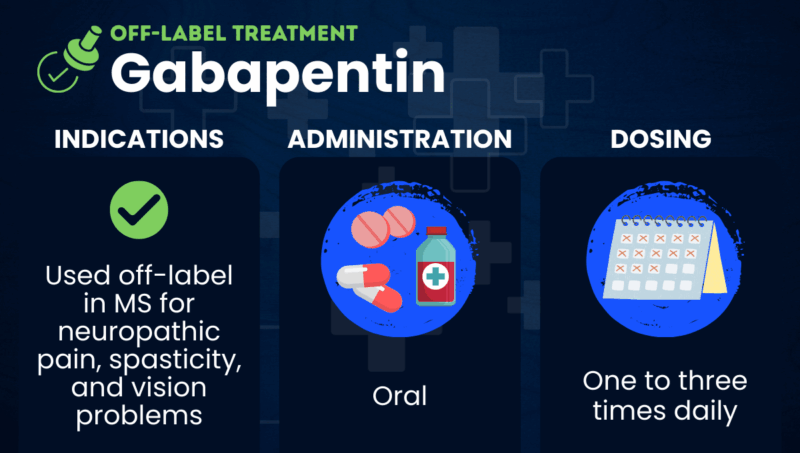
Gabapentin is an oral anticonvulsant medication that’s cleared in the U.S. to treat seizures, restless leg syndrome, and nerve pain after a shingles infection. It is not formally approved for use in people with multiple sclerosis (MS), but is often prescribed off-label to manage MS symptoms, including:
- neuropathic pain, or pain related to nerve damage, and abnormal sensations such as numbness, tingling, stinging, or burning (dysesthesia)
- spasticity, abnormally tight or stiff muscles that can lead to uncontrollable spasms
- vision problems
These symptoms arise in MS when inflammation damages the nervous system, interfering with normal nerve cell signaling. Gabapentin’s mechanism of action remains incompletely understood, but it is generally thought to modulate the release of certain brain-signaling chemicals to normalize neuronal activity.
Gabapentin comes in various formulations and is approved in the U.S. under brand names such as Neurontin, Horizant, and Gralise, with generic versions also available. Not all versions of gabapentin are directly interchangeable, as each has its own pharmacological properties.
Therapy snapshot
Scroll horizontally to view all columns -->
| Treatment name | Gabapentin |
| Usage | Used off-label to manage MS symptoms such as neuropathic pain, spasticity, and vision problems |
| Administration | Oral capsules, tablets, or solution |
Who can take gabapentin?
In MS, gabapentin is used off-label to treat various MS symptoms. It is recommended as:
- a first-line option for managing neuropathic pain
- an add-on for managing spasticity when first-line agents don’t work
- a first-line treatment for certain types of nystagmus, or involuntary and repetitive eye movements
Gabapentin should not be used by anyone with a known allergy to the medication.
How is gabapentin administered?
Gabapentin is taken orally and is available as a capsule, tablet, or liquid solution. Some formulations are meant to be taken three times per day, while others are designed for once- or twice-daily dosing.
There is no single established dosing regimen for gabapentin in MS. Patients will usually be started on a relatively low dose, which will be gradually increased to find a level that can control symptoms without intolerable side effects.
The exact dose may also depend on a person’s specific symptoms and which formulation of gabapentin is used. When stopping the medication, the dose should be gradually reduced to prevent adverse reactions that may occur with abrupt discontinuation.
Gabapentin side effects
Common side effects of gabapentin include:
- dizziness
- drowsiness
- swelling in the arms and legs
- fatigue
- poor muscle control
- nystagmus
- headache
Gabapentin may rarely cause more serious adverse events, such as immune reactions, suicidal thoughts or behaviors, and dangerously slow or shallow breathing.
The risk of serious side effects with the medication may be more likely when used with alcohol or certain other medications. Patients should tell their healthcare providers about all prescribed and non-prescribed substances they are using.
Multiple Sclerosis News Today is strictly a news and information website about the disease. It does not provide medical advice, diagnosis, or treatment. This content is not intended to be a substitute for professional medical advice, diagnosis, or treatment. Always seek the advice of your physician or other qualified health provider with any questions you may have regarding a medical condition. Never disregard professional medical advice or delay in seeking it because of something you have read on this website.