
TENS Seen as Low Cost and Accessible Way to Ease Spasticity in MS Patients
Written by |
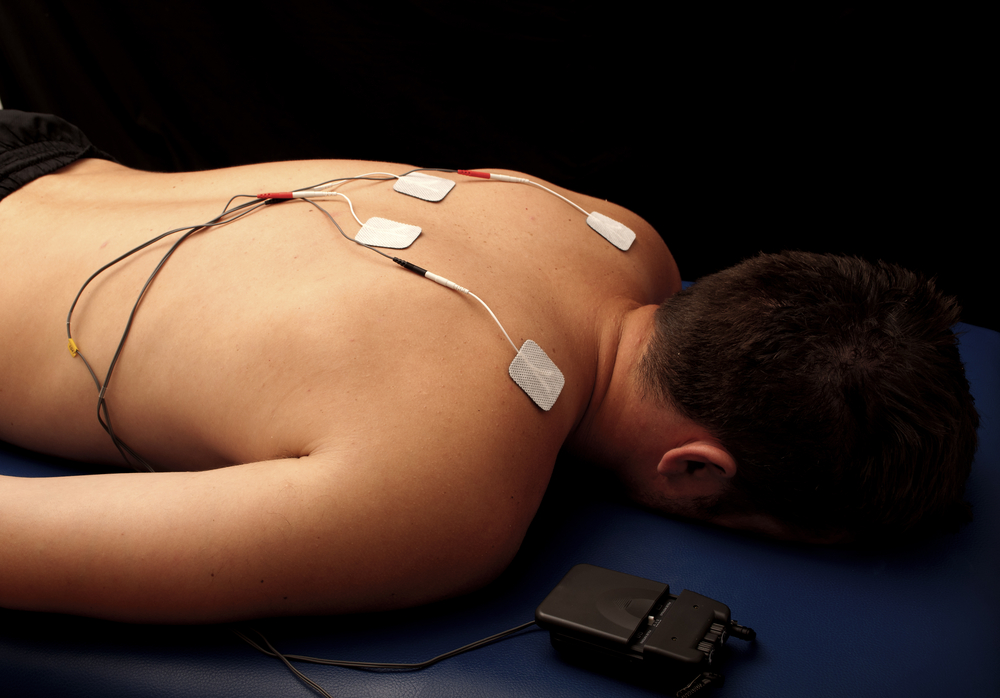
Transcutaneous electrical nerve stimulation (TENS) might be an option to treat spasticity, one of the more common symptoms of multiple sclerosis (MS), according to a literature review conducted by researchers from Universidad de Castilla la Mancha, Toledo, and Hospital Nacional de Parapléjicos de Toledo, both in Spain.
The study “Transcutaneous electrical nerve stimulation for spasticity: A systematic review” was published in the Spanish scientific journal Neurologia.
Although it is difficult to assess and compare results obtained in different studies because of the great variability in the types of stimulation used, along with differences in parameters and variables, TENS may still be a valid option to reduce spasticity and pain in multiple sclerosis thanks to its low cost, ease of use, and absence of adverse side effects, according to various reviews.
Direct experimental studies with appropriate controls may be required to objectively determine the effectiveness of TENS in multiple sclerosis. In addition, it will be necessary to optimize the parameters to be used in order to obtain the best results.
Two independent researchers from the team led by Dr. Gómez-Soriano, director of the Physiotherapy Investigation Group, searched three well-known databases (PubMed, Cochrane, and PEDro) for randomized clinical trials, published before May 2015, that addressed the effects of TENS on spasticity.
Although 96 studies were found, researchers were only able to analyze 10 of them because the other 85 did not meet the inclusion criteria set by the team. The 10 articles selected included data from 207 patients who had a cerebrovascular accident — 84 of whom had multiple sclerosis, and 39 with spinal cord lesions.
The studies showed that TENS might be effective in reducing spasticity in all these cases.
“In light of our results, we recommend TENS as a treatment for spasticity,” the authors, Jordi Serrano-Muñoz, Juan Avendaño Coy, Julio Gómez-Soriano, and E. Fernández-Tenorio, wrote.
TENS is a therapy that aims to relieve pain by delivering low-voltage electrical current to the body. It may be used to treat sudden (acute) pain, such as women going through labor, or long-lasting chronic pain that can be caused by neurological conditions, such as multiple sclerosis.
The electrical signals delivered by TENS travel along nerve pathways and result in some people experiencing less pain. Previous research has shown that TENS might also help with spasticity in multiple sclerosis.



R
Yes- TENS works- available in the size of an ipod from healthmateforever. No need to get the ones with a gazillion modes- mine has 6 modes and was less than $50. Charges with a USB cord and the main unit fits in your pocket. The wires and pads can go under your clothing. Feels heavenly.
Asia
Thank you for sharing that. Looked it up and think I'll be making a purchase! Just went through my first spasticity episode with MS this Spring. This would've been great!
Susan
Thanks so much for info sharing
Now on my to do list!!! I have read about TENS for spasticity but the units seemed so complicated. Now one that is patient friendly. I will give it a try!
Janice Golding
my chiropractor used it all the time on me and I loved it then and now with MS spastic issues it would help and would also help with my back as well to bad you can't use it on the face and head for TN because that and lower back pain are so bad
Kate
Thanks for the info
Ann
Exactly which one did you purchase? Thanks
Esther Hutton
I use my tens all the time better than pain killers, my phiso recommend it
Mary Ann Cincinnati
I have progressive ms and I get severe tightness in my legs. Will it help that???
Esther Hutton
Hi I have secondary progressive m/s I use it mostly for back pain, it seems to help with my walking for a short time as I struggle to walk 20 meters, the only thing that works for my leg tightness is baclofen I hope this helps
Jane
Did you ever get a solution that works for you? I have same problem with legs.
Kate
Would be interested in proper placement of electrodes and intensity amount. I suffer from severe hip and leg spasms on left side, so severe need sledge hammer to straighten out left leg. Pain is terrible and unrelenting. Zaniflex, Baclofen pump giving no relief.
Kate2
Kate. We must be twins If you find anything let me know. Will try medical marijuana next. Just need a night of sleep.
Robin
I am very interested on anything that can help with spasticity. I haven't been able to really find anything on electrode placement, but saw this on Pinterest. I make no representations on whether it's medically legitimate -- https://www.pinterest.com/pin/1407443610072845/?from_navigate=true
Kate
Robin, I also would like more info on TENS as of date my spasticity has not been relieved by anything. I have a Baclofen pump used Zanaflex and still can't break leg spasms. Have gotten help from spinal injections however the facet injection did not work. Am desperate for a good night's sleep.
jeanne deGraad
Any info as to whether TEN is effective with the MS HUG?
Hind
I find deep breathing helpful for MS hug.
Nick
I to am interested in the placement of the electrodes. I suffer from intense spasms in my arms, legs and back. Any help would be greatly appreciated.
Thanks,
Nick
Ben
Hey this is a really good read, I had to send it to my aunt suffering with Arthritis. I noticed a lot of people have questions about electrode placement, I came across this article and found it to be pretty helpful with helping me understand what to do
https://dmelibrary.com/tips-using-tens-therapy-sciatica-pain/
Rick Rowan
The studies and outcomes were frequency specific. TENS is a misused and misunderstood term that groups all transcutaneous treatments by delivery method. Unless you know what treatment frequency protocol is being delivered, then any success in treatment or otherwise is purely coincidental or by chance. There are specific protocols that may work for one individual and a different approach or set of frequency specific application may work for someone else. As noted with the difficulty in variables in the article itself. Hope this helps with understanding the treatments as an option as it is a powerful and very effective treatment for many outcomes if used and applied correctly. Kindest Rick Rowan
Eteca Sim
Rick, you are absolutely right. using tens with out medical guidance or assistance is a challenge. There are so many variables required, although a hit or miss feature may be tried which uses the programmed settings. You need to know the proper placement of the electrodes, how many times you'll be using it, what cycle, what frequency, what pulses, how many minutes of application is required per session, and also how many weeks you can apply it, and what is the required off time/month (to stop using) for the body to recover from the treatment. I specialize in electronics and these variables can only be answered by a medical professional. I have two TENS from Beurer. One is a small portable size and the other is double its small size. I got it from Amazon Germany and if you are an amazon USA member, you can sign in using the same username and password and register on the trial prime and order the part. after the trial membership, you can terminate the prime so as not to incur the repeat payment in membership. I hope this helps. Beurer 80 and or 49...