Water exercise beats standard PT for MS fatigue, balance issues
Researchers suggest including hydrotherapy in care plan
Written by |
- Aquatic therapy significantly reduced fatigue and improved balance in people with multiple sclerosis.
- Hydrotherapy outperformed conventional physical therapy for multiple sclerosis symptoms.
- Researchers suggested adding aquatic therapy to MS care plans for better outcomes.
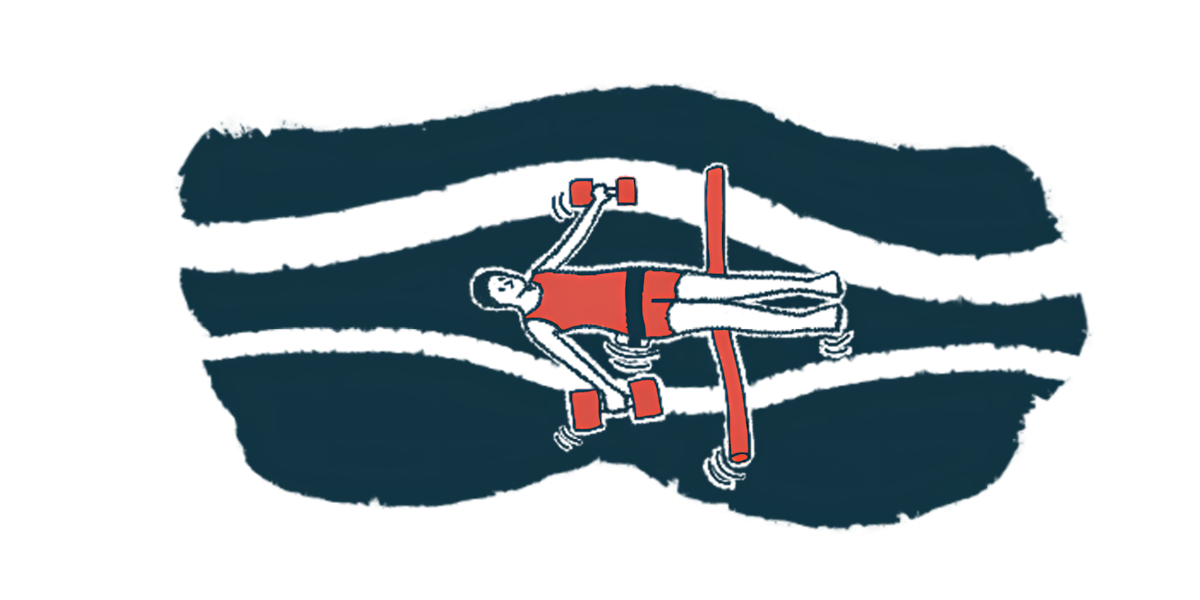
Aquatic therapy significantly eased fatigue and improved balance in multiple sclerosis (MS) patients in a clinical trial in Greece, outperforming results from a control group who participated in a conventional physiotherapy program.
“Our work suggests that incorporating [aquatic therapy] into MS care can meaningfully alleviate fatigue and balance deficits, thereby improving patients’ functional capabilities and quality of life,” the researchers wrote.
The study, “The effect of aquatic therapy on fatigue and balance in people with multiple sclerosis: An assessor-blind randomized controlled trial,” was published in Multiple Sclerosis and Related Disorders.
MS is driven by inflammation and damage to the myelin sheath, the fatty, protective coating that surrounds nerve fibers and helps them transmit electrical signals efficiently. When myelin is lost, communication between nerve cells is disrupted, leading to neurological impairment and ultimately causing symptoms of MS.
MS can affect physical strength and mobility, and regular exercise may help alleviate fatigue, improve mental health, and enhance mobility and balance. Aquatic therapy (hydrotherapy), an approach that uses the resistive and supportive properties of water to facilitate rehabilitation, has shown promise in improving motor function and balance in people with MS.

Trial aims to compare approaches
Researchers at the University of Thessaly conducted a clinical trial (NCT06121648) to investigate the effect of a hydrotherapy program on balance and fatigue in 26 people with relapsing-remitting MS. Participants were mainly women (69%) and had a mean age of 36.7 and a mean disease duration of 5.9 years.
They were randomly assigned to receive either hydrotherapy (14 patients) or conventional physiotherapy sessions (12 participants) for a period of two months. Hydrotherapy was given in 35-minute sessions, twice a week, led by a specialized aquatic therapist. The sessions consisted of exercises targeting balance, breathing, and combined breathing and movement activities, progressing in difficulty and intensity.
The conventional treatment group performed progressively harder balance and gait exercises, led by a specialized neurological physiotherapist, in 45-minute sessions twice a week.
The hydrotherapy group saw significantly greater improvements in balance than the control group, as assessed by the Berg Balance Scale (BBS), which measures patients’ ability to maintain balance in various postures and movements. Higher values indicate better performance.
By the end of the two months, the hydrotherapy group’s BBS score increased by an average of 2.7 points (from 52.63 to 55.33 ), while the control group’s BBS score decreased by an average of 3.64 points (from 53.65 to 50.01). The researchers said the results showed the hydrotherapy group achieved near-normal balance, while the control group exhibited a balance deficit and a higher fall risk.
Fatigue outcomes, evaluated using the modified Fatigue Impact Scale (MFIS), which assesses the impact of fatigue on physical, cognitive, and psychosocial functioning, showed a similar pattern. Higher values indicate greater impact of fatigue in daily life.
The hydrotherapy group’s MFIS total score decreased by 9.02 points (40.13 to 31.11), indicating a reduction of fatigue after two months. In contrast, the control group experienced a worsening of fatigue, with a score increase of 5.52 points (39.23 to 44.75). The effect was similar when analyzing the three MFIS domains separately.
These “results indicate that the [hydrotherapy] not only reduced overall fatigue but did so across the various dimensions of fatigue—physical tiredness, cognitive fatigue/mental fogginess, and the psychosocial impact of fatigue—whereas the control group experienced no benefits in these areas,” the researchers wrote.
No serious adverse events were reported in either group during the study. Patients’ adherence to exercise programs was high, with participants in both groups attending a mean of 15 out of 16 sessions.
Participants in the hydrotherapy group generally tolerated the aquatic sessions well. A few reported transient muscle soreness after the initial sessions, which diminished as they adapted to the exercise. Many participants found the water environment enjoyable, and no falls or injuries occurred in the pool.
In the control group, one participant experienced a minor relapse of MS symptoms (transient numbness), which was effectively managed with medication.
“Our findings reinforce that [hydrotherapy] is a valuable and effective component of MS rehabilitation, leveraging the supportive, low-impact, and therapeutic properties of water to enable patients to exercise more efficiently and confidently,” the researchers wrote.
Further studies investigating “the feasibility and cost-effectiveness of wider implementation of [hydrotherapy] – as well as potential alternatives like home-based pool exercises or adjuncts like virtual reality in water – would be valuable to translate these findings into routine care,” the team concluded.