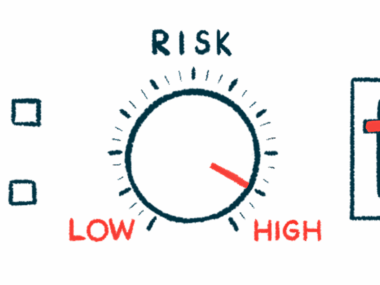
Dementia risk nearly fivefold higher for people with multiple sclerosis: Study
Aubagio also found to reduce chances of developing Alzheimer's disease
Written by |

Two hands embrace the hand of a woman whose face is partially obscured.
- Multiple sclerosis patients face a nearly fivefold higher dementia risk than those without MS.
- Disease-modifying therapies reduce neurodegenerative dementia risk.
- Aubagio specifically lowers Alzheimer's disease risk in MS patients.
People with multiple sclerosis (MS) have a nearly fivefold increased risk of developing dementia compared with those without the disease, according to a real-world study in Taiwan.
Treatment with disease-modifying therapies significantly reduced the risk for neurodegenerative dementias, or dementias associated with the loss of brain cells, the study found. Additionally, the use of Aubagio (teriflunomide) specifically reduced the risk for Alzheimer’s disease, the most common type of neurodegenerative dementia.
According to researchers, these results indicate that “MS is an independent and potent risk factor for dementia in the Taiwanese population,” and highlight the importance of monitoring cognitive skills as early as possible, carefully managing any other existing health conditions, and using the most appropriate medications in the most effective way.
The study, “Multiple sclerosis and the risk of dementia: a real-world, nationwide cohort study,” was published in Frontiers in Neurology.

Researchers used data from health insurance database
In MS, the immune system mistakenly attacks the myelin sheath, a protective coating around nerve fibers that ensures the efficient transmission of nerve signals. The loss of myelin leads to MS symptoms, including difficulty moving and cognitive changes.
People with MS may also have a higher risk of developing dementia than the general population. Dementia is a group of cognitive symptoms that include memory loss, confusion, and declining reasoning skills.
In this study, researchers in Taiwan investigated the risk of dementia in people with MS, using data from Taiwan’s National Health Insurance Research Database. The study included 10,525 people with MS, as well as 31,575 people without MS matched for age, sex, number of visits to medical facilities, and coexisting conditions who served as a control group.
Most participants with MS were women (80.3%), and had a mean age of 41.2. MS patients had higher rates of cerebrovascular disease, rheumatologic disease, high blood pressure, high blood fats, and other autoimmune diseases, such as lupus and rheumatoid arthritis, than controls. They also more frequently had paralysis on one side of the body (hemiplegia) or the legs (paraplegia).

Risk for several types of dementia elevated in MS patients
Dementia was diagnosed in 71 MS patients (0.67%) and 99 controls (0.31%), corresponding to a cumulative incidence of dementia that was significantly higher among people with MS: 739.97 versus 343.95 per 100,000 person-years. This means that for every 100,000 people with MS followed for one year, about 740 would develop dementia.
Further analysis indicated that individuals with MS had about a fivefold higher risk of dementia compared to those without MS. The risk remained significant after adjusting for patients’ age, sex, education level, insurance premiums, coexisting conditions, and place of living.
The risk was elevated for several types of dementia, including Alzheimer’s disease and other neurodegenerative dementias, and persisted after excluding patients in whom dementia was diagnosed within the first year and the first five years of follow-up.
This study confirmed that the individuals with MS had a nearly five-fold increased risk of developing dementia as compared to those without MS, which should alert physicians to be more attentive to the risk of dementia following MS.
Overall, treatment with disease-modifying therapies reduced by almost half the risk of developing other neurodegenerative dementias, while treatment with Aubagio reduced the risk for Alzheimer’s disease by 31%.
“This study confirmed that the individuals with MS had a nearly five-fold increased risk of developing dementia as compared to those without MS, which should alert physicians to be more attentive to the risk of dementia following MS,” the researchers wrote.
The mechanisms by which MS may increase the risk of dementia may include demyelination and disruption of cognitive pathways in certain brain regions, neuroinflammation, or the presence of coexisting vascular conditions that may reduce the blood flow to the brain and cause vascular dementia.
“Recent systematic reviews and large-scale data from the [U.S.] reinforced our findings, showing that MS patients are at persistently increased risk for both early- and late-onset dementia even after adjusting for comorbidities, healthcare access, and demographic factors,” the researchers added.