Author Brenda Snow on MS, self-advocacy, and social support
After fighting for her own diagnosis, Snow now helps other patients
Written by |
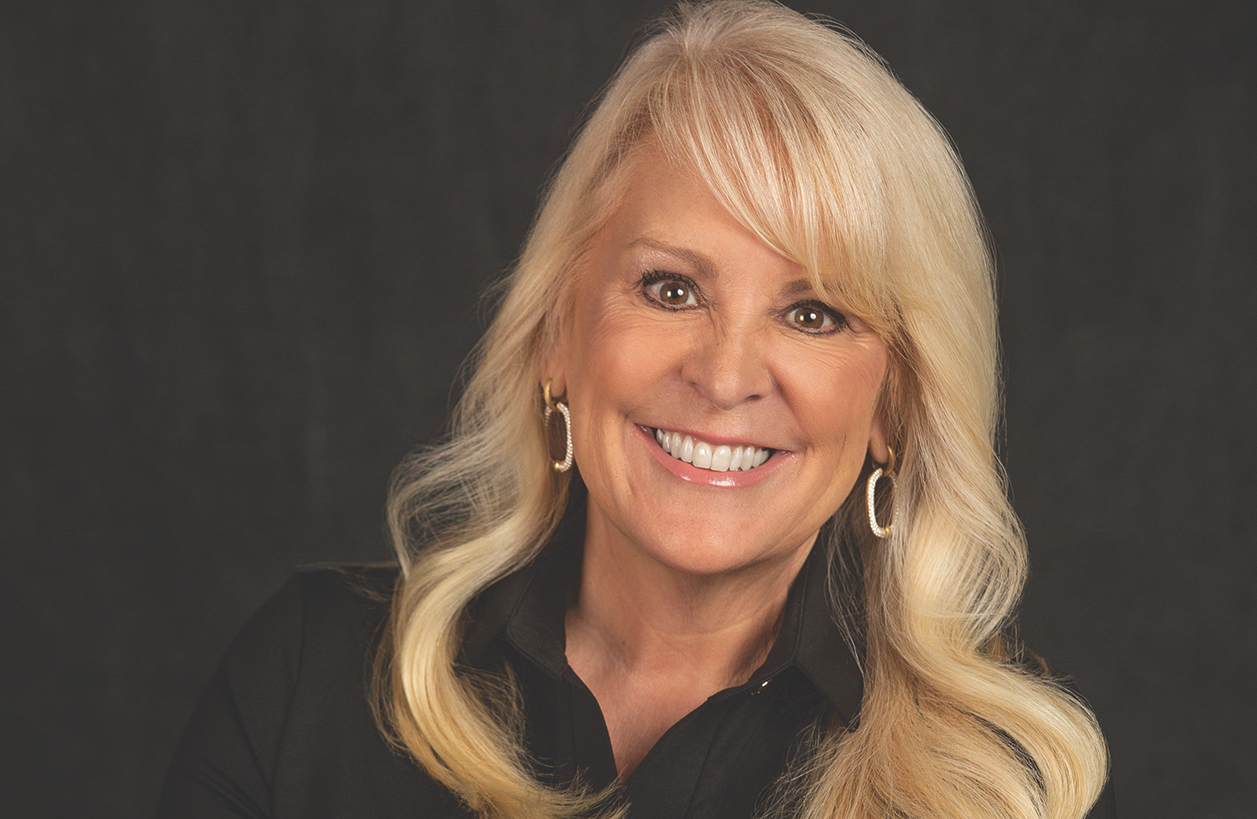
Through her book, author Brenda Snow aims to provide a road map for others with MS. (Courtesy of Brenda Snow)
When Brenda Snow started experiencing vertigo, vision problems, and other symptoms in the early 1990s, she visited several doctors. However, as often happens with complex conditions, she struggled to have her concerns validated.
Snow, who lived in Northern California at the time, didn’t give up. She continued looking for answers and was soon diagnosed with multiple sclerosis (MS).
As she navigated her life with the disease, she noticed a disconnect between patients and the pharmaceutical industry. She decided to found the patient engagement agency Snow Companies, which aims to bridge the gap and now employs more than 420 people.
She has also published a book, “Diagnosed: The Essential Guide to Navigating the Patient’s Journey,” to provide a road map for others with MS.
The road to MS diagnosis
After Snow began seeking diagnosis and treatment for her symptoms, one doctor concluded that she was “just a stressed-out single mom.” Another ascribed her bladder problems to the fact that she had had a child, even though her delivery was by cesarean.
These explanations didn’t make sense to Snow, who persevered in her quest for an accurate diagnosis.
Her lowest point came when she encountered a neurologist who implied she had psychological problems and suggested that she see a psychiatrist. “Of course, I blurted out two words,” Snow says. “The first one starts with an ‘F,’ and the second one’s a ‘you.’”
The neurologist also asked her father, who accompanied Snow to the appointment, a series of disturbing questions: whether she might hurt herself, whether she’d jump off the Golden Gate Bridge with her daughter, and whether the family owned a firearm.
“And, you know, inside of me, I was welling up like, ‘Oh, he thinks I’m crazy,’” she recalls.
Through her subsequent conversations with many other MS patients, Snow has found her experience was far from uncommon. “It’s changed a little bit in maybe the last decade, but that’s not that unusual,” Snow says.
That unfortunate visit filled her with momentary self-doubt, but her love for her daughter propelled her to keep going. “I thought, ‘I have to fight for her,’” she says.
She went to one last neurologist, who diagnosed her with MS. “[She] gently put her hand on my shoulder and said, ‘Ms. Snow, you’re not crazy, but you are very sick.’”
Bringing the patient perspective
A crucial point in Snow’s journey came when she was prescribed a new treatment that required self-injection. Snow, who had issues with vision and dexterity, found the equipment extremely difficult to use.
In what she calls a “light bulb moment,” she wondered whether the manufacturer had ever spoken to anyone with MS. She asked her father to drive to the pharmaceutical company that made the drug. There she met with a representative who was very receptive to her feedback and introduced her to other people at the company.
Meanwhile, Snow volunteered with MS organizations and traveled nationwide to share her story with other patients.
“I wanted other people to try to find the pot of gold at the end of the rainbow of a crappy diagnosis,” she says. “I wanted people to know that life wasn’t over, that there were things to hold on to, to be positive about.”
Whenever she was done talking, a line of people would form to chat with her. These experiences made her realize the power of the patient perspective and the patient-to-patient connection.
So, in 2001, she founded Snow Companies, now a global company, based in Williamsburg, Virginia, that has done campaigns for disease awareness, storytelling, and education in the United States and many other countries, including Australia, Canada, China, Japan, and Taiwan.
Sharing wisdom and advice
Looking back on her path, Snow underscores the value of self-advocacy and social support.
“You have to be your own best advocate, and if you don’t have the energy to do it, you need somebody standing by your side willing to be your voice and fight for you and advocate for you,” she says.
Despite the initial struggles, she was diagnosed in just four months, which she attributes to her loved ones’ determination to help her. “My family was like a dog to a bone,” she says.
Snow has also built a more extensive support network through her work and connections in the MS community. She often provides and receives support via phone and group chat.
She stresses that maintaining a support system takes work.
“It’s just like a garden,” she says. “[If] you don’t go water the tomatoes, you’re not going to have a wonderful harvest, are you?”
Finally, she encourages others with MS not to give up on themselves despite the challenges.
“You’re worth a life of love and experiences and to be able to still have joy,” she says. “And ultimately, like I say in the book, you’re not alone.”