
Overly strong immune response to virus causing mono may help drive MS
In MS patients, specific immune cells are overreactive to EBV, study finds
Written by |
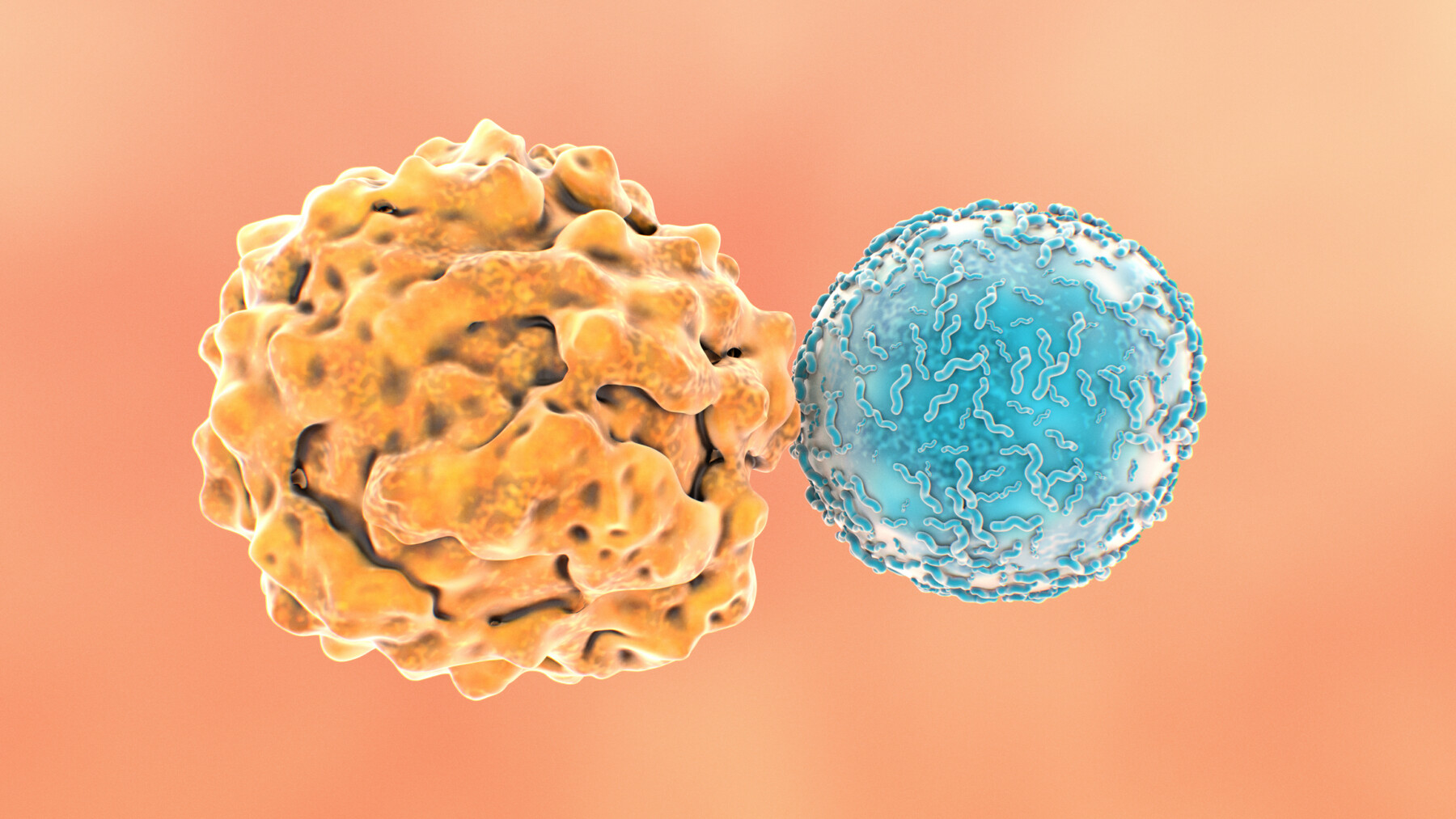
An overactive immune cell response to the Epstein-Barr virus may be a driver of MS, according to a new study. (Image from iStock)
- An overactive immune response to the Epstein-Barr virus may help drive multiple sclerosis, according to a new study.
- Known as EBV, that virus is best known for causing the so-called kissing disease, mononucleosis.
- The findings suggest that targeting EBV with antivirals, vaccines, or cell-specific therapies may be a new strategy for treating MS.
In people with multiple sclerosis (MS), an overactive immune response to the Epstein-Barr virus (EBV) — most famous as the cause of the so-called kissing disease mono — may be a driver of the neurological condition, a new study suggests.
Researchers found that a specific type of immune cell, called CD4-positive (CD4+) T-cells, reacts much more strongly to EBV in people with MS than in those without the disease. The findings suggest these cells could serve as biomarkers of disease activity, and, according to the scientists, also strengthen the rationale for developing treatments that target EBV for people with MS.
“Our results establish preferential CD4+ T cell reactivity to EBV … as a key feature of MS,” the researchers wrote, adding that this research provides “a framework for developing EBV-targeted therapies, including vaccines and antivirals.”
The study, “CD4+ T cells reactive to Epstein-Barr virus late lytic antigens are enriched in individuals with multiple sclerosis,” was published in the journal Science Translational Medicine. Funding for the work came from the National Institutes of Health, the National Multiple Sclerosis Society, and the European Union’s Horizon Europe Research and Innovation Actions.

EBV causes infectious mononucleosis, colloquially called mono, a virus that’s spread through saliva and is characterized by extreme fatigue, a severe sore throat, fever, and swollen lymph nodes.
The virus also often causes nonspecific childhood illnesses, however. And, in fact, the vast majority of people have been infected with EBV by the time they reach adulthood, research shows.
Large body of evidence already links Epstein-Barr virus and MS
A large body of data suggests that EBV infection is a key risk factor for MS. Further, there’s evidence that MS can only develop in people who have been infected with EBV.
However, exactly how EBV infection might lead to MS remains a mystery, and it’s also unclear why MS affects only a small percentage of the population, even though almost everyone has been infected with EBV.
One idea for how EBV might trigger MS is that, in some people, the immune system’s response against the virus might inadvertently set the stage for the inflammatory attack on the nervous system that drives MS. In this study, researchers sought to better understand how different types of immune cells in MS patients respond to EBV viral particles, and they found key differences in the activity of CD4+ T-cells.
CD4+ T-cells act as the immune system’s field commanders: When they detect a threat, they secrete signaling molecules that marshal other types of immune cells to go on the offensive. The researchers found that CD4+ T-cells from MS patients respond about twice as strongly to EBV, compared with CD4+ T-cells from people who don’t have MS. Still, for other closely related viruses, CD4+ T-cells from MS patients responded similarly to cells from people without the disease.
When EBV is in the body, the virus specifically infects immune cells called B-cells. A class of MS treatments called anti-CD20 therapies works to reduce levels of B-cells in the body. Through tests in dozens of patients, the researchers found that when people with MS started anti-CD20 treatment, the therapy didn’t only reduce levels of B-cells — it also lowered the number of EBV-reactive CD4+ T-cells by more than twofold. Treatment also reduced levels of EBV viral particles detectable in patients’ saliva.
Together, the findings suggest that one of the key ways anti-CD20 therapies protect against MS is by reducing the amount of EBV in the body — meaning there’s less virus for overreactive CD4+ T-cells to respond to. The researchers said this supports the idea that directly targeting EBV, with antiviral drugs or vaccines, could represent another therapeutic strategy for MS.
“That shows the importance of both of these groups of immune cells in driving disease, and how we can moderate that with immunotherapies to potentially reduce disease severity,” Emily Edwards, PhD, coauthor of the study at Monash University in Australia, said in a press release detailing the research.

Findings could lead to new treatment strategies for MS
The scientists said these findings could have important implications for how MS is treated.
For example, depleting CD4+ T-cells may be a useful strategy for MS treatment, the study suggests. And in fact, an experimental therapy designed to do just that, called frexalimab, has shown promise in clinical testing.
Going after the [disease’s] trigger may be a direction worth exploring.
The data also suggest that the biological mechanisms that govern MS may be in some ways similar to those that drive celiac disease, an immune disorder in which CD4+ T-cells respond abnormally to gluten, a protein found in wheat.
“If MS works in a similar way, going after the trigger may be a direction worth exploring,” said Natalia Drosu, MD, PhD, coauthor of the study at the Massachusetts General Hospital in Boston.
The researchers note, however, that even if MS and celiac disease share similar underlying biology, treatment of MS will likely be more complex. That’s because EBV infects the body’s cells while gluten is a component of a person’s diet.
“It’s not something you’re ingesting, so you have to have a lot more active intervention to remove the antigen,” Edwards said. Antigen is the technical term for a molecule that stimulates an immune response.
The researchers further speculated that EBV-reactive CD4+ T-cells could also become useful biomarkers for monitoring disease activity or measuring how well therapies are working. The team cautioned, however, that additional studies are needed to determine whether these cells can be reliably used in clinical practice.




Laura Lee Loeppky
I had mono when I was a child that kept me in the ICU for 2 week. My tonsils were so big they closed my throat completely. They removed my tonsil shortly after.
Thank you for sharing this information.
Andrea Pritchard pritchard
I’ve had ms since 2002 and I never felt better when I had the antivirals when I caught covid …
Karen Heath
Any help for the family elder ms patient. Damage respiratory muscle walking is lost bladder has been removed so ai have an urostomy. My ability top y. I’m feeling tired a lot
I’m in a skilled nursing home
And they are taking good care of me
Just to know thanks for taking the time and read this. Karen Heath MD.
ksuedoc@gmail . Com
Carole Ford
I had severe "mono" case at age 14. Missed six weeks of school in total. Hospitalized twice. Throat was so bad my tonsils "rotted' out hence I haven't had tonsils since then even though I've never had a tonsillectomy. MS symptoms began at age 31 with diagnosis at age 32. It took 6+ months for me to recover completely from the "mono"