Starting at age 8, MS has been the invisible illness invading my life
Written by |
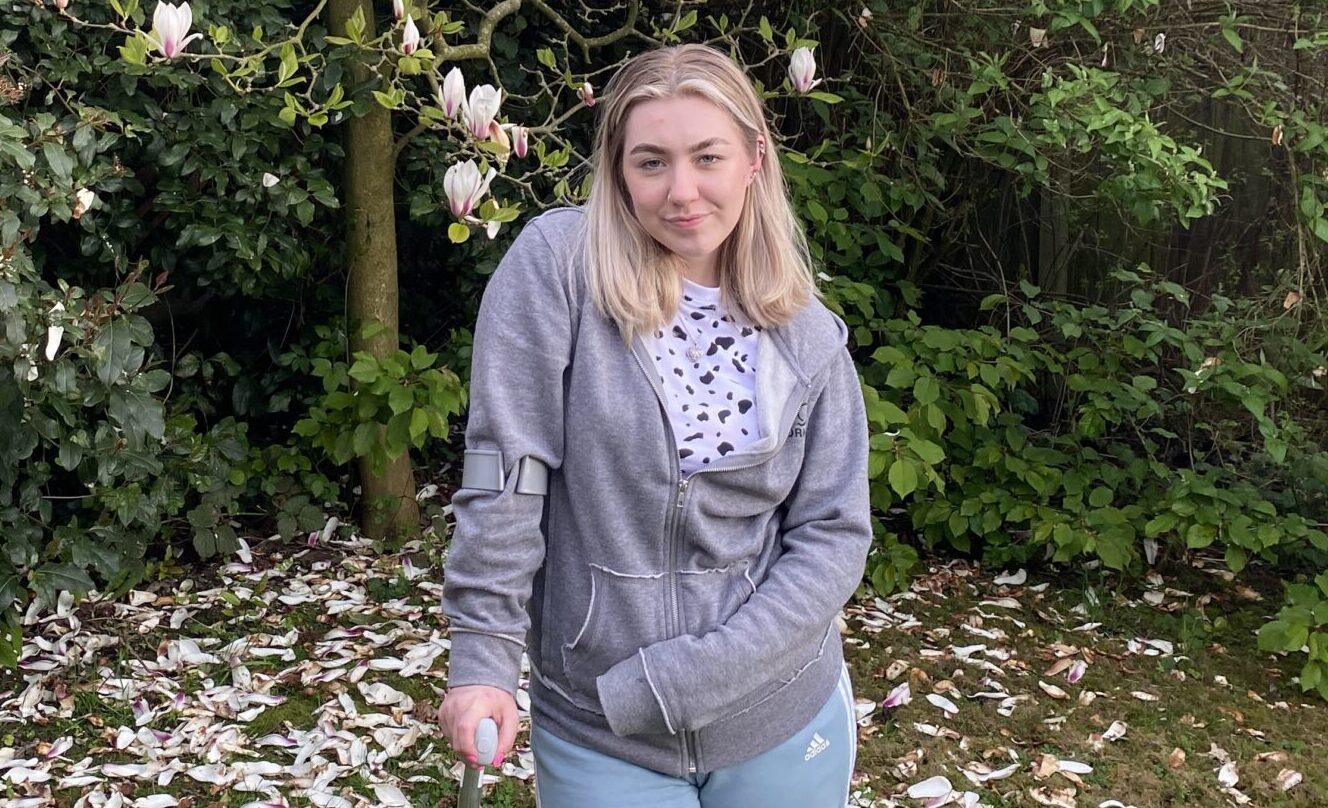
Hannah Campbell is pictured in her garden at her home in England. (Courtesy of Hannah Campbell)
In recognition of Multiple Sclerosis Awareness Month in March, the MS Awareness Month campaign features a series of stories highlighting the real-life experiences of people affected by MS, written in their own words. Follow us on Facebook, Instagram, X, and Pinterest for more stories like this, using the hashtag #MSAwarenessMonth, or read the full series.
I was diagnosed with multiple sclerosis (MS) in 2018, when I was 17. I had been having symptoms of MS since age 8, but getting diagnosed with MS was a complete surprise. It did, however, make a lot of things I had gone through make sense. I lost a lot of my childhood to MS.
I went through a lot of phases after being diagnosed, and it had a big impact on both my family and me.
The first phase was denial. I guess that’s how I felt I could deal with it all. I convinced myself and tried to convince my family that the scans weren’t mine and that the hospital had gotten it wrong. I didn’t even want to hear the words multiple sclerosis. I didn’t want to talk about it. I shut it out completely.
But later, I went through a different phase: anger and sadness. I was always thinking, “Why me?” I felt like my future was over, that all my plans didn’t matter anymore. I went to a really dark place, one I seem to still be in.
I lost so many friends, through a lack of understanding and because I couldn’t be a typical teenager because of how I felt, both physically and mentally. I had to grow up faster than everyone else my age.
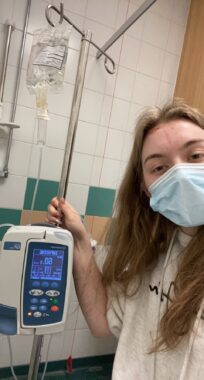
Campbell is seen in the hospital receiving an infusion.
MS is predictably unpredictable, and I think that’s one of the hardest things that you have to come to terms with. I constantly fear waking up and not being able to see or waking up paralyzed. I know something else is going to happen. It’s just a matter of when.
That’s not what any teenager should have to experience.
My mental health has been all over the place these past seven years, constantly up and down. I had to try not to think of myself as someone who “suffers” from MS, just as someone who has MS.
MS continues to invade my life. I’m still figuring it out and dealing with both my physical and mental health. Having been a child with an invisible disability, I’ve dealt with a lot of prejudice and situations where people think I’m more able than I am.
I’m constantly dumbfounded that in the era we’re in, people are still so ignorant of invisible illnesses. It’s hard because when people don’t know I have MS, they can’t see anything wrong and think I’m perfectly able and healthy. But MS cripples me.
I’m so fatigued all the time. I’m in pain all the time. I struggle with other symptoms daily, a lot of them invisible, too.
Because I was diagnosed as a child, I have experienced so many ignorant comments: “But you look fine.” Or “How can someone so young be so ill?” I never know how to respond.
We’re in an era where invisible illnesses are being recognized more, so you’d expect better, but the battle continues.