Climbing mountains when you have MS is easier with good support
Written by |
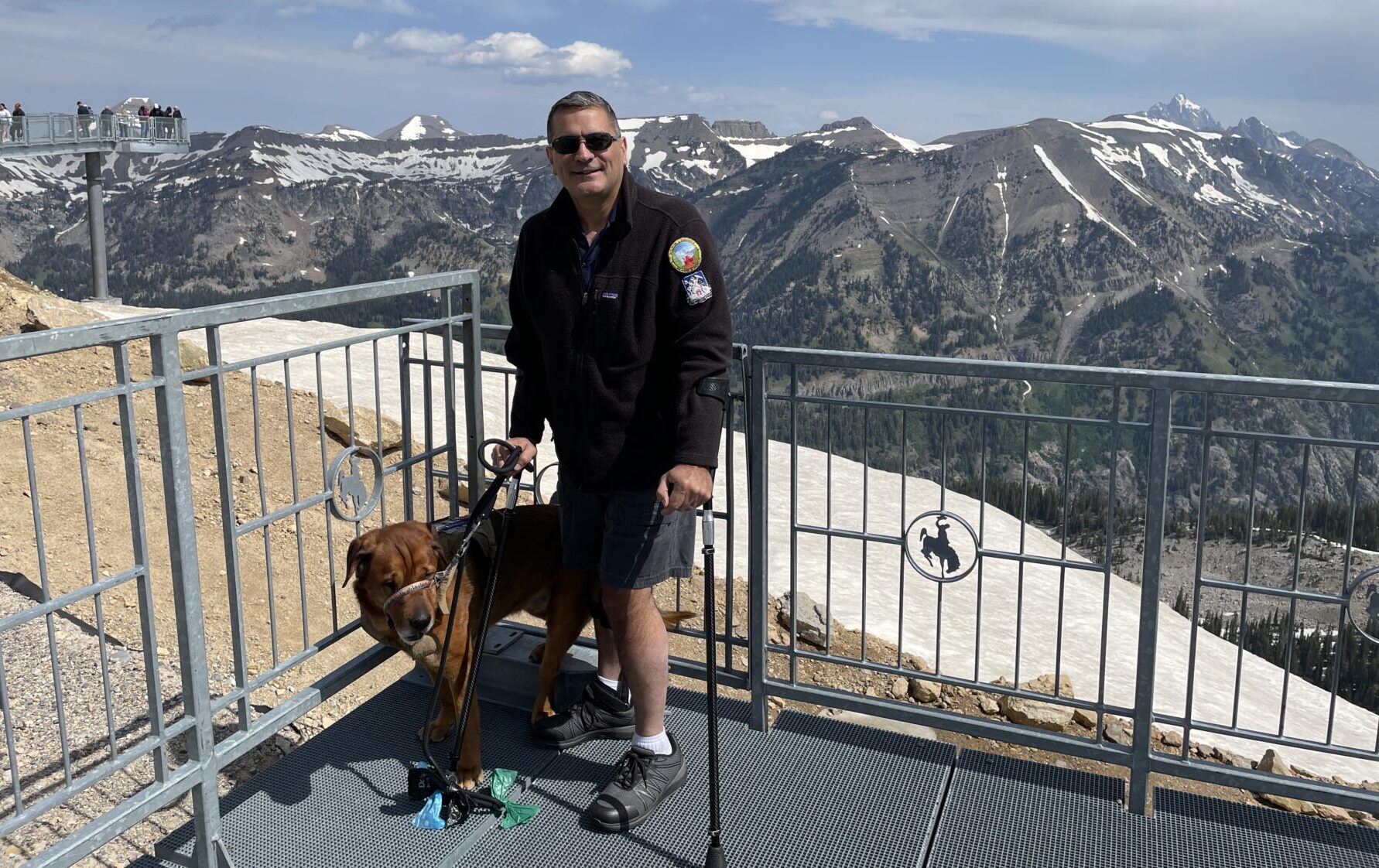
Izzy Abbass and his dog Arkasha are pictured at the gondola's top point in Grand Teton National Park. (Photos courtesy of Izzy Abbass)
In recognition of Multiple Sclerosis Awareness Month in March, the MS Awareness Month campaign features a series of stories highlighting the real-life experiences of people affected by MS, written in their own words. Follow us on Facebook, Instagram, X, and Pinterest for more stories like this, using the hashtag #MSAwarenessMonth, or read the full series.
Having grown up in Colorado, the mountains have always been part of my life. They are not just scenery to me — they are my home, my grounding, and a huge part of my identity. After my diagnosis with primary progressive multiple sclerosis, one of my quiet uncertainties was whether that relationship with the mountains could continue in any meaningful way.
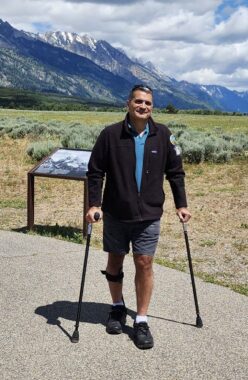
Abbass walks with forearm canes while on an adaptive adventure, with Grand Teton National Park in the background.
I shouldn’t have worried.
In June, my wife and I had the privilege of taking part in the inaugural Adaptive Adventure program organized by the Paralyzed Veterans of America sports and recreation team. Alongside eight other PVA members, we spent a remarkable week in the Teton Mountains, supported at every step by the outstanding staff at Teton Adaptive. For those of us living with MS, opportunities like this go far beyond recreation. They remind us that we can still do what we love.
For people with MS, outdoor recreation often comes with additional layers of planning, concern, and uncertainty. Fatigue, mobility limitations, heat sensitivity, and balance issues can all provide real obstacles to what should be simple activities. Having grown up hiking, backpacking, and even having been on a mountain rescue team, I sadly had apprehension as we embarked on this trip. I knew what I used to be able to do. I wasn’t sure how my MS was going to affect me in an environment that is in my soul, my home.
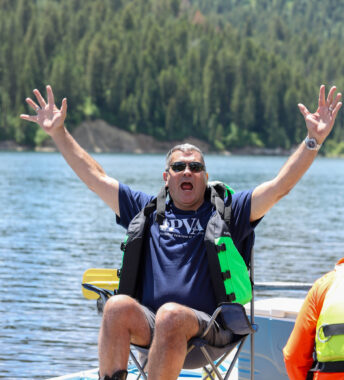
Abbass, with arms outstretched, shows his love of kayaking.
What made this program exceptional was how seamlessly those realities were addressed. Adaptive equipment, knowledgeable staff, and a culture of encouragement allowed participants to focus less on limitations and more on the experience itself. The result was not just physical activity, but confidence-building moments that carried well beyond the trails and waterways.
The week concluded on Thursday evening around a campfire — burgers and hot dogs on the grill, s’mores in hand, and plenty of shared stories and laughter. It was a fitting close to a week that fostered connection as much as adventure. For many of us, living with multiple sclerosis can feel isolating at times. Being surrounded by others who understand that reality, without needing explanation, is powerful in its own right.
And honestly, words only go so far. In this case, the photos tell the story better than I ever could.