Learning to advocate for myself helped me to help others with MS
Written by |
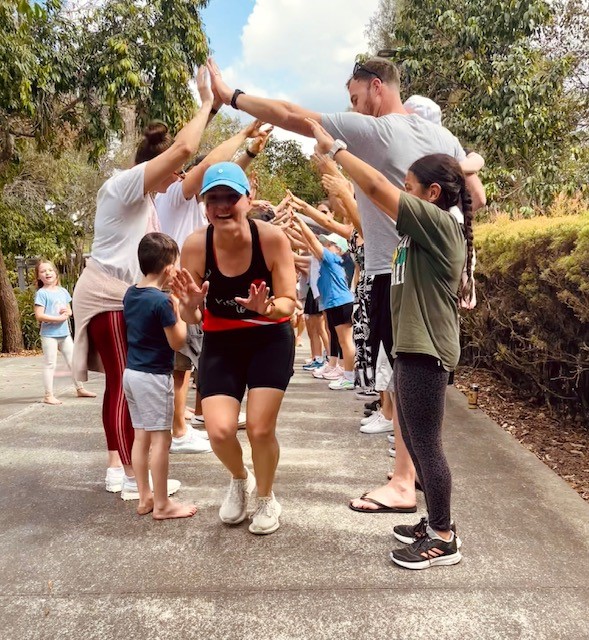
Keturah Henriquez raises her hands as she emerges from a human tunnel made by friends and family after she completed a 50K fun run. Her daughter Emmi is seen at left. (Photos courtesy of Keturah Henriquez)
In recognition of Multiple Sclerosis Awareness Month in March, the MS Awareness Month campaign features a series of stories highlighting the real-life experiences of people affected by MS, written in their own words. Follow us on Facebook, Instagram, X, and Pinterest for more stories like this, using the hashtag #MSAwarenessMonth, or read the full series.
My name is Keturah. I’m a mother of two girls, with two dogs, one cat, and a very supportive husband. I’m from Queensland, Australia, and was diagnosed with multiple sclerosis in November 2023, just months after turning 40. I’ve completed two rounds of my disease-modifying therapy (DMT). I’m now undergoing my annual assessment, hoping to avoid further treatment this year by staying active and making positive lifestyle choices.
My diagnosis wasn’t straightforward; I wasn’t diagnosed with MS straight away. I had been pregnant and was told that our third baby girl wasn’t going to survive earthside, so I had to make the decision to terminate the pregnancy.
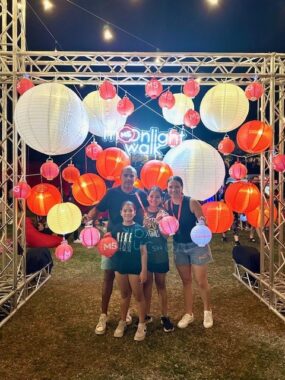
From left, Henriquez’s husband, Luis, and daughters Emmi and Zaria pose for a photo with her at an MS Moonlight Walk fundraiser.
My body soon began to break down. Pain developed in my left eye, but despite seeing three optometrists, I was told it was likely just a scratch. I went back to my doctor, who sent me for a CT scan and suggested seeing a psychologist, assuming my symptoms were linked to the loss of our baby. The scan showed nothing, and afterward, I started to get pins and needles in my left arm. These were dismissed as a misplaced contrast port from the scan.
As my vision worsened and my anxiety grew, I finally saw a neurologist. An MRI revealed optic neuritis in my left eye, but I still wasn’t diagnosed with MS. I spent months advocating for myself, knowing something was wrong even as others assumed it was grief and stress.
Three years later, everything flared again. My vision never fully recovered, and this time I experienced imbalance and intense brain fog. I was initially told to try vertigo exercises, but I knew it wasn’t vertigo. Six weeks later, still unwell, I pushed for answers. I didn’t realize recurrent optic neuritis greatly increases MS risk, but another MRI showed lesions and confirmed the diagnosis. Despite friends and family chalking it up to vertigo or aging, I trusted my instincts.
As strange as it sounds, I felt relieved. It wasn’t “all in my head.” But after that initial relief came fear — fear of what my future would look like. I’m active, I help support my family, and the idea of losing that was terrifying.
So, I chose to face MS by listening to my body and doing everything I can while I can. I’d always dreamed of running a marathon, and last year I made it happen. I also completed a 50km (31 miles) run, raising more than $5,000 for “Kiss Goodbye to MS.” I joined the MS Moonlight Walk two years in a row, also raising money for MS Queensland. I have a dream to be the first person with MS to complete the Great World Race of 7 Marathons in 7 Days across 7 Continents. My belief is simple: As long as my body lets me move, I will keep moving, and I’ll give back to a community none of us choose, but many of us rely on.
Social media has also connected me with others living with chronic illness, people who truly understand and continue to stay positive through adversity. By sharing my story, I want others to see that an MS diagnosis isn’t the end. With the right mindset, there is still so much life to live.