Multiple sclerosis diet: Foods to eat and avoid
 Fact-checked by
 No single diet is recommended for everyone with multiple sclerosis (MS). However, it is generally recommended that patients follow a varied, well-balanced eating pattern, similar to what is recommended for the general population.
In MS, the immune system mistakenly attacks the brain and spinal cord, causing inflammation and damage to nerve cells. While no diet can cure MS or replace disease-modifying therapies, some eating habits may help ease symptoms or slow disease progression.
People with MS should work with their healthcare team to develop an MS nutrition plan that fits their needs, preferences, budget, and cultural traditions.
Does diet affect MS?
Diet affects many areas of health, and can influence factors central to MS, such as immune function and brain health. What a person eats can also alter the activity of microbes that reside in the digestive tract, and certain substances produced by these microbes can impact inflammation and brain activity in ways that influence MS.
Diet alone can’t treat MS, but a balanced eating pattern that meets all nutritional needs may help people manage symptoms and support overall wellness.
Specifically, a good diet can help in:
- reducing the likelihood of disease relapses or flare-ups
- slowing disability progression over time
- improving both physical and mental health-related quality of life
- managing MS symptoms, including bladder and bowel problems, fatigue, pain, and emotional challenges
What nutrients should an MS-friendly diet include?
Healthy eating for MS involves a balanced diet that provides all the necessary nutrients that help the body function at its best. Components of a healthy diet generally include:
- carbohydrates, for energy
- proteins, for growth and tissue repair
- fats, for energy and nutrient absorption
- fiber, for digestion
- vitamins and minerals, to help with various bodily functions
Some specific MS-friendly nutrients include:
- vitamin B12, which is essential for making myelin, the fatty coating around nerve fibers that is damaged in MS, and whose deficiency can cause symptoms that mimic those of MS
- vitamin D, whose deficiency has been linked to an increased risk of MS and more severe disease activity
- calcium, a mineral needed to maintain healthy bones, the supplementation of which may help MS patients with a higher risk of bone problems
- essential fatty acids (EFAs), a class of polyunsaturated fats including omega-3 fatty acids and omega-6 fatty acids that may support nerve health and control inflammation
- antioxidants, including vitamins A, C, E, as well as compounds such as flavonoids and beta-carotenes, which help combat a type of cell damage that contributes to MS inflammation
Foods to eat with MS
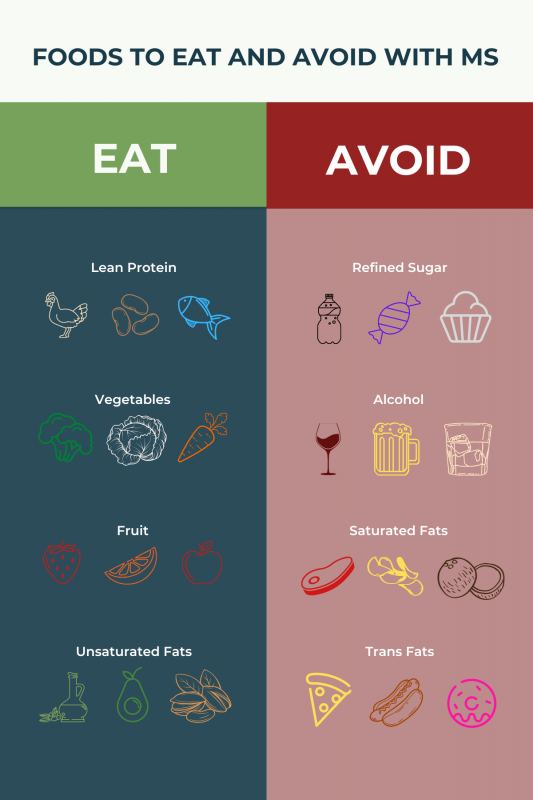
People with MS benefit from a balanced diet that provides key nutrients and supports immune and brain health. Foods commonly recommended for an MS-friendly diet include:
- Fruits and vegetables, a good source of carbohydrates, vitamins, minerals, antioxidants, and fiber
- Whole grains, such as whole wheat, oats, brown rice, quinoa, barley, and corn, which are good sources of complex carbohydrates and fiber
- Lean protein, including skinless poultry, fish, and plant-based options such as beans, peas, lentils, and tofu. These are a good way to get protein with fewer unhealthy fats.
- Unsaturated fats, especially polyunsaturated fats such as omega-3 fatty acids. These include oily fish such as salmon and mackerel, as well as walnuts, flaxseed, and soybeans. Monounsaturated fats — found in avocados, nuts, and vegetable oils — are also considered heart-healthy.
- Water, which supports hydration and bladder function in MS
Research suggests that these food groups are associated with lower disease activity, slower disability progression, and a better quality of life in some people with MS.
Foods to avoid with MS
Some foods may increase inflammation and have been linked to worse symptoms or faster disease progression in MS. Common foods to limit include:
- Saturated fats, found in fatty cuts of meat, processed meats, butter, whole milk, high-fat cheese, pastries, and some plant-based foods such as coconut and palm oils. High saturated fat intake in MS has been associated with more inflammation and potentially worse outcomes.
- Trans fats, found in fried foods, commercial baked goods, margarine, shortening, and many processed snacks. These fats can promote inflammation and negatively affect heart health.
- Refined sugar, found in sweets, sugary drinks, cookies, cakes, and many processed foods. A high-sugar diet may increase MS inflammation and also raise the risk of diabetes and heart disease, which can worsen MS outcomes.
- Alcohol, which can worsen MS symptoms such as balance and coordination issues, fatigue, and bladder problems. Alcohol can also interact with medications used to manage MS.
Many of these foods can cause health problems in anyone, but people with MS may be more sensitive to their inflammatory effects. Cutting back may support overall health and may help manage MS symptoms or disease activity.
More research needed
The relationship between certain foods and MS is still not well understood. Research results often conflict or are too limited to make strong MS-specific recommendations. Dietary components where more research is needed include:
-
Dairy: Some studies suggest dairy proteins might influence inflammation, while others show no clear link to relapse risk or progression. Recent research has not found a consistent connection between dairy intake and worse MS outcomes.
-
Salt: High-salt diets have been proposed to worsen immune responses and disease severity in animal models of MS, but human results are mixed. Larger, better-controlled trials are needed to determine whether salt intake has a meaningful effect on MS disease activity.
-
Gluten: While gluten-free diets are popular among some people with MS, there is little evidence that gluten affects inflammation or symptoms. Current research does not show a clear link between gluten and increased relapse risk or disability progression.
Special diets for MS
While there is no single MS diet, several special diets for MS have been developed. These diets aim to support overall health, reduce inflammation, and limit foods that might worsen symptoms.
However, it’s still unclear whether these diets provide real benefits, because large, well-controlled studies are still needed to assess the impact of diet on MS relapse risk and progression.
Many of these anti-inflammatory diets for MS are restrictive, which can make it harder to get all the needed nutrients. People with MS should work with their healthcare team before starting any new diet to ensure they get balanced, adequate nutrition.
Best Bet diet
The Best Bet diet is based on the idea that certain food proteins can escape a leaky gut and trigger harmful immune responses. As a result, it eliminates all foods believed to resemble the structure of myelin.
It consists mainly of fish, lean meats, fruits, vegetables, olive oil, and certain supplements. It excludes dairy, gluten-containing grains, legumes, refined sugars, eggs, and yeast, and limits certain fats, salt, and alcohol.
Although anecdotal reports suggest its effectiveness in MS, no clinical trials have proven that the diet can improve outcomes.
Intermittent fasting and calorie-restricted diets
Calorie-restrictive diets limit how much a person eats. Intermittent fasting for MS is a type of calorie restriction where eating is limited or paused at certain hours or days, and normal eating resumes during the remaining times.
Research suggests these diets may help reduce inflammation, offer some neuroprotective benefits, and support mental health. However, they may also negatively affect bone and menstrual health.
Ketogenic diet
A ketogenic diet is very low in carbohydrates and high in fats, encouraging the body to use fat for energy instead of sugar. It is believed to reduce neuroinflammation and exhibit neuroprotective properties.
A few small studies suggest the keto diet may ease fatigue and depression, improve physical function, and boost quality of life in people with MS. However, the diet may also have negative effects, such as vitamin deficiencies or digestive issues.
McDougall diet
The McDougall diet is a low-fat, plant-based eating plan rich in complex carbohydrates, whole grains, fruits, and vegetables. It eliminates meat, dairy, oils, and all other animal-derived foods, and only allows small amounts of sugar and salt.
Some research suggests it may help ease fatigue in MS patients, but as with any vegan diet, nutritional deficiencies are possible.
Mediterranean diet
The Mediterranean diet is based on foods commonly eaten in cultures surrounding the Mediterranean Sea. It includes plenty of fruits and vegetables, whole grains, and olive oil, and recommends a moderate amount of low-fat dairy products, fish, poultry, and red wine. Only limited amounts of red meat, sweets, and animal fats are included.
Some small studies suggest this diet may help reduce the impact of MS symptoms and improve quality of life.
Overcoming MS diet
The Overcoming MS diet is a plant-based approach that also includes fish and seafood, while cutting out processed foods, meat, dairy, and saturated fat intake in MS. The diet typically includes daily supplements of flaxseed oil or fish oil and is part of a lifestyle program that also includes meditation and regular exercise.
Evidence suggests this diet and lifestyle program may be linked to better mental and physical quality of life.
Paleo diet and the Wahls protocol
The paleolithic or Paleo diet focuses on foods thought to be similar to what early humans ate before the advent of farming. It includes meats, fish, nuts, fruits, and vegetables, while excluding processed foods, grains, legumes, dairy, and eggs.
The Wahls protocol is a lifestyle intervention that combines a Paleo-inspired diet with vitamins, meditation, and exercise.
There is some evidence that a Paleo or Wahls diet can help to ease fatigue and improve quality of life in people with MS, but calcium and vitamin B12 deficiencies can occur.
Swank diet
The Swank diet strictly limits fat intake, as well as processed foods, oily fish, and red meat. It encourages whole grains, fruits, vegetables, lean proteins, and low-fat dairy, while also recommending cod liver oil and multivitamin supplements.
Available data suggest the Swank diet has potential for reducing fatigue and depression, improving cognition, and boosting quality of life.
Multiple Sclerosis News Today is strictly a news and information website about the disease. It does not provide medical advice, diagnosis, or treatment. This content is not intended to be a substitute for professional medical advice, diagnosis, or treatment. Always seek the advice of your physician or other qualified health provider with any questions you may have regarding a medical condition. Never disregard professional medical advice or delay in seeking it because of something you have read on this website.