
Stem cell transplant pauses MS activity for most patients for at least 2 years
Real-world study: Strongest benefits seen in patients with relapsing-remitting MS
Written by |
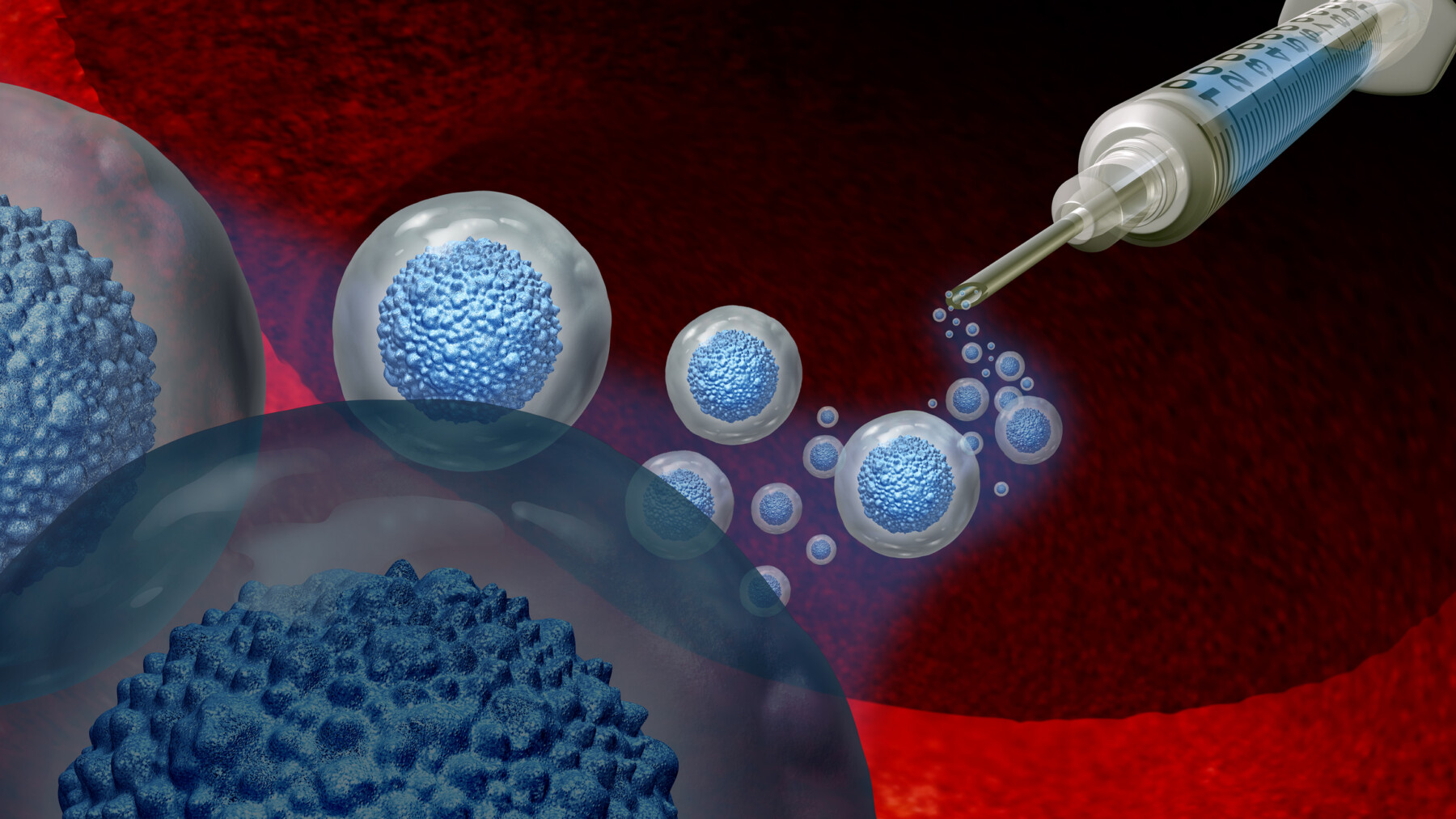
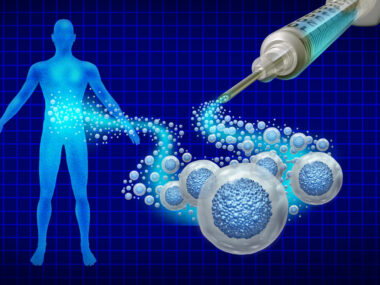
A 3D illustration of stem cell transplant show cells coming out of a syringe against a red backdrop. (Photo by iStock)
- Autologous stem cell transplant (AHSCT) paused multiple sclerosis activity for over 80% of patients for at least two years.
- AHSCT benefits were strongest for relapsing-remitting MS, particularly in younger patients with active disease.
- Patients meeting specific criteria showed higher success rates in achieving no evidence of disease activity.
An autologous hematopoietic stem cell transplant (aHSCT) helped over 80% of people with multiple sclerosis (MS) remain free from disease activity for at least two years, a real-world study in Germany found.
The strongest benefits were seen in people with relapsing-remitting MS (RRMS), with better outcomes observed in younger patients with highly active disease, shorter disease duration, and lower disability levels.
“aHSCT provided sustained NEDA-3 stability and a marked reduction in inflammatory disease activity, particularly in RRMS, with a potential benefit in progressive MS,” researchers wrote. In order to achieve NEDA-3, or no evidence of disease activity, patients must have no relapses, no signs of disability worsening, and no new or changing lesions on MRI scans.
The study, “Autologous haematopoietic stem cell transplantation in multiple sclerosis: outcomes and predictors from German real-world data,” was published in the Journal of Neurology, Neurosurgery & Psychiatry.
Stem cell transplant a treatment option for certain RRMS patients
MS occurs when the immune system mistakenly attacks and damages parts of the central nervous system, including the brain and spinal cord.
A type of stem cell therapy, aHSCT aims to reset the immune system to stop it from attacking the nervous system. It involves collecting a patient’s blood stem cells, which are responsible for giving rise to new immune cells, followed by an intensive round of chemotherapy and/or radiation therapy to wipe out the immune system and eliminate faulty immune cells driving autoimmune activity. The collected stem cells are then infused back into the patient, where they are expected to form a new immune system with healthy cells.
While aHSCT is not specifically approved to treat MS in the U.S., it is a recognized treatment option for patients with RRMS with very active disease who fail to respond to other disease-modifying therapies (DMTs). However, “debate continues regarding its justification in progressive MS,” the researchers wrote.
In this study, researchers retrospectively analyzed the outcomes of people with MS who underwent aHSCT at two centers in Germany between 2007 and 2025. It included a total of 109 patients (52.3% women, mean age 35.6 years), of whom 50.5% had RRMS, 28.4% had primary progressive MS (PPMS), and 21.1% had secondary progressive MS (SPMS).
“This study reports outcomes from the largest heterogeneous and closely monitored German cohort undergoing aHSCT, including a substantial subgroup of people with progressive MS,” the researchers wrote.
RRMS patients had more pronounced reduction in annual relapse rate
Participants had a median disease duration of 8.4 years and were treated with DMTs for a median of 3.4 years before undergoing aHSCT. Patients with SPMS had the longest disease duration, the highest number of DMTs, and the highest disability levels, as assessed by the Extended Disability Status Scale, before undergoing aHSCT.
Most participants (82.8%) achieved and maintained NEDA-3 status two years after the transplant. The proportion of patients achieving NEDA-3 was higher among those with RRMS than in those with SPMS or PPMS.
In this first German real-world cohort, we demonstrate for the first time that the ECTRIMS-EBMT core criteria identify individuals with a high likelihood of treatment success.
Patients who met the ECTRIMS-EBMT core criteria for aHSCT were more likely to experience NEDA-3 than those meeting the extended criteria, or those outside ECTRIMS-EBMT criteria. Core criteria include people with RRMS, younger than 45, living with MS for less than a decade, with less disability and highly active disease. Extended criteria include patients who may have active progressive MS, be older, have a longer disease duration, or more disability.
“In this first German real-world cohort, we demonstrate for the first time that the ECTRIMS-EBMT core criteria identify individuals with a high likelihood of treatment success,” the researchers wrote.
The most common cause of NEDA-3 failure after the transplant was progression independent of relapse activity (PIRA), or steady disability worsening without relapses or active inflammation. PIRA happened more frequently in patients with SPMS and PPMS than in those with RRMS.
RRMS patients also had a more pronounced reduction in the annual rate of relapses and in the annual rate of new inflammatory lesions visible on MRI scans.
Further analysis also indicated that among patients with progressive forms of MS, a disease duration below five years indicated a potential for NEDA-3 stability.
Overall, study results show that aHSCT demonstrates favorable “early outcomes across a broad spectrum of [people] with MS, including nearly 50% with progressive disease,” the researchers wrote. “Further studies should evaluate multidimensional outcomes beyond NEDA-3, including quality of life, neuropsychological functioning and other objective measures.”

Leave a comment
Fill in the required fields to post. Your email address will not be published.