
AI analyzes entire gut microbiome to detect MS with high accuracy
Broadening focus beyond bacteria helps power potential screening tool
Written by |
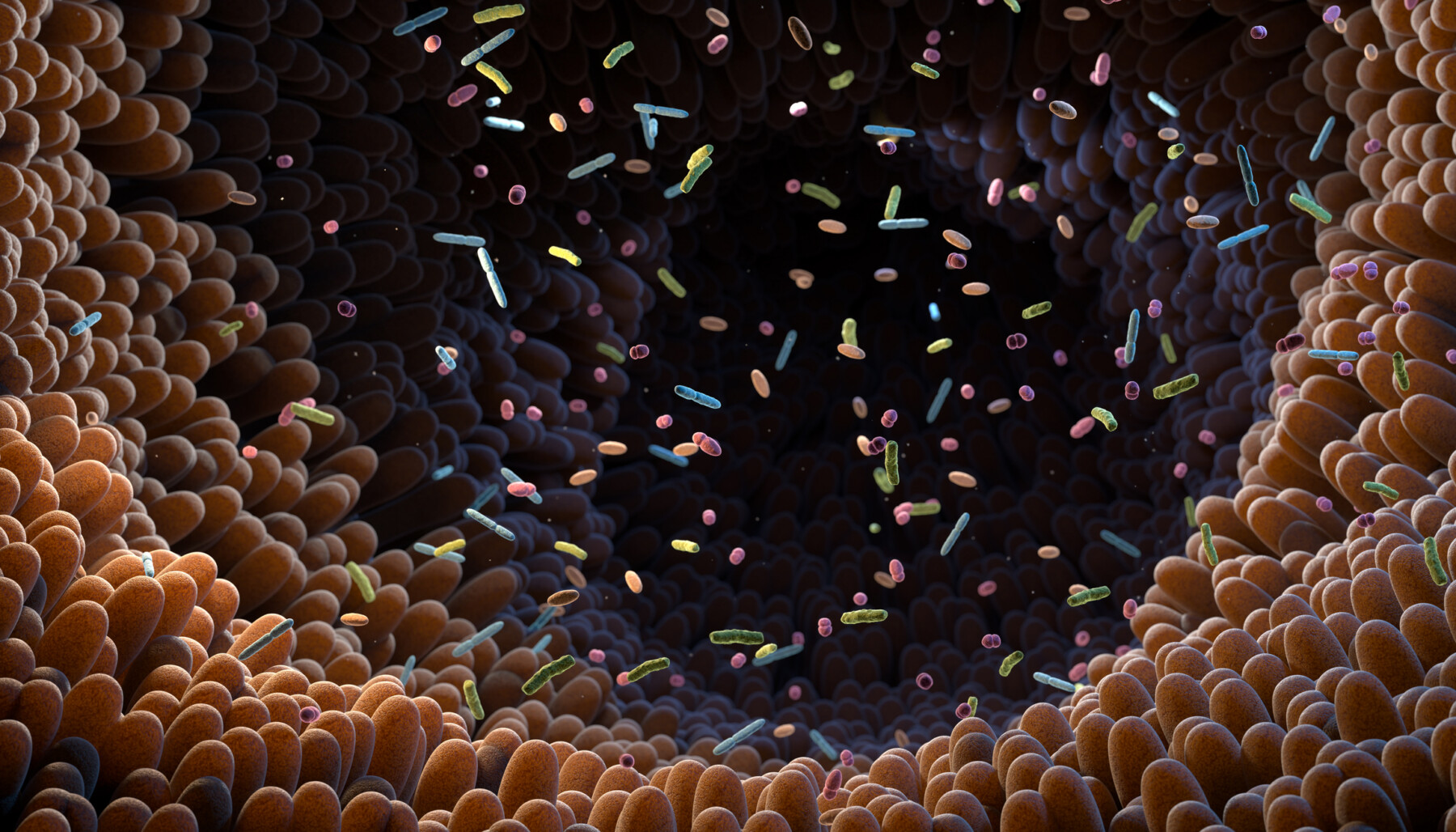
People with relapsing-remitting multiple sclerosis may have less diverse gut bacteria (pictured) than healthy people, according to a study. (Photo from iStock)
-
AI analyzing the entire gut microbiome (bacteria, fungi, viruses) accurately detects multiple sclerosis.
-
This comprehensive approach shows high accuracy in distinguishing people with multiple sclerosis from healthy individuals.
-
The findings suggest a potential for noninvasive screening tools for MS diagnosis.
Computer-based analyses of microorganisms in the digestive tract can distinguish people with multiple sclerosis (MS) from healthy individuals with high accuracy, according to a new study.
The analysis looked beyond gut bacteria to include other organisms like fungi and viruses. The findings suggest these comprehensive microbial profiles could eventually serve as a tool for noninvasive screening.
“This study suggests that multikingdom and functional gut microbiome markers can be utilized for non-invasive MS diagnosis, facilitating candidate biomarker panels for future clinical validation,” researchers wrote.
The study, “Multikingdom microbiome-based machine learning enables multiple sclerosis diagnosis,” was published in npj Biofilms and Microbiomes.

Looking beyond bacteria in the gut
The human digestive tract is home to billions of microscopic organisms, collectively known as the gut microbiome. Many of these tiny cohabitants of our bodies are bacteria — a specific category, or kingdom, of single-celled organisms. However, the gut microbiome also includes organisms from other kingdoms, including fungi, viruses, and archaea, which are unicellular organisms that resemble bacteria.
Previous studies have suggested that the gut microbiome is dysregulated in people with MS, but they have almost exclusively focused on bacteria, overlooking other organisms. Additionally, prior studies have mostly focused on the number of distinct bacteria rather than on their biological activity.
To address these gaps, researchers in China used machine learning to analyze hundreds of gut microbiome samples from people with or without MS. They examined bacteria and other kingdoms and also assessed measures of microbiome functional activity.
Machine learning is a type of artificial intelligence that involves feeding a computer a large dataset, and the computer then uses sophisticated mathematical rules to identify patterns in the data. These patterns can then be used to predict an outcome, such as whether someone has MS.
To evaluate the accuracy of their models, the researchers used a statistical measure called the area under the receiver operating characteristic curve (AUC). AUC values range from 0.5 to 1, with higher values indicating greater accuracy in distinguishing between people with and without MS.
Of note, because biological sex has been shown to influence microbiome composition, the researchers calculated separate AUCs for males and females.
Results from the main analysis showed high AUC values: 0.977 for males and 0.978 for females. These values were higher than those obtained when each kingdom or metabolic activity was examined individually.
Notably, the researchers honed in on the 30 most important features used to build their model. Using those features instead of all variables, the model achieved an accuracy of 0.99 in diagnosing MS in both men and women.
The researchers then used a separate dataset containing 154 samples to validate their model. In these analyses, the 30-feature model also performed well, with AUCs up to 0.849 for males and 0.763 in females.
“These results indicate that the models retained discriminatory ability in independent cohorts,” the researchers wrote.
In further analyses, the researchers’ model also identified relapsing-remitting MS with an accuracy on par with that seen in the main analysis (0.979 with the 30-marker panel), though it was notably poorer for progressive forms of MS (0.677).
Overall, the researchers said their results highlight the importance of considering the entire microbiome, not just bacteria, when studying MS.
“We demonstrated that diagnostic models based on multikingdom markers achieved high predictive values for MS diagnosis, highlighting the multifaceted role of the gut microbiome in MS [disease biology] and its potential for non-invasive diagnostics,” they concluded.

Delourdes Romain
I have this smell coming from my stomach for years , I had all kinds of tests , treatments, pills, mouth wash nothing worked. My last doctor prescribed anxiety pills after he read my sonogram results. If you're test can find what's wrong with me I will be grateful.
Jenn
Great article as well as amazing information
I am having some health issues for about a year now and I am starting to wonder or think that I should get tested.
I understand that MS can often be mistaken for other issues.
However I am having some related symptoms
I have many chronic issues that are related
I hear the description of the MS hug and that is something that I have too
Lots of stomach issues that no one can seem to find out the root cause of
Skin issues, nerve and muscle twitches or spasms
Fatigue and off and on fever without infection
Balance is off sometimes
I do not know where to start any longer and I am overwhelmed.
Suggestions?
Wonderful article what great information.
Kindly,
J
Kate
Can you tell me how I can get this test? Thanks
Stephanie Billings
So, since I already have MS, will changing my diet help to ease symptoms.. In addition, what specifically causes the microbiome to cause MS. Is it what you eat? Thanks
Wonja Ingamells
Excellent medical information very valuable
How does apply into reality of diagnosis?
Thank you for input
Dermot McKernan
I remember experimenting with some magic mushrooms from a nearby green field or park when I was seventeen years old. I still remember how slimy they were then. Yes I had previously picked a handful of them from that Green field, pretty disgusting really.I then mixed them with a packet of cheese and onion crisps in order disguise their horrible slimy taste. About three quarters of a hour later, I had experienced my first trip. I literally thought that I was going to explode like a rocket and I laughed all the way home to my parents house. I often think of those very short younger carefree teenage years I had growing up in the North of Ireland then. I didn’t really know much else different which also was a really was a very bad time then too. I’m now 52 years of age and still upright looking back on my younger self. I had a mis-spent youth it now seems and I could have really done without being diagnosed with MS in the year 2000 as well. I have also four siblings with MS too the financial damage because of MS has been extremely high so far ! I now find myself on my own in the very same bigoted shit hole where I’ve grown up.