
One silent MRI lesion may be enough to consider stronger MS treatment
Large study links even one lesion to higher relapse and disability risks
Written by |

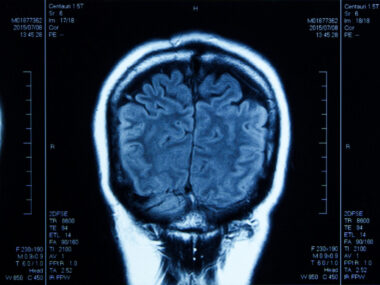
MRI scans can reveal clinically silent lesions in people with multiple sclerosis, even when they are not experiencing a relapse or worsening disability. (Image from iStock)
- Patients with relapsing-remitting multiple sclerosis who develop even a single silent MRI lesion face a significantly higher risk of future relapses.
- Detecting one or more silent lesions while on a lower- or moderate-efficacy disease-modifying therapy may warrant considering treatment escalation.
- Escalating treatment after silent lesions was associated with a substantially lower risk of future relapses.
People with relapsing-remitting multiple sclerosis (RRMS) who show even a single silent lesion on an MRI scan while taking a lower- or moderate-efficacy disease-modifying therapy (DMT) may benefit from switching to a higher-efficacy treatment, according to a large international study.
Researchers found that having one or more silent lesions — new, enlarging, or contrast-enhancing lesions seen on brain MRI scans without an accompanying relapse or worsening disability — was associated with significantly higher risks of future relapses and worsening disability than having no silent lesions.
In an emulated trial using registry data, escalating to a higher-efficacy DMT within six months after at least one silent lesion was detected more than halved the estimated four-year risk of relapse. However, escalation did not significantly reduce the risk of confirmed disability worsening. The findings challenge current guidelines, which generally recommend treatment escalation for clinically silent MRI activity after multiple lesions are detected, rather than after a single lesion.

Study challenges treatment threshold for silent MRI lesions
“Contrary to guidelines, DMT escalation should be considered after single or multiple silent lesions,” researchers wrote in the study, “Treatment escalation after clinically silent MRI lesions in relapsing-remitting multiple sclerosis,” which was published in Brain.
In multiple sclerosis (MS), the immune system mistakenly attacks healthy parts of the brain and spinal cord, and these regions of damage are visible on MRI scans as lesions. Some new lesions are clinically silent, meaning they appear on MRI without an accompanying relapse or worsening disability, and they may not cause noticeable symptoms. Even so, they may signal a higher risk of future relapses and disability worsening.
While early treatment with high-efficacy DMTs is now considered an optimal approach to reducing long-term disability, many people still follow an escalation approach, starting with lower- or moderate-efficacy therapies and switching to a higher-efficacy treatment if they show signs of disease activity.
Currently, one criterion for escalating treatment based on clinically silent MRI activity is the presence of multiple lesions. A single silent MRI lesion — which accounts for about 40% of MRI scans showing breakthrough disease activity — is sometimes termed “minimal evidence of disease activity,” and treatment escalation is not routinely recommended on that basis alone. Despite these recommendations, the evidence supporting this approach has been mixed.
To investigate further, an international team of researchers analyzed data from more than 10,000 adults with RRMS enrolled in the MSBase neuroimmunology registry, a large database tracking outcomes of thousands of people with MS and other neuroimmunological conditions.
Participants, who were treated in 26 countries between 2007 and 2025, were clinically stable on a DMT and had undergone routine MRI scans roughly every year. At their first eligible study MRI, 81.1% had no silent MRI lesions, 9.2% had a single silent lesion, and 9.7% had multiple silent lesions.
Even one silent lesion linked to higher future risks
Results showed that participants with silent MRI lesions were significantly more likely to experience relapses and worsening disability over about two years than those without silent lesions. The increased risk was greater among participants with multiple lesions, although it was also evident and significant in people who had a single silent lesion.
After accounting for other factors that could influence outcomes, a single silent lesion was associated with a 59% higher risk of relapse, while multiple silent lesions were associated with a 94% higher risk. Similarly, the adjusted risk of confirmed disability worsening was 35% higher among participants with a single silent lesion and 42% higher among those with multiple silent lesions.
The researchers then used the registry data to emulate a clinical trial examining whether escalating treatment after silent lesions improved outcomes. The analysis included 2,264 participants taking platform or moderate-efficacy DMTs. Of these, 286 escalated treatment within six months — 153 to a moderate-efficacy DMT and 133 to a high-efficacy DMT. Under the comparison strategy, treatment was not escalated unless a clinical event occurred during follow-up, in which case escalation was required within the next six months.
Over the next four years, treatment escalation more than halved the estimated risk of relapse compared with the strategy of not escalating treatment unless a clinical event occurred. The benefit was similar whether participants had developed one silent lesion or multiple silent lesions.
However, treatment escalation did not significantly reduce the risk of confirmed disability worsening. The researchers noted that current DMTs reduce acute inflammation in the central nervous system but have less effect on other processes that drive disability progression. They also said the relatively short follow-up and low rate of disability worsening may have made a treatment effect harder to detect.
“These findings oppose the concept of a tolerable radiological ‘minimal evidence of disease activity,'” the researchers wrote. “Hence, contrary to clinical guidelines, and alongside careful consideration of these therapies’ risks, detection of even a single [silent lesion] should prompt consideration of DMT escalation.”



Shane Jones
Very interesting information I got ms when I was 50 years old now I am 60 years old I am on a infusion therapy called ocruves been stable