
New MS cell therapy safely retrains immune system to tolerate myelin
Modified patient blood shields nerves from autoimmune attacks in trial
Written by |
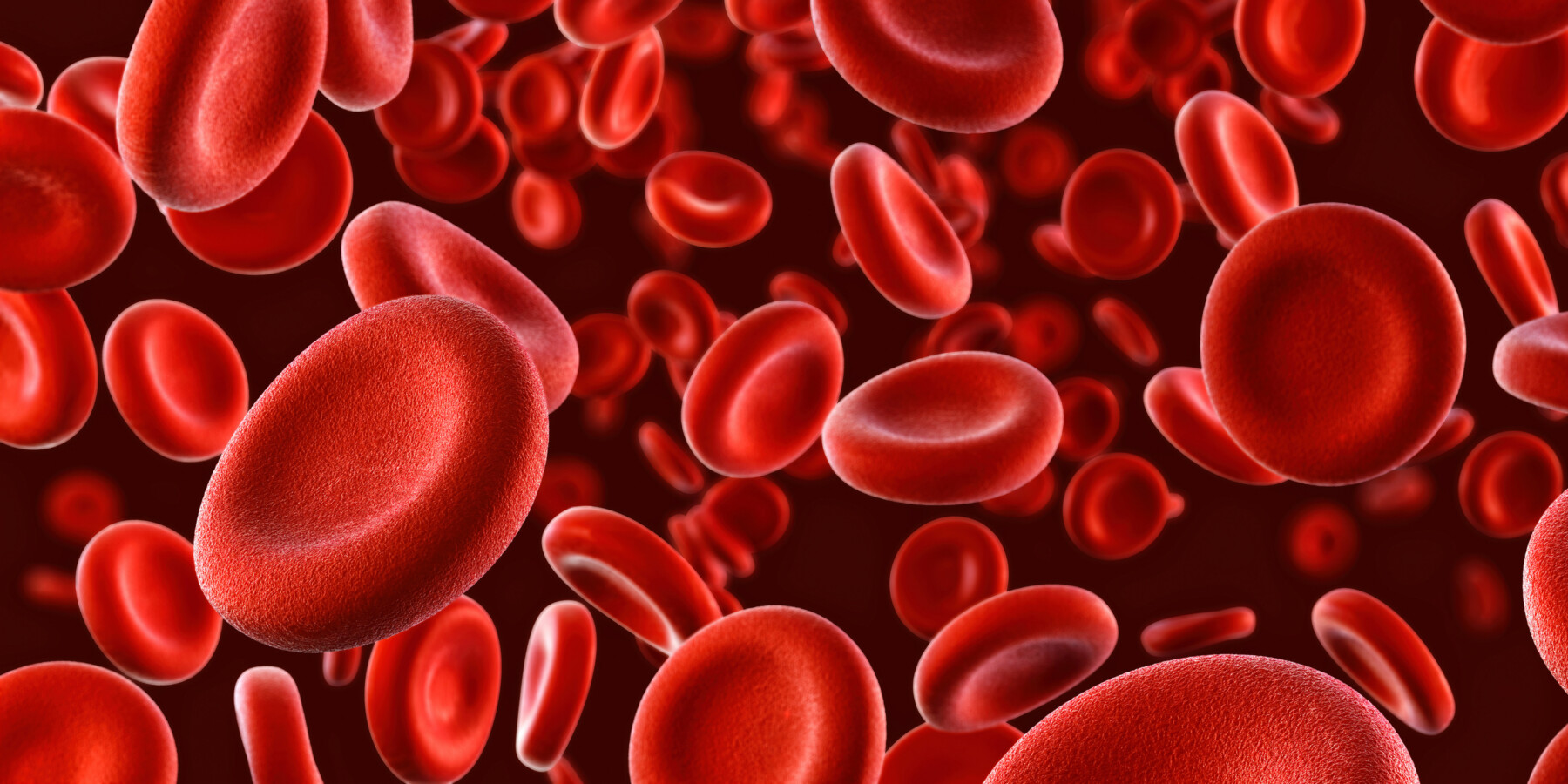
Red blood cells coupled with myelin protein fragments serve as the basis for a novel cell therapy aimed at reducing autoimmune attacks in MS. (Image from iStock)
- MS is an autoimmune disease where the immune system mistakenly attacks myelin, the protective sheath surrounding nerve cells.
- An experimental cell therapy pairs a patient's red blood cells with myelin fragments to safely retrain the immune system to tolerate myelin.
- Early clinical trial results show the treatment is well tolerated, increases regulatory T-cells, and reduces blood markers associated with nerve damage.
A new experimental cell therapy that pairs a patient’s own red blood cells with myelin protein fragments safely calmed the immune system and helped dampen the inflammatory attack that drives multiple sclerosis (MS), according to results from an early-stage clinical trial.
The novel approach works by retraining the body’s immune system to recognize myelin as friendly rather than a target. By promoting immune tolerance specifically to myelin, the treatment aims to control disease activity without causing broad immune suppression.
Trial results showed that the cell therapy was well tolerated, increased key immune-regulating cells, and reduced a blood marker associated with nerve damage.
The work was led by scientists at the University of Zurich (UZH) in Switzerland. Several of the researchers have co-founded a company called Cellerys to further develop this approach.
Restoring immune tolerance in MS
“This would make it possible to suppress this autoimmune disease in a very targeted manner and without major side effects,” Andreas Lutterotti, MD, the study’s corresponding author and a co-founder of Cellerys, said in a news story from UZH. “This approach can also be applied to many of the more than one hundred autoimmune diseases.”
The study, “Treatment of multiple sclerosis with peptide-coupled red blood cells induces antigen-specific T regulatory cells,” was published in PNAS.
In the immune system, which protects the body from infections, anything recognized as a normal part of the body is left alone, while things that are not may be seen as potential threats and attacked. The immune system’s ability to recognize and avoid attacking the body’s own tissues is known as immune tolerance.
Autoimmune diseases are characterized by a breakdown of immune tolerance, leading the immune system to mistakenly attack healthy parts of the body. MS is specifically driven by an immune attack that targets myelin, a fatty substance that normally protects nerve cells and helps them send electrical signals.
Retraining the immune system to recognize myelin as safe could theoretically restore immune tolerance and stop disease progression.
In this study, researchers tested an approach to do this using red blood cells, which are responsible for carrying oxygen through the bloodstream.
How the treatment works
Red blood cells have a short lifespan and are continuously replaced by the body. At the same time, there are biological systems in place to dispose of the pieces of broken-down red blood cells. These systems also play a role in regulating the immune system and maintaining immune tolerance, helping prevent the body from mounting an inappropriate immune response against its own red blood cells.
This new approach takes advantage of these features. Essentially, the treatment works by collecting a patient’s red blood cells, then attaching small pieces of myelin that are known to be targeted by the immune system in MS. The myelin-coupled red blood cells are then transfused back into the patient. As blood cells break down naturally, myelin fragments are swept up by the same disposal system that helps regulate immune tolerance. This presents myelin to the immune system in a way that promotes tolerance, essentially teaching the immune system to stop attacking it.
Cellerys sponsored a Phase 1b clinical trial (NCT06430671) that assessed the safety of this treatment strategy in 10 people with MS. The results indicated that the therapy was generally safe and well tolerated.
At the same time, immunological data indicated that the treatment increased the levels of regulatory T-cells, which are immune cells that play a key role in maintaining immune tolerance.
Clinical and imaging readouts remained generally stable throughout the study. Researchers observed a reduction in the levels of neurofilament light chain, a marker of nerve damage, “indicating reduced tissue inflammation in the brain.”
Overall, the researchers concluded that this approach is a “promising autologous cell therapy for achieving antigen-specific immune tolerance in MS.” Cellerys is further developing this treatment approach under the name CLS12311.



Annette
Interested in what others who have MS are thinking about this treatment
Anne Adam
I have CIDP and would be interested in hearing more about this treatment.
Thanks Anne
Kenneth D. Overcash
Praying that this treatment comes to fruition in the near future🙏🙏🙏
Gary
I found your explanation the role of myelin condescending and frustrating. Saying it is a fatty substance that protects nerve cells is too simple. What do you mean 'protect'? Far too vague.
'Protect', in terms of biochemistry, could mean so many things. You can say it insulates nerves to stop electric signals being lost and helps the signals travel. The layperson can handle such an explanation, you know. Very condescending and patronising.
What about explaining why the immune system attacks the body's own tissue? Yes, it's complicated, but as a science communicator, it's your job to give a short, understandable but non-condescending explanation. If no one knows why, say so. Don't just leave the question unadressed. The public will want to know this when they read your article. It's so condescending to think we won't have the intellectual curiosity to think up this question as we read it, such that you don't even bother addressing it. It's natural to want to know why. If you can't do it, get someone else to write the article.
This is genuine feedback. I'm not trying to have a go at anyone.
James Vacchio
This sounds great for MS patients like myself.By not attacking the myelin is a better life for MS patients.Great break through!
Sun
If the immune system can be trained to restrain itself from attacking ones own body, the next step would be transplantation of organs.
A new future free of rejection and self sabotage could advance life spans greatly and at a minimum return people's previous quality of life.
SUSAN COLWELL
Am wondering if this trial can include MND patients.
Paul Hergott
I would like to find out more info, and how to go about getting treatment.
MediCompares
This is a very informative and fascinating blog! 🧬✨ I really appreciate how clearly **Marisa Horak, MS** explained this promising new approach to MS, especially how the experimental cell therapy aims to retrain the immune system to tolerate myelin without broad immune suppression. The explanation of the Phase 1b trial, regulatory T-cells, safety findings, and neurofilament light chain results makes this complex research much easier to understand. Thank you for sharing such valuable and encouraging medical information. Keep writing more informative blogs! 👏😊
Blood test Hyderabad
Simone Biase
I was originally treated for cerebral spinal venous insuficiency in 2010 with great success.
Mali-ku Valdes
This is amazing news for PwMS and PwAIDlets hope Cellerys make Amazing progress with their studies
Beryl Jones
Very interesting
Michael Jaehner
I am scheduled to receive infusion therapy every six months. The decision will be made in consultation with the neurologist at the University hospital Leipzig end of September 2026.
Karissa Nelson
I have been battling RMS for 8 years now. I was diagnosed in my twenties and my onset symptom was sudden and unexpected grand mal or tonic clonic seizures. It has changed my life for the worse, as well as the better. I have experienced a slew of different and detrimental symptoms over the years from tangles with optic neuritis, to daily and relentlessly crippling fatigue, migraines, and motor skill complications. I have done everything as far as treatments landing in a mix of homeopathic remedies, a strong anti seizure medication, and monthly Tysabri Natalizumab infusions in hopes of slowing disease progression Long term. I am an active, otherwise healthy woman and had a decade long successful career I spent my young adult years building. I lost this career due to my medical needs and newfound dependence on state Medicaid for access to my life saving medications. I would give anything to be able to live a more simple life again, free from life-changing medical obligation or even just less debilitating symptoms. I wish, pray, and hope for a cure for millions of people like myself and manifest it in my soul every second of every day. This article gives us hope. Tell anyone that will listen to bring these clinical Trials to Colorado!! I would participate in a heartbeat! Thank you!!
Kelley
Could this potentially help with neuropathy?
Mark Henderson
I wonder if this same technique could be used to treat other autoimmune disorders, such as rheumatoid arthritis, alopecia or type 1 diabetes. Ideas?
Michelle B King
Ppms. 2005 mid sixties. Can't walk anymore
Shukla Hess
My daughter has MS since the last 20 years. Can this therapy help her? If so whom can she contact to get more news. It would help her if it is in German.
Thanks for your info.
S. Hess
Marcos Medina
Got diagnosed 19 years ago running out of time I’m 48 right now. I’ll do just about anything to get better need help please phone number 801-739-2473 live in Utah born raise in Boston, Massachusetts.
Leakey osze
Any good for Cipd please help
Martins Philippe
Rétablir la tolérance immunitaire dans la SEP
C"est un des objectifs pour soigner ma maladie qui à été qualifiée de forme agressive par ma neurologue lors de son diagnostique en l'année 2009.
Je souhaiterai savoir si ce nouveau traitement est compatible avec mon traitement actuel OCREVUS.
C"est pourquoi je vais en parler avec ma neurologue la semaine prochaine lors de notre rendez vous semestriel de suivi.
Sharon L Portis
I live in Akron, Ohio, USA. I was dx with Multiple Sclerosis in 1997, RRM by Dr. Lawrence Saltis. My symptoms really came to surface after a car accident and my head hit the windshield, in 1994. From the accident, I had trouble with my balance. I went from holding wall, to cane, to walker then to not walking needing a wheelchair.
I am interested in participating in Stem Cell Trial.
Amy Wilson
So it helps stop progression, but does it improve the myelin to improve current disability?