I trusted my gut, even after hearing I was ‘too young’ to have MS
Written by |

Emily Marsh takes part in the MS Society's MS Walk in 2025. It was surreal for her to return two years after her diagnosis. (Photos courtesy of Emily Marsh)
In recognition of Multiple Sclerosis Awareness Month in March, the MS Awareness Month campaign features a series of stories highlighting the real-life experiences of people affected by MS, written in their own words. Follow us on Facebook, Instagram, X, and Pinterest for more stories like this, using the hashtag #MSAwarenessMonth, or read the full series.
Hi, my name is Emily, and I was diagnosed with relapsing-remitting MS (RRMS) in 2023 at age 26. Like many others with MS, my symptoms began several years earlier, and it took a long time to get answers.
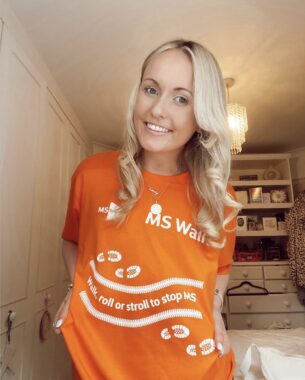
Two months after her diagnosis in 2023, Marsh participated in the MS Society’s 10-kilometer walk in London with her friends and family.
I’d always been relatively healthy, but in 2020, I started experiencing unexplained health issues. Looking back, my first noticeable symptom was persistent cramping in one leg. I saw multiple doctors, worried it was a blood clot, but all my tests were clear, and it was dismissed as exercise-related.
In 2021, I woke up with a severe burning sensation in both hands, which I now know was an MS relapse. I was in agony for a month, but doctors attributed it to repetitive strain from working from home. Eventually, the pain resolved on its own, and I didn’t think much about it.
By autumn 2022, I had a gut feeling something wasn’t right. I developed numbness in my chin that spread to my mouth and face, turning into intense burning pain similar to what I’d experienced the year prior. The doctors dismissed this as anxiety, but my aunt, who has MS, became concerned that my symptoms could be caused by the disease. I saw a different doctor, who said MS was unlikely because I was “too young,” but referred me to a neurologist due to my family history. The doctor diagnosed me with trigeminal neuralgia, possibly caused by oral shingles, and the symptoms again resolved after a month.
After waiting nine months to see a neurologist, I began to doubt it could be MS. Even the neurologist didn’t think it was, but they still recommended an MRI. I almost declined, but I’m so glad I didn’t, as the imaging revealed lesions all over my brain and cervical spine. An MS specialist confirmed I was a “textbook case” and had likely had the disease for years.
Hearing the words “you have relapsing-remitting MS” flipped my world upside down. While it was overwhelming at the time, I was also relieved to finally have answers. I am so glad I trusted my gut and had the MRI. I also knew that I didn’t want to dwell on my diagnosis; instead, I wanted to focus my energy on raising awareness and helping others going through a similar situation.
I’m now three years post-diagnosis, on treatment, and stable for the first time in years. It’s been a bumpy road to get to where I am today, but my MS diagnosis has taught me so much about myself. In many ways, it’s opened doors I never expected, including connecting with others and becoming a disability advocate at work.