
3D Laboratory Cell Growth System Should Speed Up MS Remyelination Research
Written by |
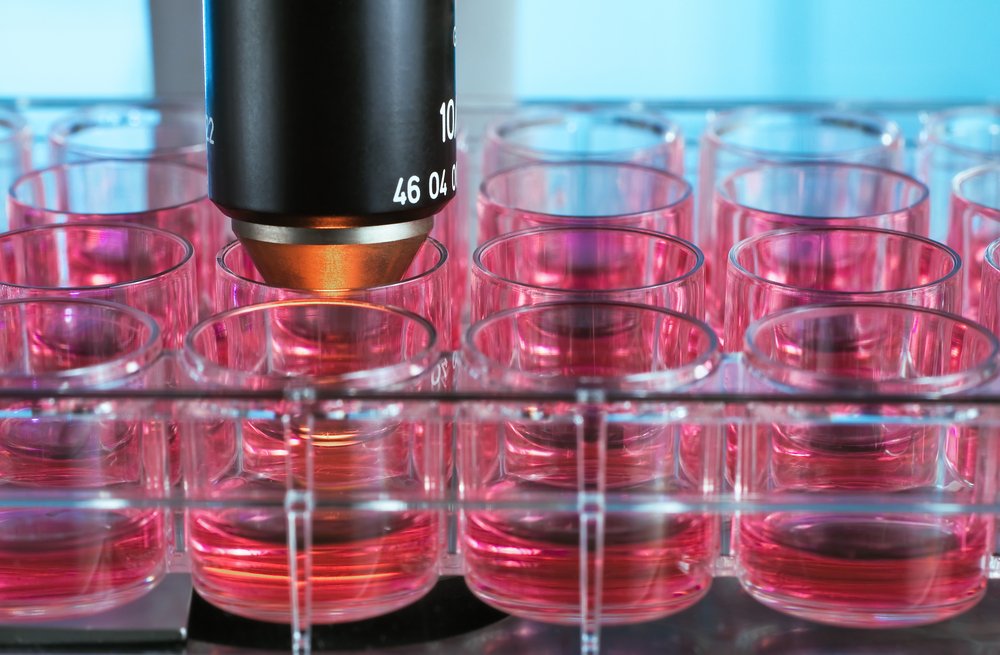
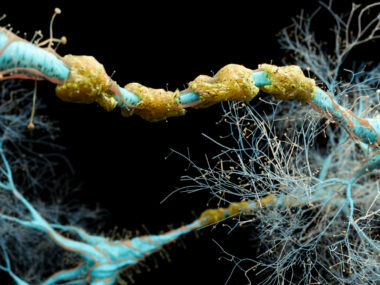
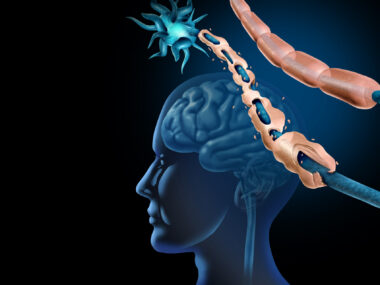
A physical scaffold that allows lab-grown brain cells to grow in a three-dimensional manner is giving scientists a whole new way of studying the regeneration of myelin, nerve coatings whose damage is at the heart of multiple sclerosis.
The scaffold is allowing researchers to test large numbers of compounds for their capacity to trigger remyelination. This could lead to an acceleration of research into regenerative drugs for MS.
“The aligned Mimetix scaffold fibres from AMSBIO have been an invaluable tool, allowing us to answer fundamental questions regarding how oligodendrocytes form central nervous system (CNS) myelin sheaths,” Marie Bechler, a senior researcher in the Constant laboratory at the MRC Centre for Regenerative Medicine in Scotland, said in a press release.
The three-dimensional orientation of cells in the central nervous system determines how cells grow and behave. Earlier methods of growing brain cells in a lab dish have been unable to mirror everything that goes on in a living human.
MRC Centre researchers are using the three-dimensional fiber technology that AMSBIO developed to study oligodendrocyte cells and myelin regeneration. Oligodendrocytes are cells that wrap their appendages around nerve cells to form myelin.
The scaffold mimics the environment surrounding cells in the brain and spinal cord, which means oligodendrocytes can grow without the presence of neurons. In addition to supporting the cells’ three-dimensional growth, the system allows researchers to study the cells under a microscope and, using analytic methods, to study remyelination processes.
“The culture system we developed permits the examination of myelin sheath formation in the absence of neurons,” Bechler said. “The aligned microfibers used in our research have enabled us to examine both the physical and molecular signals sufficient to drive CNS [central nervous system] myelin sheath formation, which could not be assessed in other culture models.”
The new tool also makes it possible for researchers to study physical cues and molecular signals that determine how much myelin is formed. In addition, it should give them insight into how the oligodendrocytes’ origin in the brain or spinal cord can affect the outcomes of regeneration experiments.
“Our findings and future work illuminate how myelin sheaths are formed during brain and spinal cord development as well as what signals enhance myelin sheath formation. This research is of particular importance for developing future therapies for diseases of myelin loss, such as multiple sclerosis and leukodystrophies,” Bechler concluded.


Andrea Kaiser
Very exciting. There is hope. I would like to follow the research. I had HSCT to halt the progress of MS if there is a possibility of remyelination whoo hoo!!!!
Margaret
This sounds very exciting, how long do you think before it is going to be trialed on patients?
Hi Margaret,
Researchers have only just developed the method, so it may take some time before it generates results that are applicable to patients.
Sam D'Uva
What do you estimate in terms of months and years?
Lidia
When do you think it will. E trailed on patients
john soper
please god it will be very soon !
Tim Bossie
We are hoping that many this new technology will be a great tool for researchers to finally unlock the remyelination code.
Emory S.
Amen! I can't wait until all of these powerful, beautiful minds get it all figured it out ?
charles
is this the assay dveloped by jonah chan? the one that identified clemastine as a remyelinating agent? i'm hoping to see clemastine used as a lead compound for the development of a next generation of drugs.
Liz
Si many medications and products that I feel lost how I have to start. Taking flatosa now thinking infusión since I have 23 scars and 3 in my spine.
Mody
Good news but I think it would takes time to be reality
Thank you so much Magdalena ?
Yes Mody,
These research efforts need plenty of validation to make sure they really work. I am happy I can bring some hope with writing about these advances.
Nancy
How can you get involved and be in a trial? Ready to be a test subject for any possible help.
Hi Nancy,
This technique has just been developed in the lab and is not ready for human applications yet.