
Study Finds PoNS Neurostimulator Plus Physical Therapy of Benefit to Advanced MS Patients
Written by |
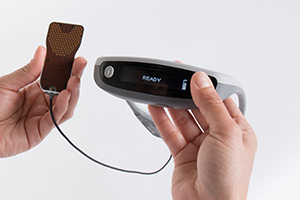
The PoNS device
Helius Medical Technologies announced results of a pilot study, demonstrating the benefits of PoNS Therapy — a combination of the investigational Portable Neuromodulation Stimulator (PoNS) device with physical therapy — in patients with advanced multiple sclerosis (MS). Specifically, the treatment was seen to improve both patients’ quality of life, and physical and cognitive abilities.
The study, “Can Exercise Combined with Cranial Nerve Non-Invasive Neuromodulation (CN-NINM) Improve Mobility in Non-Ambulatory People with MS? a Case Study Series” was developed by researchers at the Tactile Communication and Neurorehabilitation Laboratory (TCNL) at the University of Wisconsin, and presented at the recent Consortium of Multiple Sclerosis Centers (CMSC) 2016 Annual Meeting in National Harbor, Maryland.
Neuromodulation is believed to enhance neuroplasticity, the brain’s ability to restructure in response to new experiences, and the core mechanism underlying all cerebral learning and rehabilitation. The non-invasive PoNS device was designed to deliver neurostimulation through the tongue, and has been shown to induce cranial nerve neuromodulation when combined with tailored physical, cognitive or occupational therapy programs, suggesting it could be of use in a variety of neurological diseases.
Researchers assessed the efficacy of PoNS Therapy in six people with advanced MS, with Expanded Disability Status Scale (EDSS) scores of 6.5 to 7.5 (EDSS score range is 0–10). Patients enrolled in the six-month study used the PoNS device combined with physical therapy targeting balance, postural stability, and walking movement or gait.
Improvements were recorded in a number of parameters measuring quality of life, as well as physical and cognitive abilities. Real-life benefits were also observed. These included the ability to again use a walker for local trips, decreased fatigue, overcoming physical obstacles at home, increased independence with day-to-day activities, and greater community access.
“Those with greater functional ability at the beginning of the study (EDSS 6.5-7.0) made the most significant gains but all subjects could be qualified as improved. The intervention shows promise to prolong functional ambulation and independence with daily activity,” said Mitch Tyler, the study’s principal investigator, in a press release.
In a previous MS study sponsored by Helius, the PoNS device was shown to promote neural plasticity and balance after a 14-week treatment period. However, the average EDSS score for these patients was 4.5, not the 7.0 of this newer study, indicating a higher level of disability.
“The patients in this study represent a much more challenging cohort and received PoNSTM Therapy for a longer period (6-months vs. 14-weeks), yet compliance remained high. The outcome is very encouraging,” said Phillippe Deschamps, Helius’ CEO.
Other Multiple Sclerosis News Today articles related to the PoNS device are available through this link.



David
Is the PoNS therapy for use in people with Primary Progressive MS?
daan
David, it seems that yes, one of the six people enrolled is PPMS with EDSS 7.0.
To find out more click on the link "Can Exercise Combined with Cranial..." and then click on "PDF"
Peter Briscoe
Has any research been done with stroke patients?
Ronald Blendermann
I have secondary progressive MS. Can I participate in th study?
Monika Switzer
When will it be available. I really will hate for my brother-in-law to die before it is available for use...
I've read and learned so much about it and it just is so very frustrating that something so helpful with virtually no side effects, that is so minimally invasive, is right there, just out of reach. Maybe available in another country???
Kimber
Dr Earl Henslin, Brea California has the only device on the west coast.
Helen
Where may I obtain for my husband with tbi?
Or, where is a Medical facility located that offers PoNS therapy?
Pearline Nolan
where can I get this device for my son
Scott Johnson
I have RRMS and have been following PONS research for several years. I would give anything to have the chance to try it. But like most drugs in clinical trials I would guess I am years away from any chance.
D Uherek
Hang in brother.! I am in the same boat. So much for Trump fast tracking anything that will help?? It will come around. GODspeed ., Keep strong, Let us not let bitterness bring us down✌️?? Everybody keep looking up... no matter what!
Glenda Shine
If we are not famous like Montel Williams, we don’t get access to these things!
I first read about him going to try this unit YEARS ago. Why isn’t something like this available to the rest of us little people?
Maureen C Kinney
Very interested in talking to someone about this product.
Dr. Julie Phillips-Moore
As well as promoting neural plasticity, does this device also regenerate the myelin sheath/glial cells?
Catherine MS,PT
Nice to read of others being interested in the PoNS device. It is approved by Canada to use and train, with the device. It unfortunately is not covered by insurance, is private pay and is maintained in Canada for at least the 14 week training period. I am keeping the hope!!