
Miniature brains grown in lab may help evaluate MS treatments
Myelinated organoids designed to map myelin damage, repair
Written by |
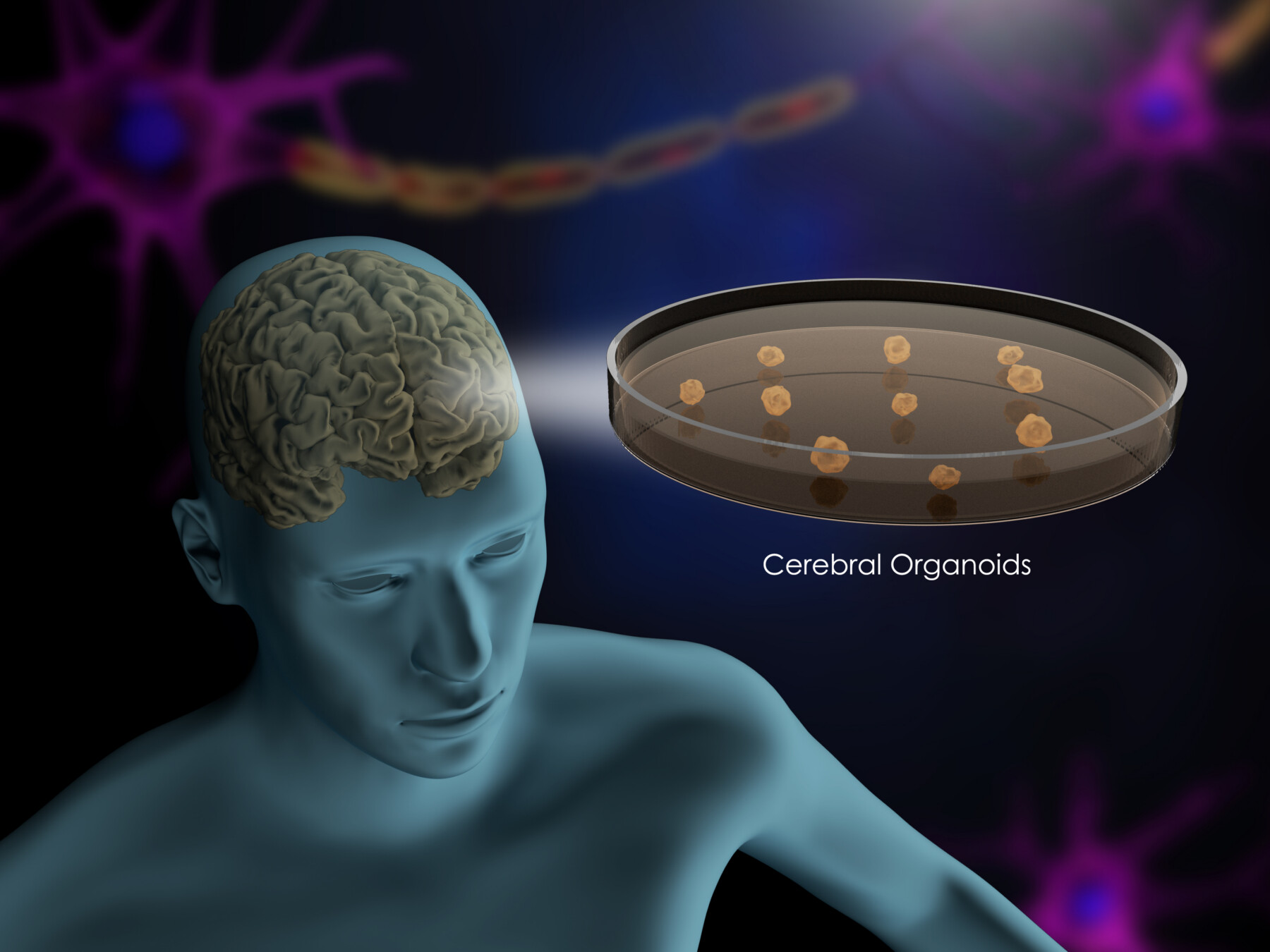
Brain organoids are designed to mimic the structure of the human brain. (Image from iStock)
- Miniature brain models (organoids) help evaluate treatments for myelin damage in multiple sclerosis.
- These human-derived organoids allow studying myelin loss, repair, and drug effects.
- The models aim to accelerate understanding and development of new therapies for myelin diseases.
28bio has developed miniature brain models to help evaluate potential treatments that aim to repair myelin, the fatty coating around nerve fibers that is damaged in multiple sclerosis (MS) and other conditions.
The CNS-3D Myelinated Organoids contain multiple brain cell types, including nerve cells and myelin-producing oligodendrocytes. In addition to helping explore how well medications promote myelin repair, the model will enable researchers to quantify myelin loss after exposure to certain drugs and track natural remyelination.
The company said this approach may improve understanding of myelination, a process that has traditionally been studied in animal models. But the extent and timing of myelin loss and repair can be different in humans.
“We are no longer dependent on unreliable animal models to understand myelin disease biology,” Christopher Butt, PhD, 28bio’s vice president of technology, said in a company press release. “For the first time, therapies can be evaluated in an assay-ready human model that directly measures myelin dynamics and functional neural activity.”
The model, currently available as a service, will be ready for shipping globally in the third quarter of this year, the company said.

Mini brains contain nerve tissue, can form myelinated fibers
MS is caused by inflammation in the brain and spinal cord — collectively called the central nervous system — that damages the myelin sheath, a fatty layer around nerve fibers that helps electrical signals travel efficiently.
28bio‘s CNS-3D myelinated organoids are generated from human induced pluripotent stem cells, lab-made stem cells that can develop into different cell types. These cells are first turned into neural progenitor cells, which can give rise to several types of brain cells.
The resulting three-dimensional mini-brains contain nerve cells, astrocytes, and oligodendrocytes arranged in an organized structure designed to resemble human brain tissue. Astrocytes are support cells that help maintain nerve cell function.
28bio said the organoids can form myelinated nerve fibers and show features of functional brain tissue, including spontaneous neural activity. Researchers can use the model to study natural myelination processes, drug-induced myelin damage, and strategies to promote myelin repair, allowing them to track both injury and recovery.
The organoids will also be available in high-throughput assay formats, with consistent size, cell composition, and functional response, enabling reproducible results across batches. The organoids are stable for at least four weeks, allowing researchers to study longer exposures to experimental therapies.
“The premarket reception for our CNS-3D Myelinated Organoids has been very positive given the deficiencies of animal models,” said Stuart Gibb, head of business development at 28bio.

Leave a comment
Fill in the required fields to post. Your email address will not be published.