
Taking high-dose vitamin D daily over the long term helps reduce MS relapses
Review shows supplementation past 1 year can also improve disability scores
Written by |
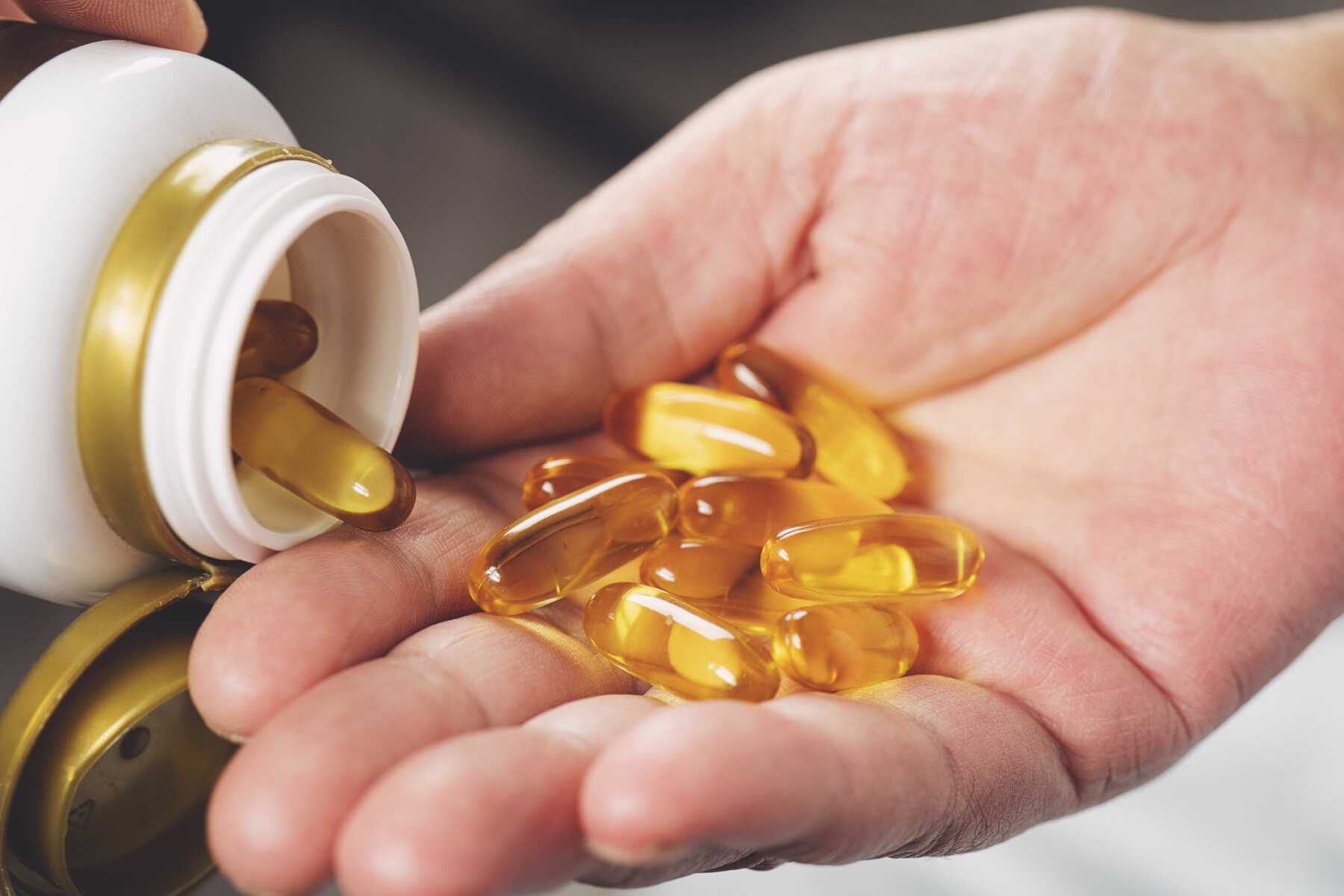
Research shows that adding long-term, high-dose vitamin D to standard MS therapies can cut relapse risk and ease disability. (Photo from iStock)
- Long-term, high-dose vitamin D supplementation reduces MS relapses and disability progression.
- This benefit occurs when vitamin D is added to standard MS therapies for more than one year.
- Low vitamin D levels are associated with increased MS risk and faster disease progression.
Taking high-dose vitamin D supplements for more than a year can significantly cut relapse risks and ease disability for people with multiple sclerosis (MS), according to a comprehensive review of more than 30 clinical trials.
These benefits were observed in patients who added the vitamin to their standard disease-modifying therapies, though the supplements had to be taken long term to be effective. Long-term supplementation with a mid-dose also led to fewer relapses, the data showed. In contrast, add-on high-dose vitamin D taken for less than one year showed no significant differences.
“Vitamin D supplementation as an adjuvant therapy may reduce relapse and disability progression, with a favorable safety profile,” researchers wrote in the study “Vitamin D for multiple sclerosis as an adjuvant therapy: A network meta-analysis of randomized controlled trials,” which was published in Clinical Nutrition.
MS is characterized by inflammatory attacks that damage the brain and spinal cord, and it’s well established that vitamin D can influence disease onset and progression. Studies have found an association between low vitamin D blood levels and a higher risk of developing MS, while other research suggests that people with lower vitamin D levels experience more frequent relapses and faster disability progression.
As a result, both the American Academy of Neurology and the European Academy of Neurology have incorporated vitamin D as an adjuvant therapy in their MS treatment guidelines.

The need for specific dosing guidelines
However, those guidelines address vitamin D supplementation only in broad terms and do not provide specific recommendations on appropriate doses or treatment duration. This has limited the practical application of vitamin D in clinical settings, according to the researchers.
To address this, researchers in China pooled the results of published clinical trials to provide more detailed, evidence-based guidance on the optimal vitamin D regimen for MS patients.
“This approach enables a deeper understanding of the role of vitamin D and offers evidence-based guidance for vitamin D therapy in MS patients to support clinical decision-making,” the team wrote.
The analysis focused on 32 clinical trials in which patients were randomly assigned to various doses of vitamin D or a placebo. These trials involved a total of 2,254 MS patients and, except for five that did not have any specific requirements on MS therapies, all others tested vitamin D as an add-on to standard disease-modifying therapies.
Pooled data from all studies showed that vitamin D supplementation for more than one year was associated with a 20% reduction in relapse risk and a modest but significant improvement in disability scores (indicating less severe symptoms) compared with a placebo.
Long-term vitamin D supplementation was also associated with a 49% lower risk of having lesions with active inflammation and a significant reduction in total lesion volume. Relapse rates, however, were not significantly different between the groups.
Vitamin D supplementation over the short term did not significantly affect relapse risk, disability levels, or relapse rates.
The team then compared different dosing and duration strategies. Interventions were classified by dose: low (less than 1,000 international units, or IU, per day), medium or mid-dose (1,000 to 4,000 IU/day), and high (more than 4,000 IU/day). They were also classified by duration: short (one year or less) or long (more than one year).
For outcomes measured beyond one year of follow-up, high-dose, long-duration supplementation showed the greatest benefit for both disability scores and relapse risk. Mid-dose, long-duration supplementation showed the most favorable results for relapse rates.
In terms of safety, vitamin D supplementation did not increase the risk of serious adverse events, which included outcomes such as death, hospitalization, pregnancy complications, and kidney stones.
The certainty of the evidence, assessed using the GRADE framework, was rated as low for short-term outcomes and moderate for long-term outcomes in relapses and disability levels. For the analysis comparing different dosing strategies, specifically, the certainty of evidence was rated as very low across all interventions.
“Further large-scale [randomized controlled trials] are required to validate the efficacy and safety of different vitamin D dosing regimens and explore personalized therapeutic approaches based on biomarkers,” the researchers concluded.




Joseph s
Wow this is amazing
Bill Watry
I read alot of material on supplementation associated with brain health and have seen significant changes in my MS life since adding some key supplements in therapeutic dosages. I have lived with relapsing MS for over 15 years but 2 years ago I added 10,000 IU of D3 with K2, 800mg of magnesium glycinate/threeonate, 1500mg of DHA omega 3 fish oil and 2,000mg slow release vitamins C and Bentofismine for nerve healing. I have not had a relapse in 18 months and my last scan showed my lesions reduced by 50%. I follow a "functional health" approach with my diet and supplementation now and am proof this approach is real. The studies also show this same approach also helps with dimensions and alsimerz. I encourage everyone living with this condition to start, it is never too late. Stay positive and keep striving forward.
Dalida Dwyer
My neurologist added 5,000 ius Vit D in April 2025 and my L’Hermittes has decreased on both frequency and duration My blood level yesterday was 87
Anne Duffey
I heard this from MS society Canada some 20 years ago. I've been taking 4000+ IU ever since (much to my doctor's horror). At one point we did do a blood test to make sure it wasn't an overdose, since Vitamin D is fat soluble and gets stored. My level was fine, within normal limits. One note: if you take calcium supplements as well be careful, as Vitamin D can increase calcium absorption.
N M Manawalankara
Living 05 years with ms
Kathryn Allen
Please tell me what is the correct dosing of Vitamin D needed to prevent further relapsing events in someone like me with more of the RRMS progression as I never know what is the ideal number of units in a over the counter Vitamin D supplement needed.
Anna Childs
High dose vitamin D3 consistency good for energy
Anna Childs
Taking vitamin d on a daily basis increase energy focus and concentration true or false
Lito Galleto
I'm taking vitamin D3 5000iu daily. Is it safe for 77 years old who can not reach out sunlight
Eliane Ranocchini
Thank you, I like the Information Very much,
.
Sharon
Your comments on evidence, dosing and certainties of disease draws into conclusion a consideration of whether you could conclude that your data did not concur with the presence of a low dosing effect and thus à low dosing effect could be ruled out of Vitamin D supplementation and MS Disease. What test could be conducted to consider such a conclusion or posthoc analysis? I read recently the presence of avocado in the diet versus the absence of avocado in the diet effected some cardiovascular disease endpoints. Was presence or absence of Vitamin D effects stated, conducted, concluded or just dosing high or low considered? Could presence or absence of mushroom in the diet be considered through posthoc analysis?
Papa
I'm delighted for the learning time
Team to stay blessed with the health information sharing please
Amen for now
Papa
I'm excited for the learning time
Team to stay blessed for the health information sharing.
Amen for now please
Anna Gerena
I was told that after 60 you stopped getting the Legion that caused MS is that true?
M Haroon
i m 50 years old and can i take regular these kind of vit and how much is effective for me
Lawrence Arceno
Try the supplement
Jody DeCarlo
Lost a 58-year old sister w/MS to UTI/Sepsis before the meds, and now another sister has ALS. I’ve tried to convince her to take more than 2000 IU daily. Argument is “her D level isn’t low” and neurology doesn’t advise it. I believe high dose D has preserved my health. I saw endocrinology almost 20 years ago for a goiter and was diagnosed with Hashimotos Thyroiditis, putting me at greater risk of MS, Lupus & more. While my TSH thyroid was within normal range, my D level was low, and I was told my thyroid will likely stop functioning, need to be removed and I’d need medication rest of my life. I was prescribed 50,000 IU of D 2x/month, and Estrogen patch (starting peri menopause). A few years later, I discontinued the HRT and switched to 5000 IU D daily. My thyroid numbers have stayed normal, all biopsies good, and my goiter has receded/shrunk. My doctor deleted the Hashimoto diagnosis! I attribute my good health to high dose Vitamin D!
Sandra Armstrong
This was a very interesting subject to ready about, cause this MS runs in my family a lot. Thanks for all the insight on this!!