
Certain cannabis-based therapies may help relieve spasticity in MS
Study: Cannabinoids should be considered cautiously as adjunctive therapy
Written by |
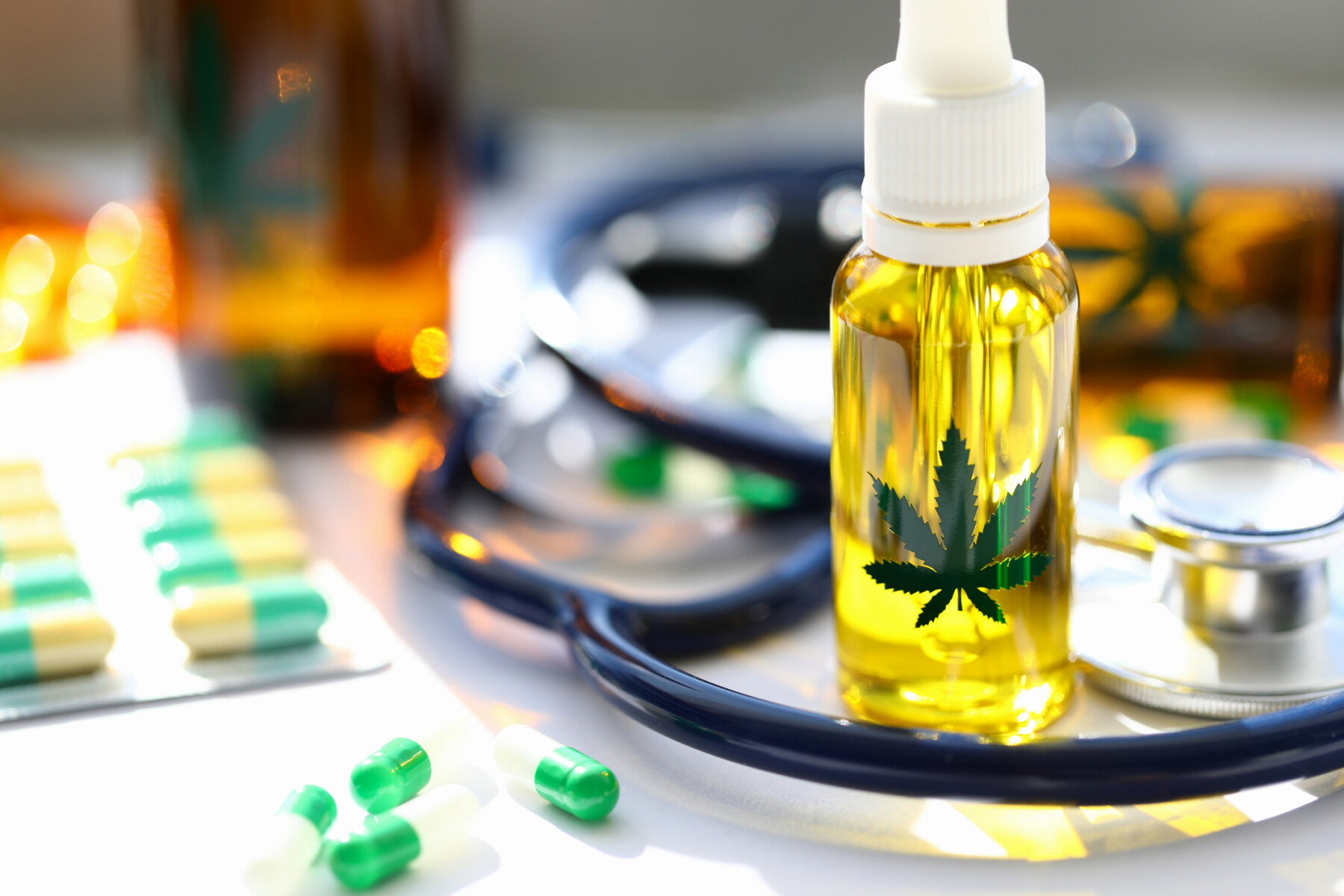
A bottle of cannabis oil stands next to a stethoscope and a packet of capsules. (Photo by iStock)
- Cannabis-based therapies, particularly equal mixes of THC and CBD, may help relieve multiple sclerosis spasticity.
- Patients often report symptom relief, though objective clinical assessments show limited consistency.
- Cannabinoids should be used cautiously as adjunctive treatments with safety monitoring due to low certainty evidence.
Certain cannabis-based therapies may provide relief from spasticity in people with multiple sclerosis (MS), according to a review of data from 27 clinical trials involving more than 3,000 participants.
Among the different therapies evaluated, those containing an equal mix of two of the main compounds found in the cannabis plant, primarily the oral spray nabiximols, showed modest but consistent benefits. The two compounds are delta-9 tetrahydrocannabinol (THC) and cannabidiol (CBD).
These benefits, however, were seen mainly in patients’ own ratings of spasticity rather than in objective clinical assessments. Thus, “cannabinoids should be considered cautiously as adjunctive therapy with appropriate safety monitoring,” researchers wrote.
The study, “Efficacy and safety of cannabinoids in the treatment of spasticity in multiple sclerosis: A systematic review of randomized clinical trials,” was published in the British Journal of Clinical Pharmacology.

Cannabis-based therapies used for muscle stiffness, tightness in MS
Spasticity, marked by muscle stiffness, tightness, and involuntary muscles spasms, is one of the most common MS symptoms, affecting up to 84% of people with MS over the course of their disease. It can make walking, maintaining balance, and carrying out everyday activities more difficult, substantially reducing quality of life.
Although several medications are available to help manage spasticity, their benefits typically don’t last long, and side effects can limit long-term use. Thus, many people with MS turn to cannabis-based therapies to help with muscle stiffness or tightness. These therapies include products containing THC, the main psychoactive compound in cannabis, CBD, a nonintoxicating cannabis compound that is associated with calming effects, or a combination of the two.
One such therapy, is nabiximols, which is already approved under the brand name Sativex in several countries, but not in the U.S., for easing spasticity in people with MS. International guidelines generally recommend it only after standard medications have failed to provide adequate relief and before considering more invasive treatments.
Yet, despite progressive incorporation into clinical guidelines, “there are still relevant uncertainties regarding the practical conduct of therapy,” the researchers wrote.
THC and CBD showed modest but consistent evidence of benefit
To learn more, researchers in Brazil conducted a systematic review of published studies evaluating the effectiveness and safety of a range of cannabis-derived therapies in MS patients experiencing spasticity. The final analysis included 27 randomized clinical trials, published through December 2025, involving more than 3,000 participants.
All studies compared a cannabis-based therapy with a placebo or no treatment, and all lasted between two weeks and three years. The therapies evaluated included those containing both THC and CBD (primarily nabiximols), other cannabis extracts, THC or CBD used alone (either naturally derived or synthetic), and smoked cannabis.
To compare the different cannabis-based therapies, the researchers first combined the results of studies evaluating the same treatment. They then used a statistical method that also allowed them to estimate how different therapies compared with one another, even when they had not been tested directly in the same clinical trial.
Across both analyses, preparations containing both THC and CBD, primarily nabiximols, showed modest but consistent evidence of benefit. They were the only cannabis-based products to significantly reduce patients’ own ratings of spasticity compared with a placebo.
Considering the overall low certainty of the evidence and the methodological limitations of the available trials, cannabinoids should be used with caution in the management of spasticity associated with multiple sclerosis and may be considered as an adjuvant option aimed at improving patient-perceived symptoms, within the context of shared decision-making and safety monitoring.
Those improvements, however, were not consistently reflected in objective clinical assessments. Clinician-rated measures of muscle stiffness, as well as assessments of walking, mobility, balance, hand function, and other aspects of physical performance, generally showed little or no consistent benefit. The researchers suggested that this discrepancy may partly reflect the limitations of current tools used to objectively measure spasticity in people with MS.
Regarding safety, cannabinoid-based therapies were generally associated with mild to moderate side effects, most commonly dizziness, fatigue, sleepiness, dry mouth, nausea, and feelings of intoxication, particularly with THC-only therapies. Serious adverse events were rare and generally not considered related to treatment. When the researchers compared the different therapies, none was associated with a significantly higher risk of adverse events than a placebo.
The researchers cautioned that the overall certainty of the evidence was low because many studies had methodological limitations, showed inconsistent results, and evaluated different cannabis-based therapies using different outcome measures.
“Considering the overall low certainty of the evidence and the methodological limitations of the available trials, cannabinoids should be used with caution in the management of spasticity associated with multiple sclerosis and may be considered as an adjuvant option aimed at improving patient-perceived symptoms, within the context of shared decision-making and safety monitoring,” the researchers concluded.




Judy A Conarty
I am using gummies with 5 THC and 5 CBD and I was very doubtful but it does help with spasticity and neropathy.
Vijay Chaudhary
I want to be a part of clinical trials for this treatment if possible.
alan notholt g
Hello
Can you inform me of the % of each substance and serving amount pls?
Ty
JoAnn Perun
Do you ever write about CBG for MS?
Penny FitzLyon
Please explore the bannabinoid system and the cannabinoids receptots. We need THCa, THCb.
The cannabiodes need researching