
Plant extract shows neuroprotective effects in rat model of multiple sclerosis
Study found gains in motor function, memory, and nerve-support proteins
Written by |

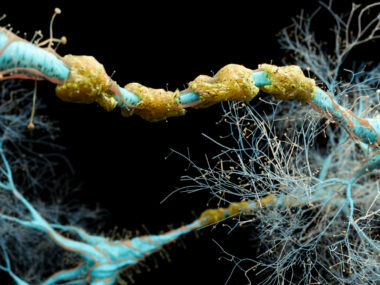
Aegle marmelos fruit extract reduced demyelination and inflammation and improved motor and memory measures in a rat model of multiple sclerosis. (Image from iStock)
- Multiple sclerosis is an immune-mediated disease involving inflammation and damage to the protective myelin sheath surrounding nerve fibers.
- Disease-related processes in MS include oxidative stress, neuroinflammation, demyelination, and damage that can disrupt motor and cognitive function.
- Oral treatment with Aegle marmelos extract reduced demyelination and improved motor and memory performance in a rat model of MS.
An extract from the fruit of the Aegle marmelos plant reduced inflammation and damage to the myelin sheath in a rat model of multiple sclerosis (MS), a study reports.
Researchers found that the extract, administered orally over 42 days, also improved motor and memory performance, restored levels of nerve-support proteins, and lowered markers of cellular stress, with effects the researchers described as comparable to those of fingolimod, an approved MS drug sold as Gilenya and available as generics.
The study, “Aegle marmelos neuroprotective potential in demyelination rat model through modulation of BDNF, GDNF, HSP-90 and HSP-60,” was published in Inflammopharmacology.
While the exact causes of MS are currently unknown, the disease involves immune-mediated inflammation and damage to the myelin sheath, the protective coating on nerve fibers. This disrupts the transmission of nerve signals and leads to a wide range of symptoms.

Bael extract tested in rat model of MS
Aegle marmelos, also known as bael, is a plant native to the Indian subcontinent, including India, Pakistan, and Bangladesh, and also found in Southeast Asia, including Myanmar. Prior research suggests that Aegle marmelos extract (AME) exhibits anti-inflammatory and neuroprotective properties across several disease models.
Researchers in Pakistan sought to evaluate AME in rats with MS-like disease induced by cuprizone (CPZ), a chemical that triggers demyelination, or loss of the myelin sheath around nerve fibers.
Fruits of the plant were first dried and crushed. The powder was mixed with ethanol (alcohol), then the ethanol was evaporated to leave a semi-solid extract.
CPZ-exposed rats received one of three oral AME doses (250, 500, or 750 mg/kg), while others received fingolimod (15 mg/kg). Some rats received CPZ alone as a disease model, and others remained healthy. Treatment lasted for 42 days (six weeks).
In behavioral testing, rats exposed to CPZ showed reduced exploratory activity, suggestive of anxiety-like behavior, weaker grip strength, and impaired memory compared with healthy controls. Fingolimod and AME improved these measures, with AME showing dose-dependent effects, particularly for grip strength and memory.
Brain tissue examination found signs of widespread demyelination, inflammatory lesions, and plaque development in rats given CPZ. Treatment with fingolimod reduced the frequency of plaques, while AME treatment showed dose-dependent improvements, with signs of remyelination at 500 mg/kg.
Extract improves antioxidant defenses
CPZ exposure reduced the mean activity of antioxidant enzymes, including catalase and superoxide dismutase, compared with controls. Those levels increased with fingolimod treatment and in all three AME dose groups. Malondialdehyde, a marker of oxidative damage, was also elevated in the CPZ group, but was lowered by both AME and fingolimod treatments.
Levels of the nerve cell signaling molecules dopamine, noradrenaline, and serotonin were reduced with CPZ exposure and restored toward control levels by fingolimod and the highest AME dose.
CPZ treatment increased — or worsened — the mRNA expression of inflammatory and neurodegenerative markers, including TNF-alpha, interleukin-6, and amyloid beta precursor protein. Fingolimod treatment reduced — or improved — expression of these markers, while AME did so in a dose-dependent manner.
The extract and fingolimod also increased blood levels of two proteins involved in nerve cell growth and repair, BDNF and GDNF, toward levels seen in healthy controls. In addition, both treatments reduced blood levels of heat shock proteins HSP-90 and HSP-60, which the team associates with cellular stress and protein misfolding.
Additional inflammatory and oxidative stress markers, including PGE2, LTB4, nitric oxide, and MPO, were elevated in the CPZ model group and were reduced by fingolimod and by AME in a dose-dependent manner.
A separate 14-day acute toxicity test in female mice found no treatment-related adverse effects after a single oral AME dose of 2,000 mg/kg, including signs of liver or kidney toxicity or abnormalities in standard blood tests.
“This study demonstrates for the first time the powerful therapeutic benefits of Aegle marmelos extract (AME) as a multimodal strategy that can currently demolish the interrelated pathological [disease-related] components of multiple sclerosis,” the researchers concluded. Numerous components found in the extract are “probably responsible for the reported therapeutic efficacy, which is comparable to that of the well-known medication fingolimod.”



Leave a comment
Fill in the required fields to post. Your email address will not be published.