
Phase 2 Trial Will Assess Autologous Mesenchymal Stem Cell Therapy to Treat Progressive Forms of MS
Written by |
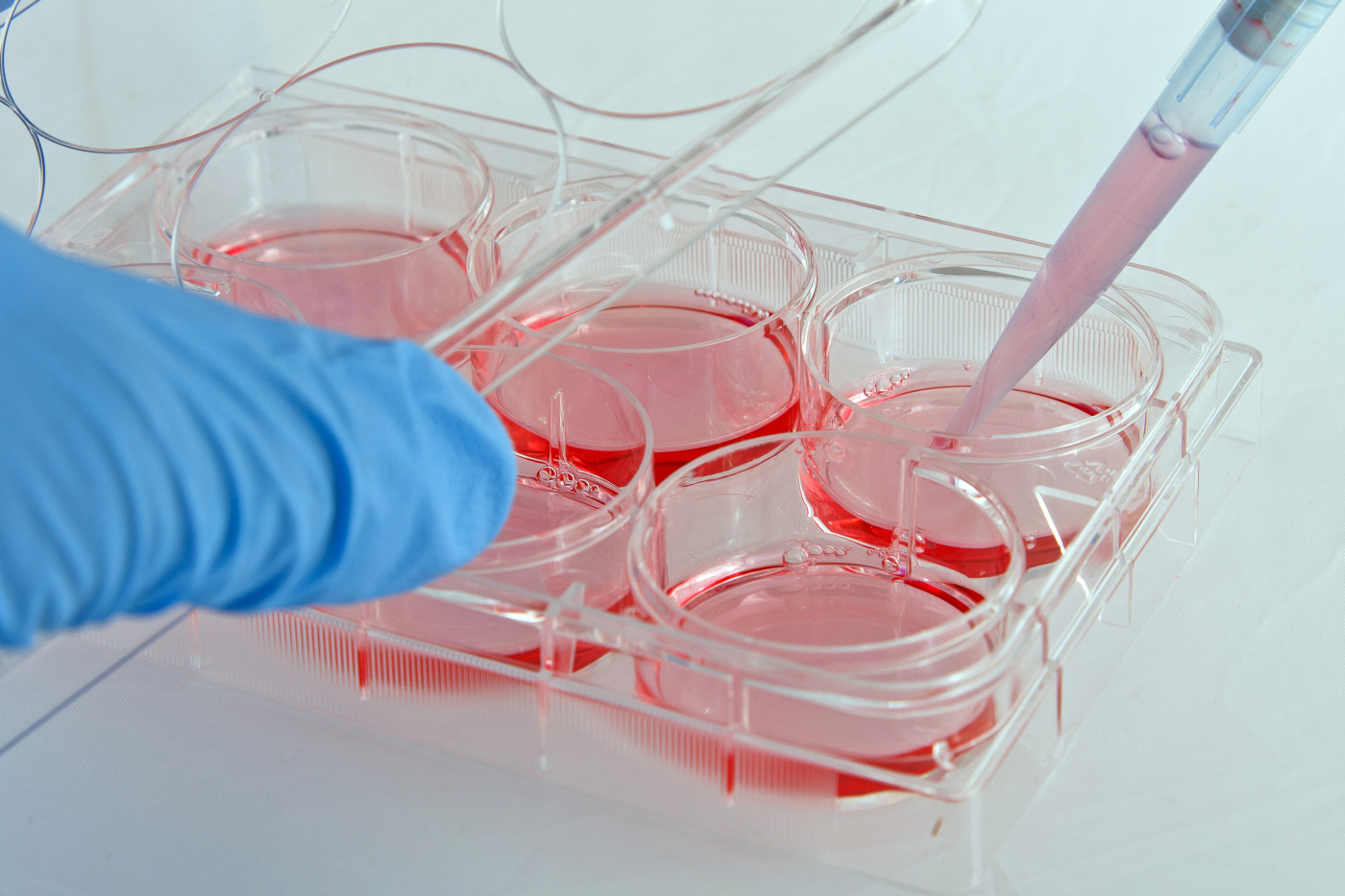
The National Multiple Sclerosis Society is funding a new Phase 2 clinical trial to test the effectiveness of stem cell therapy on individuals with progressive forms of multiple sclerosis (MS), using mesenchymal stem cells from their own bone marrow.
The ability of stem cells to both self-renew and create new cell types (differentiation) makes them a promising tool to repair damaged or diseased cells and tissues. The types of cells generated during differentiation depend on the stem cell type (origin) and its potency (ability to become other cell types).
The new clinical trial (NCT03355365) will assess treatment with mesenchymal stem cells, which can differentiate into many types of cells, and are so-called multipotent. The cells are derived from the participants’ bone marrow — a process called autologous cell therapy — expanded in the laboratory, and triggered to become mesenchymal stem cell-derived neural progenitors.
Cells are then put back into the patients, infused into the spinal fluid in multiple doses. Once mesenchymal stem cells are infused, they are believed to secrete growth factors that stimulate the repair of damaged tissues, and possibly act as inhibitors of immune responses associated with MS.
The placebo-controlled, Phase 2 trial will test the effectiveness of autologous cell therapy with mesenchymal stem cells-neural progenitors in 50 participants with progressive forms of MS. Participants will receive six injections of culture-expanded autologous stem cells at two month intervals in one year. Patient recruitment is ongoing.
Join the MS forums: an online community especially for patients with MS.
Researchers will assess changes in patients’ functional disability by using the Expanded Disability Status Scale (EDSS), based on examination by neurologists. The study also will assess changes in bladder function and possible adverse side effects associated with the treatment.
“There is an urgent need for more effective treatments for MS, particularly for those with more progressive forms of the disease,” Bruce Bebo, PhD, said in a press release. Bebo is executive vice president, research, of the National MS Society.
“We believe that the potential of all types of cell therapies must be explored, and we are pleased to be a part of this clinical trial,” Bebo said.
The study is a follow-up of a Phase 1 trial led by researchers at Tisch MS Research Center of New York. The National MS Society offered $1 million over three years to help support Phase 2 clinical trials testing stem cell therapy in progressive MS.
For more information about the trial, and how to participate, visit this link.



David Morris
I have been diagnosed with ms since 2001 and now I am taking the medication ocrevious one every six months I take the infusion but yet I don't know if this medication is working or not.
LuAnn Sullivan
My doctor wants me to start Ocrevious. I stopped my meds in 2016 for the same reason that you mention. There is no guarantee that they actually slow disease progression. I hope this stem cell therapy offers us better results.
Stephanie Billings
David, I would ask your Neurologist if he/she has seen any improvements. Specifically ask what your score is for the EDSS tests and if your walking time has improved. Also, if you are going to Physical Therapy your PT person should be able to see differences, mine does and she tells me what she sees is improving. Hope this helps.
Stephanie
Sherlyn Alemania
David, I was diagnosed with SPMS IN 2005 and I am on OCERVUS also. I do notice a little difference and my PT Physical Therapist notices a difference and improvement. I believe I am to old for the trial, but would like to be in it. I have heard good things about stem cell therapy, I hope this will be available soon. I thank God for the progress being made.
Patty
I was diagnosed with M/S, 2001. I had stem cells in April this year. I had it done through adipose. The FDA, is going against any clinic in USA, that does this procedure. So I now went to Costa Rica for stem cells. I don't have time to wait, for their trails It is already proved it works in other countries. And it has helped me.
Kym
Yes David, I am also taking Ocrevus, and have no idea if it's working or not. But, I've had MS since 1985 and have SPMS. My Dr. said If it works for RRMS and PPMS, why wouldn't it work for SPMS? Keep fighting, and think positive. Hopefully Ocrevus will stop/slow the progression. Good luck!
Keir TIMBRELL
Hi Kym
Can I just ask if you are being prescribed Ocrevus on the NHS? My Consultant has lead to believe that it is only available on the NHS for Remitting Relapsing MS? Thank You
Tony Dalsanto
I am interested in a PPMS clinical trial.
Louis
Hi Tony, you can look at this website to see if they have any trails for PPMS: https://mstrials.org.au/. Best wishes. Louis
Elena G Brunet
If patient recruitment is on-going I’d like to learn more about what qualifications are required? Age, date of MS diagnosis, severity over time? Please let me know what my next step would be. Thank you.
Suzanne branch
I’ve been taking a Ocrevus for a year and a half. MS is still progressing. We need a cheer
Mrs S Potter
IT sounds good,
Todd Boldt
How can I get in a trial for the stem cells ?
Colline Rios
My daughter is at a 9.0 on the disability scale
Could this be reversed with this treatment??
How do I get her in this trial???
Must she be in NYC??
We can transport her there if she can participate.
Dorothy Hope
Hello
I am a mother of a son that was diagnosed with MS ..
in the prime of his life he was 22 he managed it for years with meds and then it kept getting worse .. 4 yrs ago he underwent stem cell transplant of course our hopes were high but nothing changed much as years passed my son has progress got worse even though the drs. involved said the transplant was a success. he can barely work and he has cognitive issues that are progressively getting worse, The only good thing I can say is the lesions stopped.
I wanted all Ms Patients to know our truth about Stem cell transplants.