
Blood Test Seen to Distinguish MS from Other Neurological Conditions
Written by |
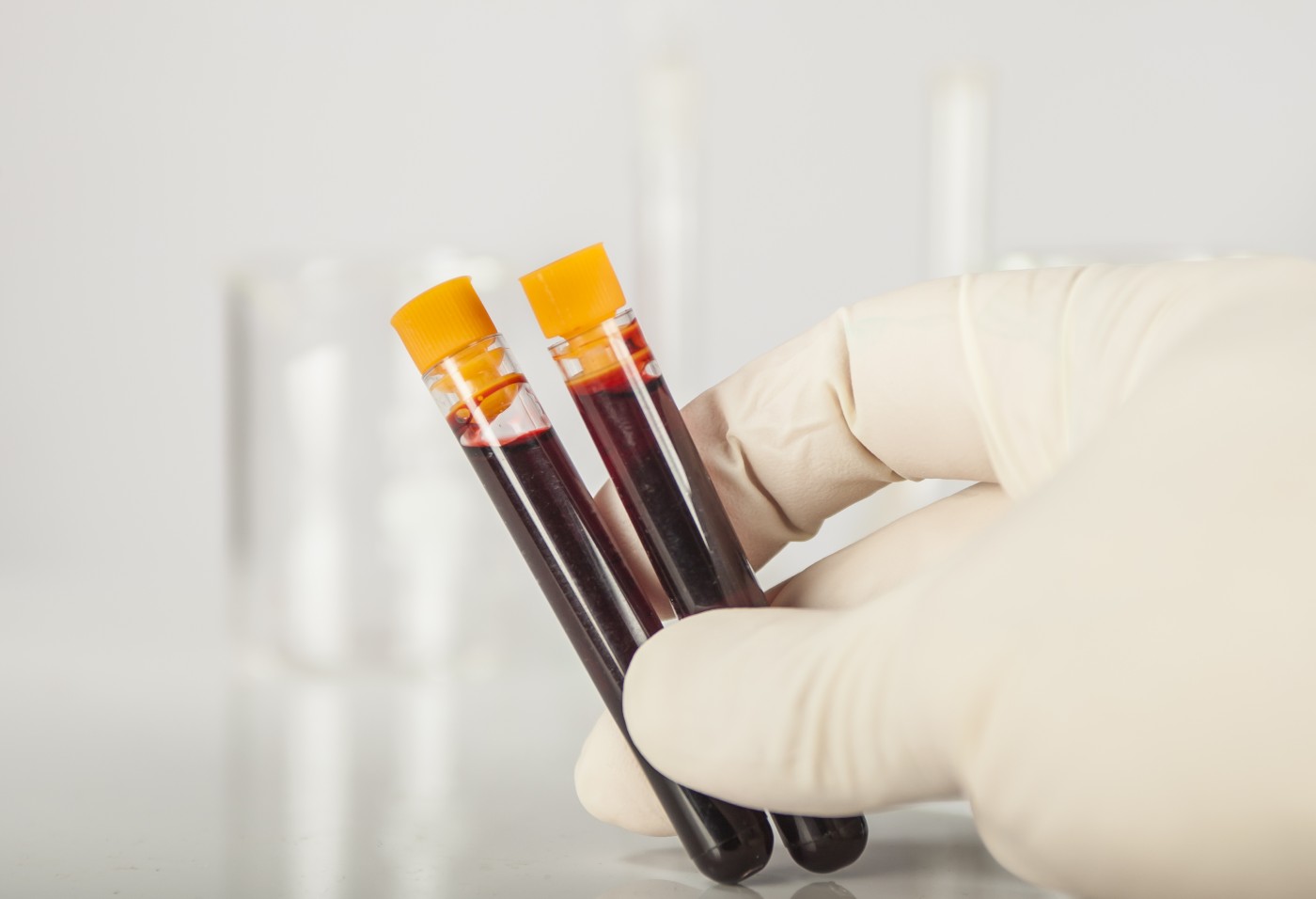
Researchers at Michigan State University suggest that a blood test can distinguish patients with multiple sclerosis (MS) from people with other neurological conditions, according to a recent study published in EBioMedicine.
Results from the study, “An In Vitro Diagnostic for Multiple Sclerosis Based on C-peptide Binding to Erythrocytes,” need to be confirmed in larger and more in-depth studies, but so far provides a promising candidate for an easy, inexpensive and fast way to make an initial MS diagnosis.
Because diagnosing MS can be a slow and uncertain procedure, researchers have long been on the lookout for an objective lab-based method. Currently, most people have to wait between six months and two years before a diagnosis is set, but because available therapies are only able to slow disease progression, it is crucial to start treatment as soon as possible.
The study recruited 200 participants composed of three groups: MS patients, patients with other neurological conditions, and healthy controls. A blood sample was collected from each participant, and then a lab test was used to measure how much C-peptide added to the blood would bind to red blood cells.
Researchers noted that more peptide bound to blood cells from the 86 MS patients, than to those of the 75 other neurological patients or the control group. The test correctly identified MS patients in 98.3% of the cases, and had an 89.5% chance of ruling out the disease.
In addition to being a tool for detecting MS in patients, the test may tell researchers something else about what goes on in MS.
C-peptide is a molecule produced by the pancreas, along with insulin, and has been long viewed as a marker of insulin production in Type 1 diabetes. During the past decades, it has become clear that the molecule is actually beneficial for diabetes patients because it improves blood flow. How this relates to MS is not clear, but scientists have suggested that the factor increases delivery of the trace element zinc to red blood cells.
The research team is now working with regulatory agencies on the design of a larger validation study that might bring the test closer to clinical use.
“This pilot study demonstrates the potential of C-peptide binding … as a possible test to assist in the diagnosis of MS, and has the advantages of being minimally invasive, employing widely available reagents, and rapid return of results,” the researchers wrote.



Anon
Fantastic news that will definitely help diagnosis quicker! I had to wait for three years and a second relapse before being diagnosed because my PCP would not bite the bullet and run the big test (MRI) because my initial symptoms were "mild". She had no issue with drawing a darn lot of blood out of me though!
Faith French
If a blood test could diagnose, the form of MS is still unknown. To then prescribe a MS DMT right away is wrong. DMTs for PPMS are more risky than effective. New MS patients need time to make fully informed care decisions. DMTs are pushed far too much by neurologists.
Dianne
In what way are DMTs risky to those with PPMS?
Dana Spence
I am the corresponding author on this article. We have a ways to go, but are encouraged by our results, especially after 200 patients.
Faith, you are correct that prescribing DMT in MS is tricky; we hope our test takes some of the guessing game out of the DMT.
Bernice
How can we find out if you perfect this test and does not having a spleen affect the testing?
dana spence
Bernice
we are getting ready to run a larger trial with more patients involving other universities outside of msu...if our results hold, it should generate more excitement and hopefully bring this test to the clinic for use;
Edie Firmin
I know this article has not been commented on for some time, but I have questions about the test and trials.
Wendy Samuel Herbelin
Are there any updates on this test or current studies? I'm a patient who has been diagnosed with a form of Lupus, but is also being evaluated for a possible alternative diagnosis of MS.
Joyce Casey
I was diagnosed with Lupus and Mixed Connective tissue disease in 2004. I have started noticing quirks leading to question if another process is beginning. I have 2 aunts diagnosed with Parkinson's and another with MS.
I hope we get a response Wendy.
Jason
Hi Faith I am in limbo due to being positive for Obands but no mri activity. Can I get the blood test?
Jason
[email protected]
Bgarr
Oligoclonal banding is not a specific bio-marker for MS. Some people have MS and no OCB's. I hate that it relied on so heavily.
Kimberly Burdette
are there any more active studies going on with this? I would like to participate. Thanks Kimberly
J Hunter
Can this test be ordered on a patient and what is it called and what lab can run this C peptide test for relapse of MS and what vial and how much blood does it need? Patient is in Nashville.
THANK YOU!
Hi Julia,
The test described is still in development and need to go through further validation before becoming commercially available.
For now, traditional neurological examinations, including MRI scans, are needed to diagnose MS. If this is a client of yours, please refer him or her to a neurologist.
Kathy
I was made to feel ashamed & embarrassed by my local MS specalist because i couldnt prove lesions on my brain, she told me if i didnt show lesions i didnt have MS!! although have a positive genetic test results for limb girdle MS. Told the dr ive had problems running into door frames, walls etc. she replied we all have balance problems. I have problems using my legs, numbness the entire top of legs from knees to thighs. Nerves n legs constantly firing, excurciatingly painful. Live in small town, no dr to help no matter how far i travel. I read that not having lesions does not mean a person doesnt have MS
Sherry
Is there a study I could sign up for for this test?
Hi Sherry,
I have no further information about ongoing studies of the test. You could always attempt to contact the researchers directly. You can find contact details if you follow the link to the article.
Marla
What is update as of July, 2019? Is this blood test available? They took blood from me on 12/17 to verify MS and it was negative along with MRI. Not sure if this was the test done.