Desmopressin for bladder dysfunction in multiple sclerosis
 Fact-checked by
What is desmopressin for MS?
Desmopressin acetate is a medication approved in the U.S. for managing urinary and bleeding problems in people with certain diseases. Although it is not specifically indicated for individuals with multiple sclerosis (MS), it is sometimes prescribed off-label to manage bladder problems related to the neurological disease.
Some people with MS experience neurogenic bladder, in which problems with the nerves involved in bladder control lead to issues such as sudden strong urges to urinate, incomplete bladder emptying, or needing to wake up throughout the night to empty the bladder (nocturia).
Desmopressin is sometimes used as an MS bladder dysfunction treatment. It works by mimicking certain effects of the hormone vasopressin, also known as the antidiuretic hormone, which helps control water balance and urine production in the kidneys. Desmopressin is most commonly used in MS for reducing urination and managing nocturia.
In the U.S., desmopressin is available in various formulations, ranging from oral tablets and oral solutions to injections and nasal sprays. It is sold under brand names such as DDAVP and Desmoda, with generics also available.
The approved indications vary for different formulations, and while none specifically include MS, they may include other conditions that cause excessive urination, such as diabetes insipidus and bedwetting.
Therapy snapshot
Scroll horizontally to view all columns -->
| Treatment name | Desmopressin |
| Usage | Used off-label to manage bladder problems in MS |
| Administration | Oral tablet, oral solution, injection, or nasal spray |
Who can take desmopressin?
In the U.S., the use of desmopressin for MS is off-label, meaning no formulation of the medication is specifically approved for people with the chronic disease. Doctors may still sometimes prescribe it for managing frequent urination and reducing nighttime urination in MS.
Various formulations of desmopressin carry different contraindications, or reasons to avoid use. In general, the medication may need to be avoided or used cautiously by people with:
- allergies to desmopressin or any other ingredients in the medication
- kidney or heart problems
- illnesses that can cause fluid or salt imbalances
- a history of low blood sodium (hyponatremia)
- excessive production of vasopressin
- extreme or constant thirst
- uncontrolled high blood pressure
The medication may also need to be used with caution or avoided by people older than 65 or those taking certain diuretic or blood pressure medications.
Injectable formulations of desmopressin carry a black box warning for risk of hyponatremia, a medical condition marked by abnormally low sodium levels, which can be life-threatening. The medication should not be used in people with risk factors for severe hyponatremia.
How is desmopressin administered?
Desmopressin acetate nasal sprays, oral solutions, and oral tablets are available. The medication can also be administered via into-the-vein (intravenous) or under-the-skin (subcutaneous) injections, though this is not as common for people with MS.
Dosages and dosing frequency may vary across formulations, but for its approved indications, desmopressin is usually taken 1-3 times daily. 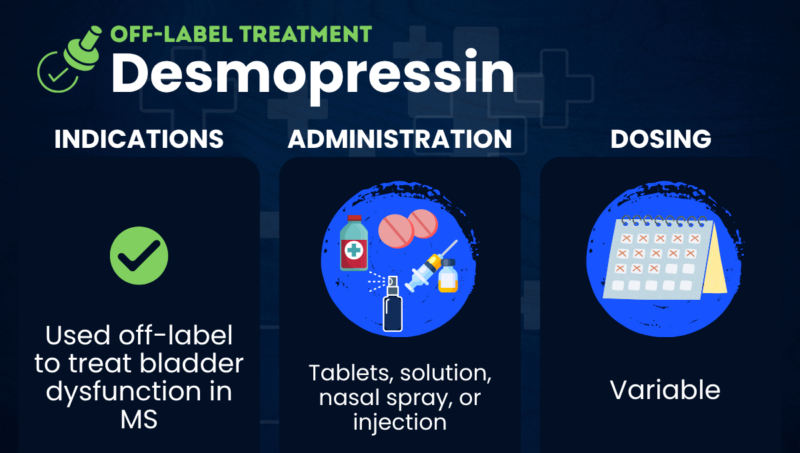
Potential side effects of desmopressin
There is little specific data about the side effects of desmopressin in people with MS. One review article found the most common side effects for MS patients included:
- headache
- nausea
- fluid retention
- nosebleed or nasal inflammation
- general feeling of being unwell
- swollen ankles
In its approved indications, the side effects of desmopressin vary by formulation but may include:
- dizziness
- abdominal pain
- high blood pressure
- diarrhea
Additional side effects may occur with the injection formulation, although that’s less likely to be used to manage MS bladder issues.
Because hyponatremia is a potential complication, people taking desmopressin may need to have their blood sodium levels routinely monitored. Doctors may also recommend that some patients using desmopressin reduce their fluid intake to reduce the risk of dangerously low blood sodium levels.
Other possible risks with desmopressin may include:
- fluid retention, which can be particularly problematic for people with heart failure, uncontrolled hypertension, high pressure inside the skull, or a history of urinary retention problems
- allergic reactions
Multiple Sclerosis News Today is strictly a news and information website about the disease. It does not provide medical advice, diagnosis, or treatment. This content is not intended to be a substitute for professional medical advice, diagnosis, or treatment. Always seek the advice of your physician or other qualified health provider with any questions you may have regarding a medical condition. Never disregard professional medical advice or delay in seeking it because of something you have read on this website.