
Potential myelin-repair treatment for MS enters human testing
Phase 1 assesses safety in healthy adults; Phase 2a will enroll people with MS
Written by |
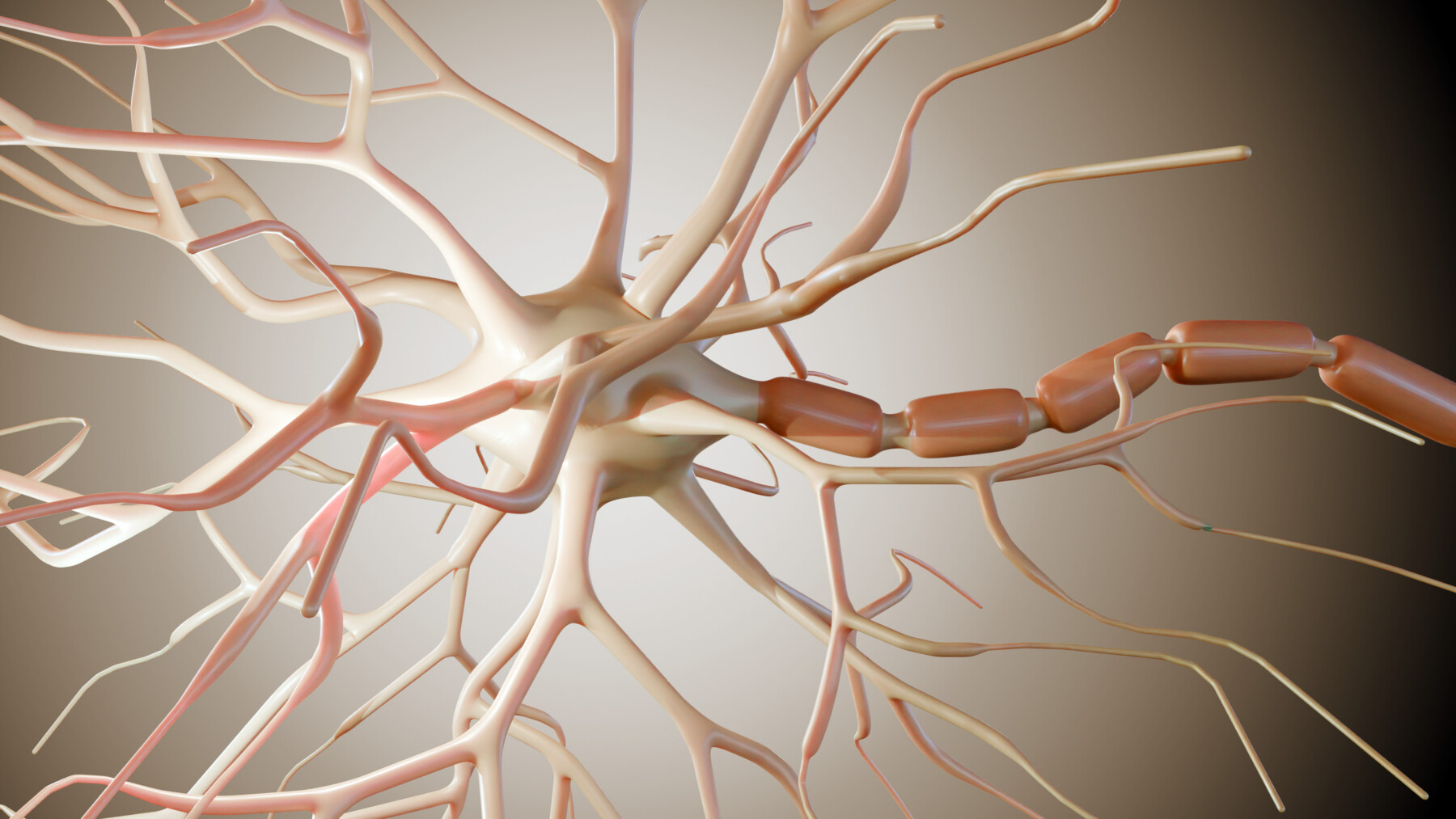
Myelin is a protective coating around nerve fibers that helps electrical signals travel efficiently. In multiple sclerosis, damage to myelin disrupts these signals, and experimental treatments are being studied to help restore it. (Image by iStock)
- Multiple sclerosis (MS) damages myelin, the protective coating around nerve fibers. This disrupts communication between nerve cells and can contribute to disability.
- Common MS symptoms include muscle weakness, vision problems, and difficulties with movement and thinking.
- A new Phase 1/2a clinical trial has begun testing PRO-1562, an experimental oral treatment designed to promote myelin repair.
The first participant has been dosed in a Phase 1/2a clinical trial testing PRO-1562, an experimental oral treatment designed to repair myelin, the protective sheath around nerve fibers that is damaged in people with multiple sclerosis (MS).
Developed by Progentos Therapeutics, PRO-1562 aims to help existing immature cells develop into myelin-producing cells, potentially restoring nerve function and protecting nerve fibers from further damage.
“This milestone is a significant step forward in translating promising remyelination science into a potential therapy for people living with MS,” Paul Frohna, MD, PhD, chief medical officer of Progentos, said in a company press release.

How PRO-1562 aims to restore myelin in MS
MS is a chronic disease in which the immune system mistakenly attacks myelin, a fatty coating that protects nerve fibers and helps them carry signals. Damage to myelin disrupts communication between nerve cells and can cause symptoms such as muscle weakness, vision problems, and difficulties with movement and thinking.
Over time, myelin loss can also leave nerve fibers more vulnerable to injury, potentially contributing to worsening disability.
Currently available therapies for MS mainly reduce inflammation, helping limit disease activity and slow disability progression. However, these treatments cannot fully stop nerve damage or directly replace lost myelin.
“Disease-modifying immunomodulatory therapies have transformed the treatment of MS by reducing relapses and controlling inflammatory disease activity, yet many patients still accumulate neurological damage and disability over time. Today, there are no approved therapies to regenerate lost myelin,” Frohna said.
PRO-1562 is being developed to help address this need by encouraging immature cells, called oligodendrocyte precursor cells, to mature into oligodendrocytes. These cells produce myelin in the brain and spinal cord.
In preclinical studies, PRO-1562 helped these immature cells develop into myelin-producing cells and increased myelin formation in models of long-term myelin damage. According to Progentos, the treatment increased myelin formation in both white matter, which consists mainly of nerve fibers, and gray matter, which consists mainly of nerve cell bodies.
The company believes this approach could eventually help protect nerve fibers and improve nerve function. However, it remains unknown whether these benefits will occur in people with MS.
Progentos previously secured $65 million in funding to help move its experimental myelin-repair treatments for MS toward clinical testing and develop additional treatments.
Phase 1/2a trial begins with safety testing in healthy adults
The ongoing Phase 1/2a clinical trial (NCT07826689) has two parts. In Phase 1, healthy adults will be randomly assigned to receive a single oral dose of PRO-1562 at one of several increasing dose levels, or a placebo.
Phase 1 is underway and recruiting at a single center in Australia. Researchers will assess the treatment’s safety and tolerability, how it is absorbed and processed by the body, and whether it can reach the brain and spinal cord.
Phase 2a will then assess whether PRO-1562 can promote myelin repair in adults with relapsing forms of MS who also have chronic optic neuropathy, a condition involving long-term damage to the optic nerve that can affect vision.
During the six-month treatment period, participants will receive PRO-1562 or a placebo once a month while continuing their existing MS disease-modifying treatment. After six months, participants may continue receiving their assigned treatment until the last participant completes the six-month treatment period.
Researchers will test how clearly participants can see, measure how quickly nerve signals travel through the optic nerve, use MRI scans, and assess thinking and motor function to look for possible benefits of myelin repair.
“The preclinical data with PRO-1562 suggest that our novel remyelinating approach has the potential to fundamentally alter the treatment paradigm for patients with MS and improve their long-term prognosis,” Frohna said.




Leave a comment
Fill in the required fields to post. Your email address will not be published.