
Guest Voice: An insurance denial spurs me into advocacy mode
MS changed my life, but advocacy has been my Uno Reverse card
Written by |

It took exactly 14 days for my health insurance to pick the first fight with me this year.
The letter arrived quietly, the way these things always do. Denied. Out of network. This time it was Octave Bioscience’s Multiple Sclerosis Disease Activity (MSDA) test, a blood test that evaluates biomarkers to show what’s happening beneath the surface in multiple sclerosis (MS).
If you live with MS or love someone who does, you understand that an MRI tells only part of the story. My scans have been stable for two years, which means I hear the familiar statement, “Your medication is working. You’re stable.”
Yet my body tells a different story. More stiffness, spasms, cognitive drag, and fatigue sink into my bones. That disconnect creates its own kind of panic. If the MRI is normal, why do I feel worse?

MS doesn’t always announce damage through new lesions or bright spots on a scan. It can quietly smolder in the background, and disability can gradually accumulate over time.
Researchers describe this as progression independent of relapse activity. It’s why the symptoms that got me to the neurologist in the first place are minimal compared with what I feel today, even though I haven’t had a single relapse.
Tests like the MSDA help fill that gap. They can indicate whether a therapy is effective, whether a higher-efficacy disease-modifying therapy (DMT) should be considered, or whether a patient might benefit from emerging Bruton’s tyrosine kinase (BTK) inhibitors.
Better information leads to better treatment decisions. Insurance, however, hasn’t kept up with that shift.
Filling the gap through advocacy
This isn’t my first round with coverage barriers. Two years ago, my DMT was denied with a fail-first requirement. I needed to try and fail a lower-efficacy drug before accessing the treatment my neurologist wanted to prescribe.
That denial came wrapped in the language of safety and policy, but the underlying message was the same one patients always hear: The insurer gets the final word. The doctor can suggest. The patient can hope. The insurer decides.
This year, it’s a different denial, but the same pattern. A necessary tool is blocked on a technicality, process overruns clinical logic, and the burden shifts to the patient.
This is where real advocacy comes into play. Not the polished variety with ribbons and step counts. The kind that begins when a patient asks their neurologist why a tool exists if insurers refuse to cover it, someone posts online that a denial isn’t final, and patients compare notes, realize they were all told the same thing, yet assumed they were the only ones.
For me, advocacy began with disbelief at how blunt the system is. How can a DMT be considered too aggressive until a patient fails a less effective one? How can a test that measures silent disease activity be treated as optional?
Then I learned how many patients simply absorb the denial and move on. Not because they agree, but because they don’t know they can appeal, or the cognitive load required to fight feels impossible.
And here’s the part that rarely gets acknowledged: MS already taxes cognitive function, processing speed, planning, and fatigue. Adding prior authorizations, appeals, and reimbursement battles isn’t a neutral inconvenience. It filters out anyone who lacks the time, health, or knowledge to push back.
During college, I sold life, health, and disability insurance. I was 19 and learned enough about the system to understand exactly how denials function economically. If everyone appealed, the numbers would look different. But most people don’t. The system bets on that and profits from it.
The harm isn’t only the denial itself. It’s the way denial shapes what patients believe they’re entitled to ask for. A denial has a chilling effect. It convinces people that the science isn’t established enough, that they’re not sick enough, or that they don’t deserve clarity.
We’re living in a moment of genuine progress in MS science. Biomarkers are redefining how we evaluate disease activity. BTK inhibitors are approaching regulatory decisions. Researchers are teasing apart immunological mechanisms that were invisible a decade ago. Science is sprinting. Insurance is strolling.
So the question becomes, who gets left behind while we wait for coverage to catch up? Newly diagnosed patients. Patients without insurance literacy. Patients without a neurologist willing to write a six-page justification. Patients without the energy to sit on hold and argue with a call center.
That gap is where advocacy has to live. Because silence is expensive. Silence delays coverage, access, and care.
I appealed my denial. I still don’t know if it’ll be approved, but I know this: I’m not willing to let a claims department define my understanding of my disease or to stay quiet about how these decisions affect patients who don’t know how to fight back.
MS changed my life, but advocacy has been my Uno Reverse card. It’s how I change things right back.
To submit your own Guest Voice for publication on Multiple Sclerosis News Today, please email your idea to our columns manager at [email protected] with the following included in the subject line: “Guest Voice: Multiple Sclerosis News Today.”
Note: Multiple Sclerosis News Today is strictly a news and information website about the disease. It does not provide medical advice, diagnosis, or treatment. This content is not intended to be a substitute for professional medical advice, diagnosis, or treatment. Always seek the advice of your physician or other qualified health provider with any questions you may have regarding a medical condition. Never disregard professional medical advice or delay in seeking it because of something you have read on this website. The opinions expressed in this column are not those of Multiple Sclerosis News Today or its parent company, Bionews, and are intended to spark discussion about issues pertaining to multiple sclerosis.

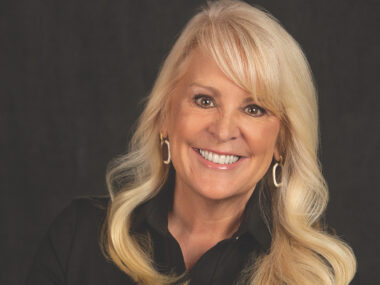


Gwen Williamson
How u can live with spasicity and can't do nothing when you get diagnosed with M.S. you get everything else High Blood Pressure Depression Anxiety Ext.