
Brain scans, clinical data help AI model predict cognitive decline in MS
Explainable tool showed about 90% accuracy in internal validation
Written by |

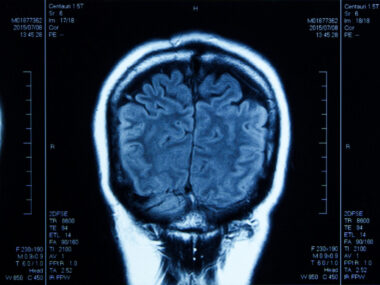
An AI model that combined brain scans with clinical and demographic data predicted cognitive decline in people with MS with about 90% accuracy in internal validation. (Image from iStock)
- An AI model predicted cognitive decline in MS using brain scans and clinical data.
- Key factors included brain volume, age, lesion burden, and cognitive reserve.
- This AI tool may help personalize cognitive assessment and monitoring in MS.
An artificial intelligence (AI) model that analyzes brain scans alongside clinical and demographic data showed high accuracy in predicting which people with multiple sclerosis (MS) were likely to experience cognitive decline over time, according to a new study.
Using tools that show which parts of the data most influenced the model’s predictions, researchers were also able to identify which factors the model used to distinguish between patients who experienced cognitive worsening and those who remained stable.

AI model may aid cognitive monitoring
“The proposed multimodal AI approach demonstrated robust performance and highlighted relevant brain regions associated with cognitive worsening, underscoring its potential for personalized cognitive assessment and monitoring in MS,” researchers wrote.
The study, “Explainable Artificial Intelligence to Predict Neurocognitive Disorder Progression in Multiple Sclerosis Using MRI and Clinical Data,” was published in the European Journal of Neurology.
In MS, the immune system attacks and damages healthy parts of the brain and spinal cord, leading to symptoms that can include movement difficulties as well as cognitive problems, such as issues with memory, learning, and thinking.
Under current diagnostic frameworks, these cognitive changes are classified as mild or major neurocognitive disorders (NCDs), depending on how much they affect a person’s ability to function independently. Studies suggest that many people with MS meet the criteria for mild or major NCDs, but the clinical features and brain changes linked to these conditions have not yet been fully explored.
While AI tools are increasingly being explored to predict cognitive problems in MS, many models rely on only one type of data and do not clearly explain how they reach their predictions.
To address these gaps, a team of researchers in Italy first set out to examine how common mild and major NCDs are in people with MS, and to identify the clinical features and brain changes associated with these conditions.
Study tracks cognitive worsening over time
The team retrospectively analyzed data from 224 adults with MS and 115 healthy controls collected at a research center in Milan. The MS patients were relapse-free, steroid-free, and on a stable disease-modifying therapy for at least three months before undergoing clinical evaluations and MRI brain scans. The MS patients also completed cognitive testing at the start of the study and again after a median follow-up of 3.4 years.
At the start of the study, 10 individuals with MS (4%) met the criteria for mild NCD and 24 (11%) for major NCD.
Compared with individuals without cognitive impairment, those with major NCD were generally older, had lived with MS longer, and had more severe disability. They also had lower levels of education and cognitive reserve, a measure of the brain’s ability to function despite damage, and reported worse fatigue and lower physical health-related quality of life.
Participants with both mild and major NCD also had a greater volume of MS-related brain lesions and smaller volumes in the thalamus and hippocampus, brain regions linked to cognitive function.
At follow-up, 27 participants with MS (12%) experienced cognitive worsening. Among those without impairment at the start of the study, 11 (6%) developed mild NCD and 12 (6%) developed major NCD. Among the 10 individuals initially diagnosed with mild NCD, four (40%) progressed to major NCD.
Model used brain scans, clinical data
The researchers then developed an AI model — a computer-based system that can learn patterns from large amounts of data — to predict future cognitive decline.
The model was built using data collected at the start of the study, including MRI brain images, MRI-derived measures such as the volume of brain lesions and the volume of specific brain regions, clinical measures (e.g., disability level, disease duration, and cognitive reserve), and demographic information (such as age and sex).
In internal validation, using these initial features, the model predicted cognitive outcomes with high accuracy, correctly classifying patients who remained cognitively stable and those who experienced worsening over follow-up in approximately 90% of cases.
To better understand how the model made its predictions, the researchers used explainability tools, which are methods that help reveal which features most influenced the model’s decisions.
These analyses showed that the most influential factors, in order of importance, included the volume of cortical gray matter, age, the volume of the thalamus and hippocampus, the volume of MS-related brain lesions, and cognitive reserve.
“The multimodal AI implemented in this study demonstrated high accuracy and reliability, with explainability analyses confirming the involvement of brain regions linked to cognitive impairment,” the researchers concluded. “These results support the potential for AI-based tools in personalized cognitive assessment and monitoring in MS.”



Leave a comment
Fill in the required fields to post. Your email address will not be published.