
Teenagers who eat a healthy diet face less risk of later MS, study suggests
More adolescent dairy intake linked to lower odds of late-onset MS
Written by |

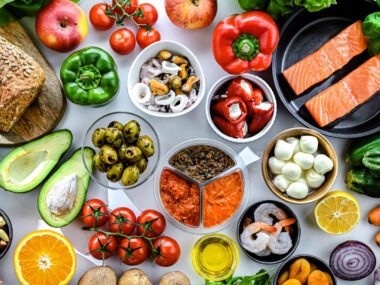
Eating a healthy diet as an adolescent, with fruits and vegetables and dairy products, has been tied to lower odds of developing late-onset MS later in life. (Photo from iStock)
- A healthy adolescent diet, rich in dairy, seafood, nuts, fruits, and vegetables, may help lower the risk of late-onset multiple sclerosis, a new study suggests.
- High dairy intake during a person's teenage years was specifically linked to a nearly 80% reduced risk of MS after age 50.
- The researchers noted that the findings align with the fundamentals of the Mediterranean diet.
For teenagers, eating a healthy diet during one’s adolescent years — particularly one rich in milk, cheese, and yogurt, among other dairy products — may help reduce the risk of developing late-onset multiple sclerosis (MS) later in life, a study has found.
In fact, participants in the study who had the highest intake of foods in the dairy group as teens appeared to have a nearly 80% lower risk of an MS diagnosis in later years than those consuming less of those products, according to the researchers. Eating more fish, fruits and vegetables, and nuts during adolescence was also linked to lower odds of late-onset MS, the data showed.
“Our research highlights the advantageous impact of dairy products, seafood, nuts, fruits, and vegetables in lowering the [late-onset MS] odds. Hence, advocating for nutrition role in development of [late-onset MS] could represent a preventive measure for people susceptible to MS,” the researchers wrote.
So-called late-onset MS, seen in fewer than 10% of patients, is characterized by the neurodegenerative disease occurring later in life, usually after age 50. The researchers noted that, compared with an earlier onset, a later in life diagnosis “is often accompanying with more unfavorable disease outcomes and a faster progression of disability.”
The study, “The influence of adolescent diet on the occurrence of late-onset multiple sclerosis: a population-based case-control study,” was published in the journal BMC Neurology by researchers in Iran.

A chronic neurological disease, MS occurs when the body’s immune system launches a misguided attack against the protective sheath covering nerve fibers. This leads to a range of symptoms, with most diagnoses occurring between the ages of 20 and 50. What exactly causes MS is unclear, but research suggests the disease develops from a combination of genetic and environmental factors.
Some studies have found evidence indicating a potential association between diet and the risk of developing MS, although this is “still a matter of debate,” according to the researchers.
Now, to better understand if and how food choices affect the course of the disease over time, a team led by researchers from the Tehran University of Medical Sciences examined whether diet during adolescence could influence the odds of developing late-onset MS. The team analyzed data from 83 late-onset MS patients from the National MS Registry of Iran and 207 adults of similar age and sex with no history of neurological diseases, who served as controls.
To study eating habits, the participants were asked to complete a food questionnaire reporting how often they ate different types of products — dairy, meat, vegetables, fruits, dressings and oils, and fast foods — during their adolescent years, specifically from ages 13 to 19. For each item, intake was classified as low, medium, or high.
The results showed that individuals with the highest intake of dairy products had up to 79% lower odds of developing late-onset MS relative to those with lower intake. Eating more seafood, nuts, fruits, and vegetables was also associated with a lower risk of developing the disease, the data showed.
These findings suggested that healthy dietary patterns may have beneficial effects on MS prevention.
According to these researchers, these findings align with the fundamentals of the Mediterranean diet, which promotes eating plant-based foods such as grains, nuts, beans, fruits, and vegetables, while also encouraging the consumption of fish, seafood, and dairy products.
“These findings suggested that healthy dietary patterns may have beneficial effects on MS prevention,” the researchers wrote.
The scientists acknowledged that study participants were being asked to recall their past diet from many years earlier, which could be subject to recall bias, or not accurately remembering what occurred in the past. However, this problem likely affected both the patients and the controls, the team noted.
Another limitation pointed out by the authors was the lack of follow-up on participants’ dietary habits in subsequent years.
Nevertheless, the findings suggest that a healthy diet, with high consumption of dairy, seafood, nuts, fruits, and vegetables, during adolescence may reduce the odds of developing late-onset MS later in life, according to the researchers.
“Hence, advocating for a dietary pattern rich in these food subgroups could serve as a preventive measure for people susceptible to [late-onset MS],” the researchers wrote. The scientists added that such foods “may provide protection against” MS developing after age 50.
Still, the team noted that “future research is required to validate our findings and investigate the potential intermediate mechanism.”



KT
100% believe that is true. I still eat meat or chicken(just not every night). I have my Ezekiel toast w avocado n coffee. Late lunch lite dinner and no food after 7
KT
Btw this should go with what I just posted lol. I am in my early 60’s BUT in my earlier years I never ate healthy and never ate vegetables I ate anything with sugar- not good.