
Molecules point to stem cell therapy response in progressive MS
Study IDs 4 biomarkers that could help track MSC-NP treatment
Written by |
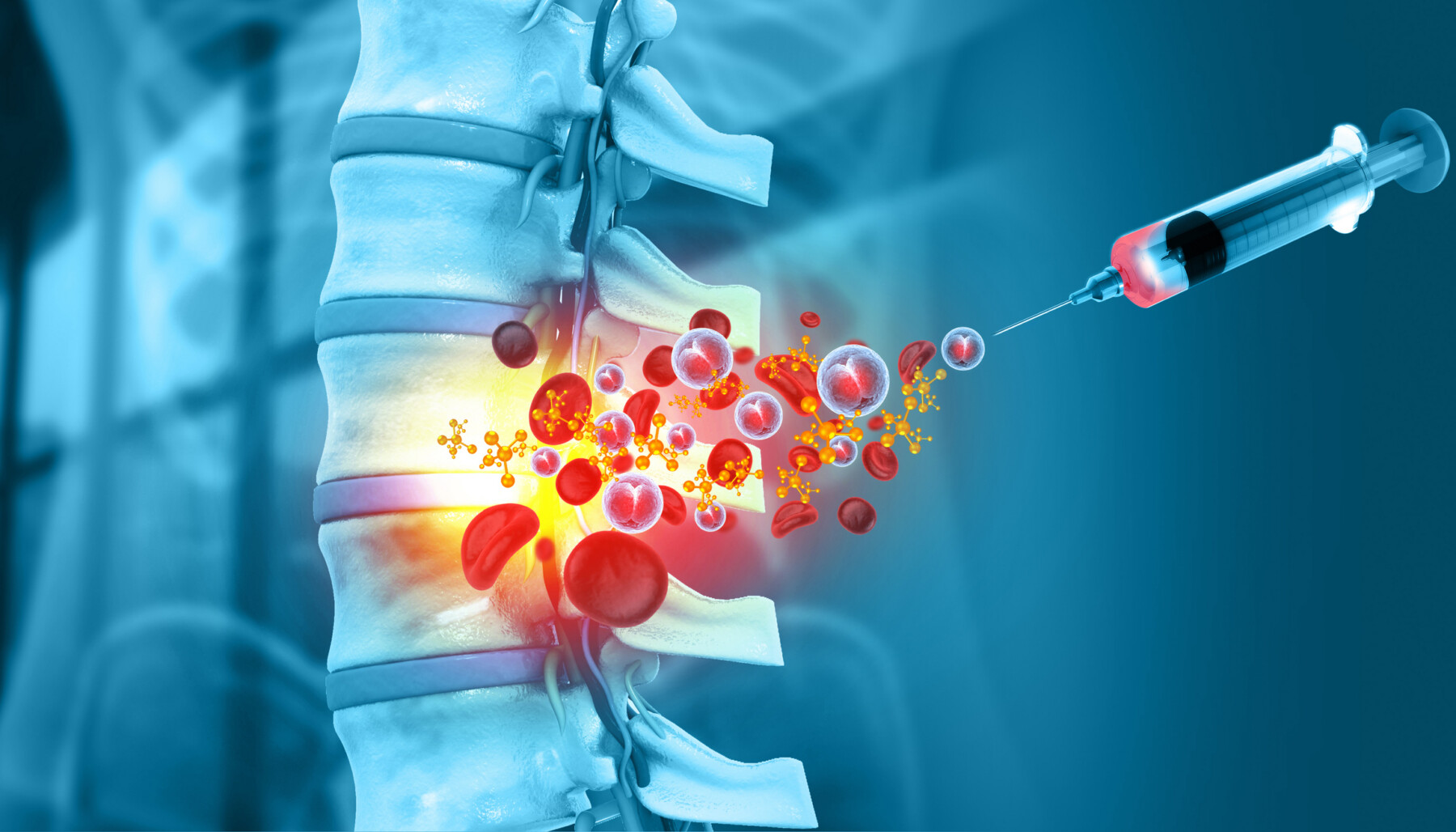
Stem cell treatment is administered into cerebrospinal fluid.
- Researchers identified four cerebrospinal fluid biomarkers that may track response to MSC-NP stem cell therapy in progressive MS.
- Levels of specific inflammatory and repair-related molecules altered significantly following MSC-NP treatment in clinical study participants.
- These biomarkers may help define biological responses to stem cell treatment and guide the design of future clinical trials.
Researchers have identified four key biomarkers in the fluid surrounding the brain and spinal cord that may be used to assess response to MSC-NP, a type of stem cell therapy currently in early clinical testing for progressive forms of multiple sclerosis (MS).
The levels of these four molecules — markers of inflammation, immune responses, and potential repair processes — were found to be significantly altered after MSC-NP treatment in people with primary progressive MS (PPMS) or secondary progressive MS (SPMS).
“Biomarkers are an excellent tool for monitoring progressive disease,” Saud A. Sadiq, MD, the study’s co-senior author and director of the Tisch Multiple Sclerosis Research Center of New York (MSRCNY), said in a press release from the center.
The four biomarkers “help define the [biological] response to MSC-NP treatment as well as guide the design of future clinical studies,” the researchers wrote.
The study, “Effect of intrathecal injection of mesenchymal stem cell-neural progenitors on cerebrospinal fluid biomarkers in progressive multiple sclerosis,” was published in Stem Cells Translational Medicine. It was funded by the National Multiple Sclerosis Society and the Damial Foundation.

Stem cell treatment shows promise for MS
MS is an inflammatory disease that causes damage to the brain and spinal cord (central nervous system). This neurological damage disrupts normal nerve signaling, which ultimately leads to MS symptoms. PPMS and SPMS are types of MS marked by symptoms that worsen over time, irrespective of disease flares.
Stem cells are cells that can develop into other cell types. Mesenchymal stem cells (MSCs) are a type of stem cell that can normally grow into certain structural tissues.
MSC-NP therapy involves collecting MSCs from a patient and engineering them into neural progenitors, a type of stem cell that can generate new nerve cells (neurons) and other types of brain cells.
The engineered MSC-NPs are administered to the central nervous system via intrathecal injection (into the spinal canal), with the aim of reducing inflammation and promoting neurological repair.
MSC-NP treatment has shown promise as a potential MS treatment in early clinical trials, but its exact biological effects on the body are not yet fully defined.
Sadiq and colleagues at MSRCNY set out to identify MSC-NP-specific biomarkers — that is, objectively measurable molecules that could provide insight into the effect of MSC-NP treatment.
Their analysis involved data from nearly 100 PPMS and SPMS patients who received repeated MSC-NP injections across two clinical studies: a Phase 2 trial (NCT03355365) and its expanded access study (NCT03822858), both of which were sponsored by MSRCNY. The expanded access study included patients who did not fill eligibility criteria of the Phase 2 trial.
Results showed that in both trials, MSC-NP treatment altered levels of four key biomarkers in the cerebrospinal fluid (CSF, the liquid around the brain and spinal cord) but not in the blood.
Specifically, CSF levels of CCL2, a proinflammatory molecule that’s increased in MS, and SCF, a molecule thought to be involved in immune cell behavior, dropped after MSC-NP treatment. In contrast, CSF levels of CHIT1 and MMP9, two biomarkers of the early stages of MS thought to promote neurological tissue repair, increased.
“We identify a panel of 4 [biomarkers] that are easily measured in CSF samples and are reproducibly altered in response to [intrathecal] MSC-NP treatment suggestive of a biological response to treatment,” the researchers wrote.
They noted, however, that the four biomarkers did not show clear connections with measures of disability severity, highlighting a need for further studies to better understand their clinical implications.
Still, “seeing biomarkers respond to stem cell-based treatment deepens our excitement about the potential of these therapies as a treatment for MS,” Sadiq said.



nancy d russo
My daughter underwent stem cell theraphy in Mexico. She strongly urges the treatment for all MS people. It can be highly successful. Some people consider themselves cured.
Bruce Warhanik
Thank you very much for the news and updates on MS. I was diagnosed with MS in 1985 at an age of 38. Thankfully the Good Lord, my wonderful doctor (Dr. Barry Arnason ... University of Chicago), and my MS all worked together to keep me in my career as a commercial airline pilot
Hopefully there will at some point be a cure for my SPMS, although at my age, I'll admit that possibility seems to be a real stretch ... but who knows.
So never give up hope. Today's technology and breakthroughs will someday, sooner will be better than later, rid ourselves of this dastardly beast.