
 Discussion
Staying strong: MS and exercise
Last updated Feb. 17, 2025, by Agata Boxe
 Fact-checked by Inês Martins, PhD
Multiple sclerosis (MS) can affect your physical strength and mobility, but the right exercise program can help with managing your MS symptoms.
MS is a neurological disorder. Symptoms — including numbness and tingling, fatigue, pain, difficulty walking, and vision problems — vary based on the areas of the nervous system that are most affected by the disease.
While it’s understandable your symptoms can discourage you from exercising, there are many benefits to being active with MS. Even if you have trouble walking or rely on a wheelchair to get around, you can find exercises you can do while sitting on a chair or lying in bed.
MS exercise may help mobility, improve balance, ease fatigue, boost your mood, and ease mental health issues such as anxiety and depression. You should always consult your healthcare provider before starting to exercise.

Benefits of exercise for MS
Exercise plays an important role in managing MS. It can help to increase your energy levels and cardiovascular fitness, and address MS symptoms such as muscle weakness and bladder and bowel issues.
Physical activity can also build emotional resilience through the positive effects it can have on mental health.
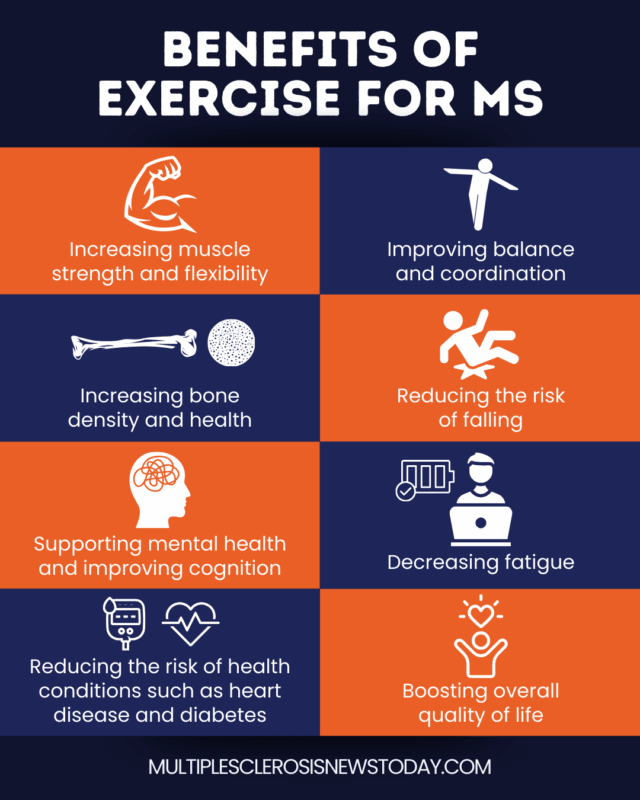
Some of the benefits of exercise for people with MS include:
- increasing muscle strength and flexibility
- improving balance and coordination
- increasing bone density and health
- reducing the risk of falling
- supporting mental health and improving cognition
- decreasing fatigue
- reducing the risk of health conditions such as heart disease and diabetes
- boosting overall quality of life.
Fatigue and other MS symptoms can make it harder to stick with an exercise routine. You can make exercising a more positive experience for you and your MS by working with a physical therapist, finding the right kind of physical activity, and adjusting the intensity based on how you are feeling.
Suggested exercises for people with MS
There is no one best type of exercise for MS. You may choose aerobic exercises like walking, strength training, and gentle stretching, among other options. A physical therapist can help you choose a safe activity that fits your abilities and suits your needs — and that you’ll enjoy.
If you are someone who dislikes working out, try different forms of exercise to see which one you are most likely to continue. A physical therapist can work with you to create a safe and effective exercise program tailored to your preferences and symptoms.
Aerobic exercises
Aerobic exercise is a type of physical activity that increases your heart rate. Examples of aerobic exercise include walking, swimming, and cycling.
Such exercise is good for heart health and can help reduce the impact of MS fatigue. It can also improve your mood by boosting endorphins, which are hormones released by the brain to reduce pain and stress.
If you have mild to moderate MS, aerobic exercise should be done at a moderate level — meaning that your breathing is harder and your heart rate goes up, but you are still able to talk while working out.
While people in general should aim for at least 150 minutes, or 2.5 hours, of moderate aerobic activity per week, it’s important to check with your doctor or physical therapist to know what amount of time is right for you.
If you are not currently active on a regular basis, your therapist will help you set an exercise pace and duration that feels good to you, which you may gradually increase. You may want to set exercise goals that help you progress.
A doctor will also adjust your exercise plan if your symptoms worsen or your current exercise routine is becoming harder to follow.
Strength training
Strength training, whether using resistance bands, light weights, or bodyweight exercises, can help you build muscle strength.
Muscle weakness is common in MS because the communication between nerve cells in the brain and spinal cord and muscles is impaired. But MS symptoms such as fatigue, pain, and depression may prevent you from being physically active, which may also weaken the muscles.
Strength training, also called resistance training, at least two days a week, may not only strengthen muscles but help with daily living tasks, and improve balance and lessen fatigue. Ideally, you want to try to target all muscle groups.
Some of the recommended exercises for MS are functional strength exercises, which are those that ultimately help you with daily activities and movements. For example, if you struggle with getting up from a chair, you want to incorporate exercises that strengthen the muscles involved in doing this.
Stretching and flexibility exercises
Stretching and flexibility exercises such as yoga or Pilates may improve mobility and address spasticity or muscle stiffness that often occurs with MS.
Stretching may increase range of motion, or how far you can move a joint or muscle in various directions. Daily stretching, ideally several times a day, for a total of at least 10 to 15 minutes per day, is recommended for people with MS.
Yoga can make you more flexible, improve your balance, and ease your fatigue. It’s also been shown to benefit mental health and reduce bladder activity.
Balance and coordination training
Living with MS can affect your balance and coordination, which together with symptoms such as vision problems and fatigue, increases your risk of falling. Exercise training can help you develop greater stability, making you less likely to fall, so you feel safer and more confident.
Targeted physical therapy, or exercise such as tai chi, which merges slow, flowing movements with deep breathing and meditation, can help with balance and other MS issues. Tai chi and similar traditional Chinese exercises may improve balance, the ability to perform daily living activities, and reduce depression in people with MS.
Better balance is especially important because it can also help to prevent falls, a common problem in MS that can greatly contribute to the stress of living with the disease.
Creating a safe exercise routine for MS
A safe exercise program for MS should ideally be created with the assistance of a physical therapist. It should take into account common MS issues such as fatigue, reduced mobility, and sensitivity to heat, and be designed to minimize the risk of falling while you are working out.
MS fatigue, which is an overwhelming exhaustion that can affect many aspects of your life, can make exercising with MS challenging. So can heat, as an increase in body temperature during exercise can worsen MS symptoms.
A therapist or trainer, ideally one who has worked with people who have multiple sclerosis, can help provide exercise tips for MS, and make sure you’ve lined up safe exercises for MS to do.
Other exercise tips for MS include:
- Start slowly and gradually build strength and endurance.
- Work out in a cool, air-conditioned room or gym.
- Wear a cooling towel to reduce getting hot when exercising.
- Drink iced water from an insulated water bottle to stay hydrated and manage body temperature.
- Consider seated exercise, such as rowing or lifting weights while sitting, if you are concerned about falling during exercise or have limited mobility.
Overcoming exercise challenges with MS
Some other ways to make exercising with MS more doable include adapting workout routines to your mood and energy levels, finding support, and identifying ways to stay motivated.
Ask your physical therapist for recommendations about how to modify your exercise routine as needed. For example, if you usually go jogging or take a walk but some days feel too fatigued, the therapist may suggest trying gentle stretching or flexibility exercises at those times instead.
You can also experiment with so-called exercise snacks, or short exercise sessions that are spaced out throughout the day. If completing one 30-minute workout feels too challenging, you can try exercising for 10 minutes three times a day.
You also want to be realistic with your expectations and not expect immediate results. It often can take months of consistent exercise before you see any progress. This is true for people in general, not just patients with MS.
Work with your physical therapist to come up with reasonable goals for MS and exercise that are challenging but achievable over time, such as walking a certain distance or lifting a specific amount of weight.
Celebrate your achievements when you reach them. For example, you can treat yourself to a new workout outfit or take yourself out to lunch.
If possible, work out with a partner or a group of people to help you stay motivated. Or invite a friend or family member to join you.
You can also find camaraderie and encouragement in support groups, as well as Multiple Sclerosis News Today’s online forums.
Multiple Sclerosis News Today is strictly a news and information website about the disease. It does not provide medical advice, diagnosis, or treatment. This content is not intended to be a substitute for professional medical advice, diagnosis, or treatment. Always seek the advice of your physician or other qualified health provider with any questions you may have regarding a medical condition. Never disregard professional medical advice or delay in seeking it because of something you have read on this website.
Related content
-
Discussion
-
 Discussion
-
 Discussion
-
 Discussion
-
 Discussion
-
 Discussion