Tizanidine for multiple sclerosis
 Fact-checked by
What is tizanidine for MS?
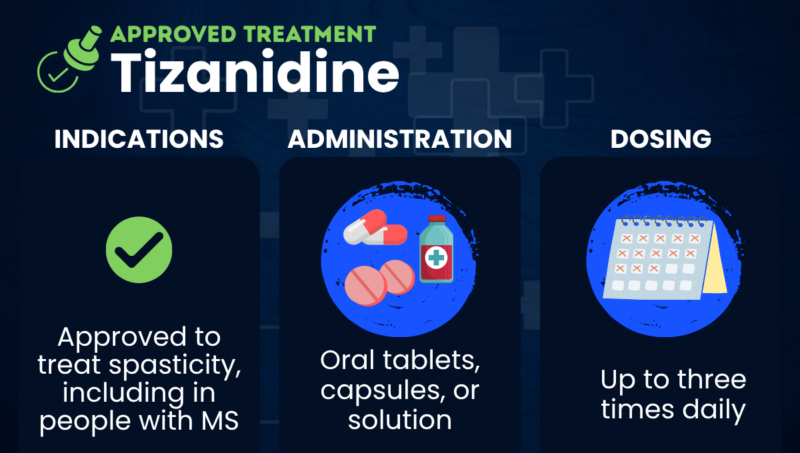
Tizanidine is a short-acting muscle relaxant approved for treating muscle spasticity in adults that is sometimes used to manage the symptom in people with multiple sclerosis (MS).
In MS, spasticity — muscle stiffness and tightness that may be accompanied by uncontrolled involuntary muscle movements (spasms) — is caused by damage to nerve cells (neurons) that help control movement.
Tizanidine is one of the muscle relaxers used for MS spasticity. It belongs to a class of medications called alpha-2 adrenergic receptor agonists. It binds to alpha-2 receptors on neurons, preventing them from releasing signaling molecules that normally activate specialized muscle-controlling neurons.
This is expected to dampen the overactive nerve impulses thought to underlie spasticity. Using tizanidine for MS spasticity may help relax muscles and increase control over movement.
Legacy Pharma sells tizanidine as oral capsules or tablets under the brand name Zanaflex, with generic versions also available. Fidelity Biopharma also sells Ontralfy, an oral solution of tizanidine.
Therapy snapshot
Scroll horizontally to view all columns -->
| Brand name | Zanaflex, Ontralfy, and generics |
| Chemical name | Tizanidine |
| Usage | Used to treat spasticity in MS |
| Administration | Oral tablet, capsule, or solution |
Who can take tizanidine?
In the U.S., tizanidine capsules and tablets are approved to treat spasticity; their safety and effectiveness in children have not been established. Ontralfy oral solution is approved to treat spasticity in adults.
Tizanidine is contraindicated, meaning it should not be taken, for use alongside medications that strongly inhibit the enzyme CYP1A2, including the antidepressant fluvoxamine and the antibiotic ciprofloxacin, which is sometimes used to manage urinary tract infections in MS.
It also should not be used by people with a history of allergies to the medication or its ingredients.
How is tizanidine administered?
Tizanidine capsules, tablets, and solutions are all taken by mouth. Initially, the recommended tizanidine dosage for spasticity is 2 mg every 6 to 8 hours as needed, up to a maximum of 3 doses per day. Over time, doctors may gradually increase the prescribed dosage based on an individual’s response, up to a maximum total daily dosage of 36 mg.
Tizanidine’s formulation and whether it is taken alongside food may influence side effects and symptom control. Patients should take it consistently with respect to food.
The effects of tizanidine last a relatively short time. Patients should prioritize taking it when relief of spasticity symptoms is most needed.
Tizanidine in clinical trials
One of the two studies that mainly supported tizanidine’s U.S. approval included 140 people with MS and spasticity.
Participants received a single dose of tizanidine (8 mg or 16 mg) or a placebo. Muscle stiffness was assessed in the hours after treatment using the Ashworth scale, with higher scores indicating greater spasticity. The results showed that tizanidine led to significant reductions in Ashworth scores compared with the placebo at one, two, and three hours after treatment.
Other studies have tested repeated dosing of tizanidine in people with MS. For example, a clinical study showed that over about three months of treatment, tizanidine led to significantly greater reductions in patient-reported muscle spasms than a placebo.
Potential side effects of tizanidine
On the prescribing label, tizanidine side effects in MS are grouped together with the medication’s side effects in people with other causes of spasticity. The most common ones include:
- dry mouth
- sleepiness
- weakness or lack of energy
- dizziness
All formulations of tizanidine also carry warnings for less common, but potentially serious side effects, including:
- low blood pressure
- liver injury
- sedating effects that can interfere with everyday activities, especially when combined with other sedating substances such as alcohol
- hallucinations
- allergic reactions
Patients will be monitored for these side effects. If any of these occur, treatment may need to be discontinued. People with kidney problems may also need extra monitoring while using the medication.
Tizanidine can interact with other medications. Patients should tell their care providers about all medications they are taking as one or both medications may need to be adjusted.
The medication should not be discontinued abruptly, as this can cause withdrawal symptoms such as high blood pressure, fast heart rate, and muscle stiffness. The medication should be slowly tapered under medical supervision.
Multiple Sclerosis News Today is strictly a news and information website about the disease. It does not provide medical advice, diagnosis, or treatment. This content is not intended to be a substitute for professional medical advice, diagnosis, or treatment. Always seek the advice of your physician or other qualified health provider with any questions you may have regarding a medical condition. Never disregard professional medical advice or delay in seeking it because of something you have read on this website.