Hydroxyzine for multiple sclerosis
 Fact-checked by
 What is hydroxyzine for MS?
Hydroxyzine is an antihistamine medication approved in the U.S. to treat anxiety and allergy symptoms, though clinicians sometimes prescribe it off-label to treat certain symptoms of multiple sclerosis (MS), including tremors, itching, and other abnormal sensations. Concrete evidence of its efficacy in this setting remains lacking.
The medication blocks certain effects of histamine, a chemical messenger that plays roles in allergic reactions and other immune responses, as well as wakefulness. In doing so, hydroxyzine can help control allergic reactions while providing a sedative effect that can ease anxiety.
Researchers have found some evidence suggesting that histamine contributes to MS disease processes. While using antihistamines for MS symptoms is not standard, hydroxyzine is sometimes prescribed off-label to manage:
- tremors, or uncontrollable shaking related to nerve damage in movement-related brain pathways
- dysesthesias, which are abnormal nerve sensations such as itching, pins and needles, skin crawling sensations, or a burning sensation, which are neuropathic, or related to nerve damage
Little concrete evidence supports using hydroxyzine for tremors, and researchers have not established how the medication works in this context. Hydroxyzine for MS dysesthesias may sometimes provide relief, although it generally acts less effectively as a neuropathic itching treatment than for histamine-mediated itching from allergic reactions. Its sedative effects may also indirectly help counteract sleep disruptions related to MS itching.
Hydroxyzine was previously sold under the brand names Vistaril and Atarax, both of which have been discontinued. Generic versions of the medication are still available as oral capsules, tablets, and solutions. Injectable versions are also available, though these are usually used for specific purposes in hospital settings and are unlikely to be prescribed for MS.
Therapy snapshot
Scroll horizontally to view all columns -->
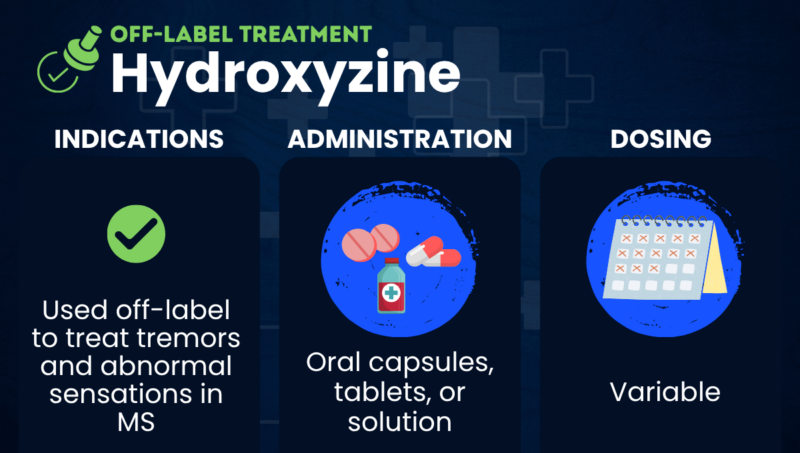
| Treatment name | Hydroxyzine |
| Usage | Used off-label to treat tremors or abnormal sensations in MS |
| Administration | Oral capsule, tablet, or solution |
Who can take hydroxyzine?
Hydroxyzine doesn’t have specific approval for use in MS, but doctors sometimes prescribe it off-label — or outside of its approved indications — for this population. The prescribing information notes that it is contraindicated, or not recommended, for people:
- in the early stages of pregnancy
- with a prolonged QT interval, a type of heart rhythm abnormality
- with a history of allergic reactions to hydroxyzine or its ingredients, or to the related medications cetirizine hydrochloride or levocetirizine hydrochloride
The antihistamine may interact with other drugs, and MS patients should always tell their prescribing doctor about all other medications they use.
How is hydroxyzine administered?
Hydroxyzine is available as oral capsules, tablets, or liquid solutions. Because MS is an off-label indication, clinicians lack a standard, evidence-based hydroxyzine dosage for MS. One small study investigated a daily dose of 100 mg. For its approved indications, patients typically take hydroxyzine three to four times daily.
The injectable formulation is typically administered only in specific cases where oral administration isn’t possible or appropriate, and it is unlikely to be used for MS symptom management.
Potential side effects of hydroxyzine
Little data are available about specific hydroxyzine side effects in MS. Common side effects for its approved indications include:
- dry mouth
- dizziness or drowsiness
- confusion, particularly in older adults
- headache
Less common but potentially severe side effects include:
- development or worsening of tremor
- seizures
- heart rhythm changes
- allergic reactions
- skin rashes and fever
Multiple Sclerosis News Today is strictly a news and information website about the disease. It does not provide medical advice, diagnosis, or treatment. This content is not intended to be a substitute for professional medical advice, diagnosis, or treatment. Always seek the advice of your physician or other qualified health provider with any questions you may have regarding a medical condition. Never disregard professional medical advice or delay in seeking it because of something you have read on this website.