MS therapy CDR111 advances after meeting preclinical milestone
Cell, animal studies support continued development
Written by |
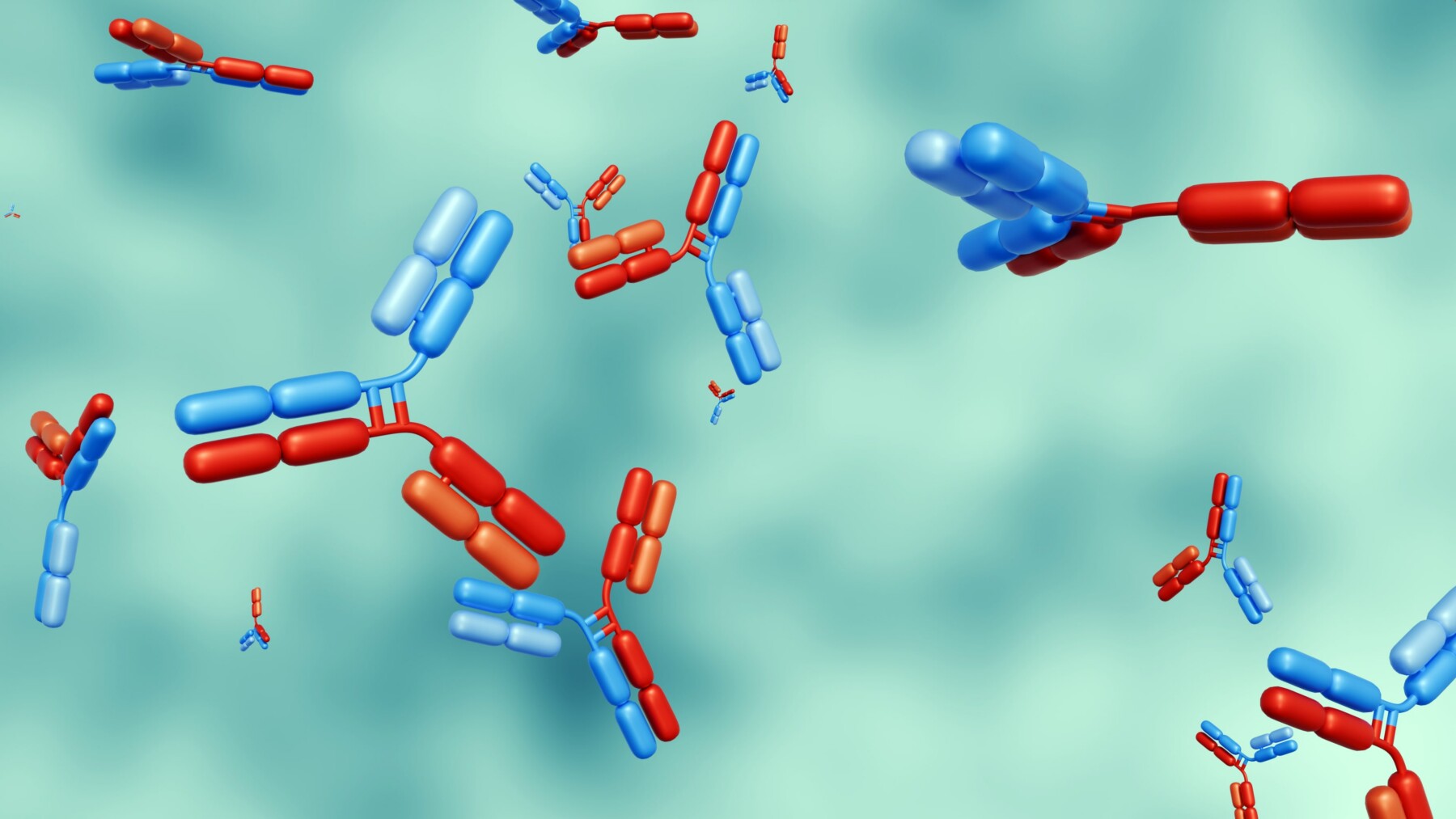
A 3d rendering shows antibodies.
-
CDR111, an experimental therapy for MS, targets harmful B-cells driving inflammation.
-
It works by engaging T-cells to destroy B-cells, aiming for broad B-cell depletion.
-
Preclinical studies in cells and animals support its continued development.
An experimental therapy designed to eliminate harmful B-cells — key drivers of inflammation in multiple sclerosis (MS) and other autoimmune diseases — has reached an early development milestone.
The treatment candidate, CDR111, is being developed under a collaboration between CDR-Life and Boehringer Ingelheim. The milestone was achieved after proof-of-concept studies in cells and animal models, supporting continued development. Based on these findings, Boehringer has elected to proceed with further development of CDR111, CDR-Life said.
“This milestone reflects the strength of our antibody-derived platform and its ability to rapidly generate highly potent, selective molecules,” Christian Leisner, PhD, CDR-Life’s CEO, said in a company press release. “We are excited to see continued momentum in our partnership with Boehringer Ingelheim and look forward to further advancements of this program.”
The press release didn’t detail the findings.
B-cells are a type of immune cell that play a central role in many autoimmune diseases. They are responsible for making antibodies, including self-reactive ones that target the body’s own tissues, and can also activate several other immune cells to promote and sustain inflammation. Therapies that reduce or eliminate B-cells have become an important treatment strategy for these conditions.

Targeting B-cells via T-cells
Several therapies are already approved to target B-cells in MS. Ocrevus (ocrelizumab), Kesimpta (ofatumumab), and Briumvi (ublituximab) work by binding the CD20 protein on the surface of these cells.
CDR111 is instead designed to eliminate B-cells by physically bringing them into close proximity with T-cells, immune cells capable of killing other cells. The therapy is a trispecific T-cell engager that can simultaneously bind to CD3 on T-cells and to the BCMA and CD19 proteins on B-cells.
By acting as a bridge between the two cell types, the therapy is expected to direct the T-cells to destroy B-cells. According to CDR-Life, this should result in a broad depletion of B-cells that helps reset the immune system.
CDR111 was developed using CDR-Life’s proprietary M-gager platform, which is designed to produce antibody-derived T-cell engagers that selectively link T-cells to specific disease-causing cells.
Under the terms of the global licensing agreement for CDR111 established last year, CDR-Life is eligible to receive up to $570 million in total payments, including $48 million in upfront and near-term payments, as well as royalties on future sales.
In addition to MS, CDR111 may be used to treat other autoimmune diseases, including lupus and certain forms of arthritis.