
Under-the-skin Briumvi supported by early MS clinical trial data
Quarterly dosing now in Phase 3 could allow at-home self-injection
Written by |
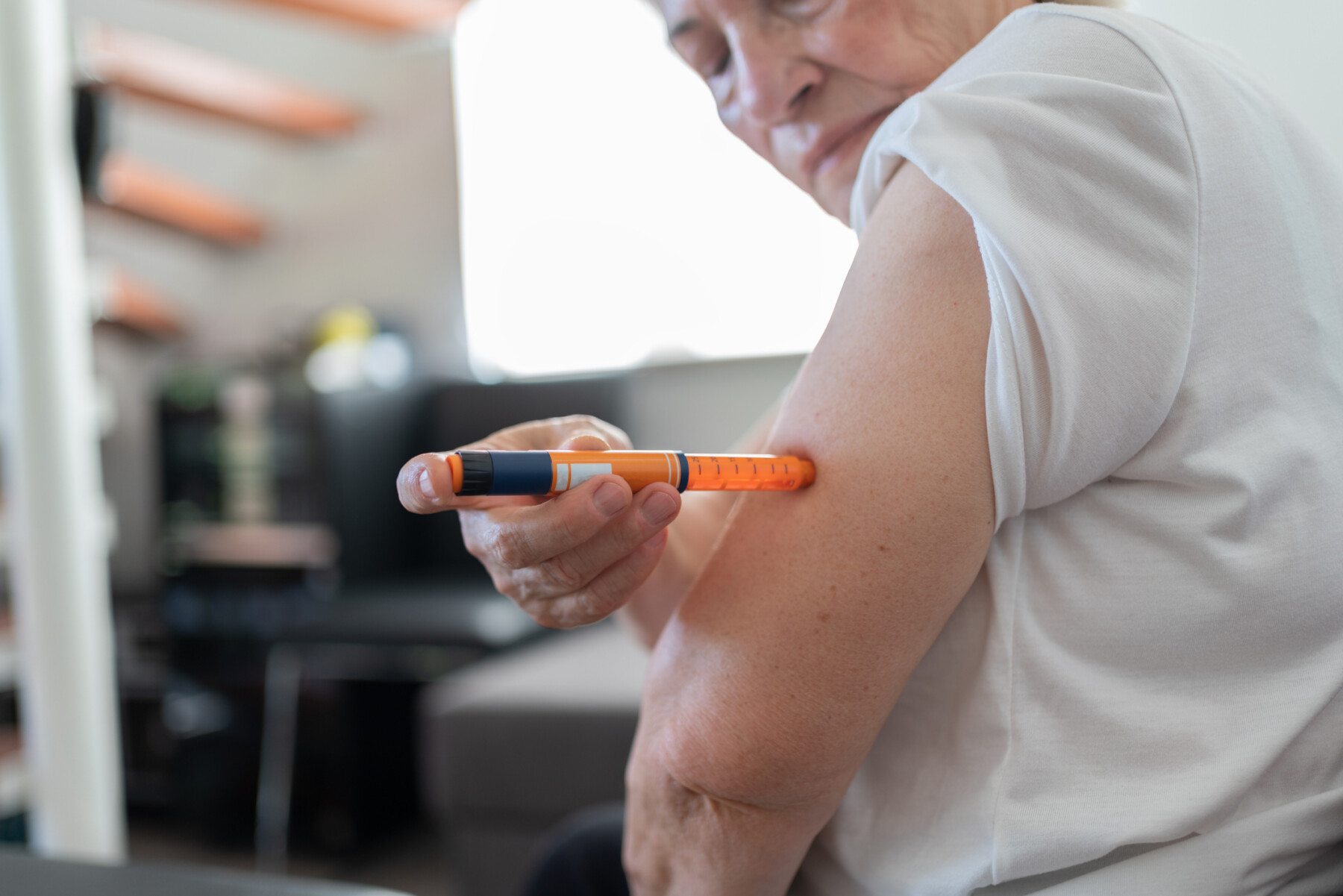
A person prepares to self-inject medication at home. A new under-the-skin formulation of Briumvi is being tested as a potential self-administered option for relapsing forms of MS. (Photo from iStock)
- An under-the-skin Briumvi formulation for relapsing multiple sclerosis is moving forward in clinical testing.
- Phase 1 data showed it was generally well tolerated and had biological activity consistent with intravenous Briumvi.
- The formulation is designed for potential at-home self-administration, with possible approval as early as 2028.
A new formulation of Briumvi (ublituximab) — TG Therapeutics’ therapy for relapsing forms of multiple sclerosis (MS) — designed for possible at-home self-injection was generally well tolerated and showed biological activity consistent with the approved intravenous (into-the-vein) version, according to Phase 1 trial data.
The Phase 1 trial is comparing the new subcutaneous, or under-the-skin, formulation of Briumvi with the approved intravenous version, which needs to be administered by a healthcare provider.
To date, more than 100 patients have been treated, including more than 80 who received subcutaneous Briumvi across multiple dose levels. More than 225 under-the-skin injections have been administered, with more than three-quarters delivering the 400 mg/2 mL high-concentration subcutaneous dose that is being tested in an ongoing Phase 3 trial (NCT07211633).
“We are very pleased to report these positive Phase 1 results demonstrating that our proprietary high-concentration, low-volume subcutaneous formulation of Briumvi was well tolerated and achieved sustained drug exposure,” Michael S. Weiss, chairman and CEO of TG, said in a company press release.

Phase 3 trial tests quarterly dosing
The Phase 3 trial is testing whether the subcutaneous version can achieve noninferior drug exposure in the blood compared with the approved intravenous version in adults with relapsing forms of MS. In other words, researchers are testing whether the under-the-skin version can deliver drug levels that are not meaningfully lower than those seen with intravenous Briumvi. After initial doses, the new formulation is being tested in two separate dosing schedules — either every other month or quarterly — while intravenous Briumvi is given every six months.
According to Weiss, the data from the Phase 1 trial strengthen the company’s confidence that the quarterly dosing regimen in the Phase 3 trial can achieve its main goal, which is to show that this subcutaneous dosing schedule achieves noninferior total drug exposure in the blood over about six months compared with the intravenous formulation.
Top-line results are expected by the end of this year or in early 2027. If successful, TG said the study could support approval of the new formulation as early as 2028.
According to the company, the 400 mg/2 mL dose being tested in the Phase 3 trial is consistent with a volume that is suitable for at-home self-administration via an autoinjector device, which TG said will be evaluated in a separate study later this year.
Briumvi is an antibody-based therapy that targets CD20, a protein found on the surface of B-cells, thereby reducing their number. B-cells are a type of immune cell that play a key role in driving the inflammation and nerve cell damage that contribute to MS symptoms.
Approved in the U.S. in late 2022, Briumvi joined Ocrevus (ocrelizumab) and Kesimpta (ofatumumab) as the third anti-CD20 therapy to win approval for relapsing forms of MS in the U.S.
Briumvi treatment starts with two infusions given two weeks apart. The first infusion takes about four hours, while the second and later infusions take about an hour. After that, Briumvi is given every six months. This is shorter than the typical 2- to 3.5-hour intravenous infusion for Ocrevus, though infusion times can vary. Kesimpta, by comparison, is administered as a monthly under-the-skin injection.
With the new formulation, TG is seeking to offer a more convenient option for people who prefer at-home injections.
Early data support under-the-skin Briumvi
Results from the Phase 1 study showed that the under-the-skin formulation was absorbed gradually into the bloodstream with lower peak concentrations compared with intravenous administration. The new formulation also delivered more than 60% of the drug exposure seen with intravenous administration.
Modeling based on the Phase 1 drug-exposure data also supported the conclusion that the two dosing schedules now being tested in Phase 3 would achieve noninferior total drug exposure in the blood over about six months compared with approved intravenous Briumvi, which is the main goal of the Phase 3 trial.
The new formulation also produced B-cell depletion consistent with that achieved with intravenous Briumvi, indicating that it was working as intended. Treatment was also generally safe and well tolerated, with a safety profile consistent with that of the approved formulation.
Local injection-site reactions were uncommon, occurring in fewer than 5% of participants, while about 21% experienced systemic injection-related reactions. These reactions were usually seen after the first injection, were not linked to dose, and resolved in all participants. No serious injection-site reactions or new safety concerns were reported.
“If approved, subcutaneous Briumvi would be the first and only self-administered, at-home, quarterly anti-CD20 therapy for people living with multiple sclerosis, significantly reducing the total number of injections per year as compared to currently available options,” Weiss said.




Leave a comment
Fill in the required fields to post. Your email address will not be published.