
Study shows under-the-skin MS shot saves time, cuts costs
Tysabri injection faster, easier than intravenous form
Written by |

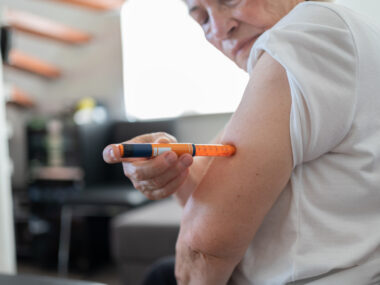
Patients and medical professionals preferred the time-saving injectable form of Tysabri to intravenous infusion. (Photo by iStock)
- Subcutaneous Tysabri is faster and more convenient than the intravenous form.
- Patients prefer the under-the-skin injection due to time savings, reduced discomfort, and improved quality of life.
- Subcutaneous Tysabri significantly lowers costs for patients, hospitals, and society.
Under-the-skin (subcutaneous) injections of Tysabri (natalizumab) allow people with relapsing-remitting multiple sclerosis (RRMS) to receive treatment much faster, more conveniently, and with less disruption to daily life than the original into-the-vein (intravenous) form, a study found.
Use of the subcutaneous formulation, which is approved in the European Union but not the U.S., was also associated with lower costs for hospitals, patients, and society.
These results, from an observational study called EASIER 2, are in line with earlier real-world evidence that patients tend to prefer receiving Biogen’s Tysabri as a subcutaneous injection rather than an intravenous infusion.
“These results provide critical evidence underpinning the integration of [subcutaneous Tysabri] into clinical routine and contributing to a growing recognition of the importance of patient experience and flexibility in chronic disease management, thus supporting an increasingly patient-centered management of MS [multiple sclerosis],” the researchers wrote.
The study, “Subcutaneous natalizumab administration in relapsing–remitting multiple sclerosis: results of EASIER 2 study,” was published in the Journal of Neurology. Two of its authors work at Biogen Italy, which funded the research.

Study designed to compare formulations
MS is an autoimmune disease that damages the protective covering of nerve fibers in the brain and spinal cord. In RRMS, patients experience sudden worsening of symptoms (relapses) followed by periods of recovery.
Tysabri is a disease-modifying treatment approved for all relapsing types of MS in the U.S. In the EU, its use is limited to RRMS.
The EASIER 2 study, conducted at 14 Italian MS centers, was designed to evaluate whether subcutaneous Tysabri is superior to its original intravenous formulation for treating RRMS.
The researchers analyzed 265 subcutaneous injections administered to adult RRMS patients by healthcare providers. Patients had received a mean of 62 intravenous infusions of Tysabri (range: 0 to 200) as part of an earlier study, EASIER, and four subcutaneous injections (range: 0 to 17).
In the first part of the three-part study, the researchers measured the time, equipment, and human resources needed for subcutaneous Tysabri injections in routine clinical practice. Next, healthcare professionals completed questionnaires on how subcutaneous injections affected each center’s organization compared with intravenous infusions. Patients also filled out questionnaires about travel time, preferences, quality of life, and costs.
Data showed that patients spent a mean of 26.6 minutes at an MS center for subcutaneous treatment, while the actual injection took about 2.5 minutes. Healthcare professionals spent about 14 minutes actively caring for each patient, including about five minutes preparing the medication and six minutes on follow-up tasks.
The researchers compared the two routes of administration using data from eight MS centers that participated in both studies, covering 367 intravenous infusions in EASIER and 175 subcutaneous injections in EASIER 2.
Subcutaneous Tysabri reduced total time spent at the MS center by 77% and active time spent by healthcare professionals by 35%. In practical terms, patients spent nearly two fewer hours at the center.
Healthcare professionals, including neurologists and nurses, favored subcutaneous treatment. All 17 respondents rated subcutaneous Tysabri as either “very favorable” (76.5%) or “favorable” (23.5%). Most healthcare professionals (88%) believed waiting lists for MS services would become shorter.
A total of 242 patient-reported questionnaires were completed. “Almost all patients expressed satisfaction with their current treatment, and specifically, 86% stated a preference for the SC [subcutaneous] formulation,” the researchers wrote. The main reasons were spending less time at the MS center (77%), less physical discomfort (65%), and less emotional stress (60%).
Patients spent an average of 4.2 hours traveling to and from MS centers to receive subcutaneous Tysabri. The round trip covered a mean distance of 70 kilometers (about 43.5 miles), mostly by private transport. Employed patients said treatment required an average of 3.8 hours away from work, although about two-thirds of those hours were covered by social benefits.
On days without Tysabri treatment, patients reported an average quality-of-life score of 74.8 on a scale ranging from 0 to 100. The score dropped to 56.9 on days with intravenous infusions and to 70.4 on days with subcutaneous treatment. This represents a significant, 13-point improvement in quality of life with subcutaneous versus intravenous administration.
From the MS center’s perspective, each subcutaneous Tysabri injection saved nearly €20 (about $23) compared with intravenous infusion, and overall healthcare costs could be reduced by 60%. Patients spent about €45 (about $51) per subcutaneous treatment, including travel and other personal expenses, reflecting a 14% cost reduction and saving about €7 ($8) per treatment.
And from a broader societal perspective — taking into account healthcare costs, lost work time, caregiver time, and other indirect costs — each subcutaneous treatment cost about €118 (about $135). Compared with intravenous Tysabri, the subcutaneous formulation reduced societal costs by about €59 (about $67.50) per treatment.
Relative to intravenous Tysabri, the subcutaneous formulation “is efficient in terms of healthcare and non-healthcare resources and advantageous in supporting patient autonomy, satisfaction, and quality of life,” the researchers wrote. “By reducing treatment burden and increasing scheduling flexibility, SC administration shows a positive impact on the organization and efficiency of the MS center.”



Leave a comment
Fill in the required fields to post. Your email address will not be published.