
Sugar-like molecules may help immune cells clear myelin debris in MS
Lab study suggests cyclodextrins may reduce harmful fat buildup
Written by |
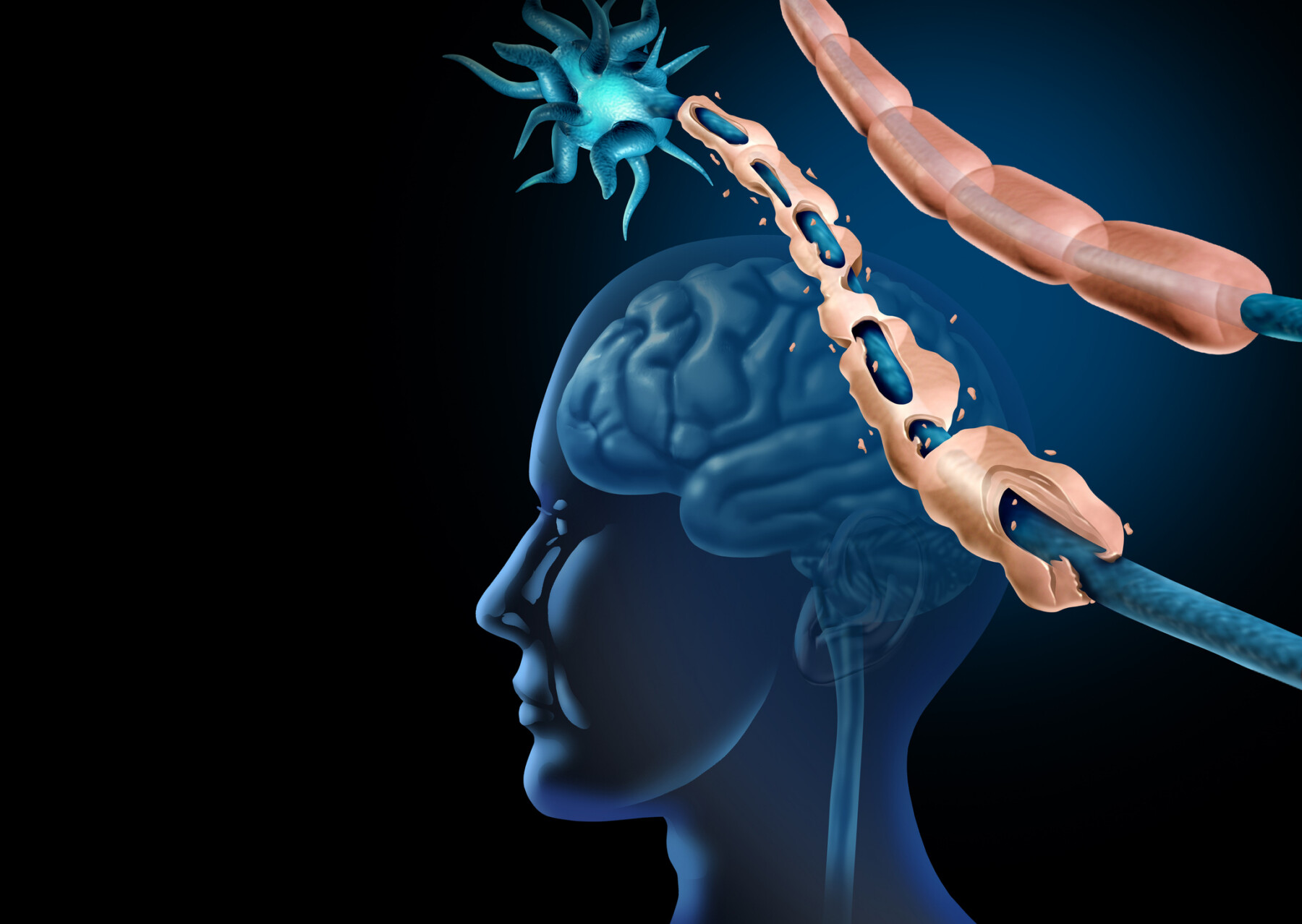
Damage to the myelin sheath, the protective coating surrounding nerve fibers, is at the core of multiple sclerosis. (Image from iStock)
- Cyclodextrins may help create conditions that support myelin repair in MS.
- These sugar molecules reduced fat buildup in “foamy” immune cells and altered inflammation-related activity that may hinder repair.
- Further studies in animal models are needed to test their effects on remyelination and repair.
Novel ring-shaped sugar molecules called cyclodextrins may help promote conditions that support myelin repair in multiple sclerosis (MS) by easing harmful changes in the immune cells that clear away damaged myelin, a new lab study suggests.
Researchers found that after taking up myelin debris over time, these immune cells gradually become “foamy,” meaning they become loaded with fatty molecules, and shift toward a pro-inflammatory state that may interfere with myelin repair. Treatment with cyclodextrins, however, reduced fat buildup in these cells and altered the activity of genes tied to inflammation and wound healing.

Foamy immune cells may interfere with myelin repair
“Our findings suggest that cyclodextrins may … hold therapeutic potential in MS, warranting further investigation,” researchers wrote in the study, “Myelin debris uptake by macrophages and microglia: Resolution of foam cells with a series of novel cyclodextrins,” published in Neurotherapeutics.
MS is an inflammatory disease of the central nervous system characterized by damage to the myelin sheath, the fatty coating around nerve fibers in the brain and spinal cord. Such damage leaves myelin debris behind in lesions (areas of damage), which is cleared by two types of immune cells: macrophages, which are found in nearly every tissue throughout the body, and microglia, which reside in the brain and spinal cord. These cells engulf and digest the material through a process called phagocytosis.
While this cleanup is initially beneficial, prolonged exposure to myelin debris can overload these cells with fat molecules and cause them to acquire a “foamy” appearance. These foamy cells also acquire a pro-inflammatory state, potentially contributing to MS disease processes and hindering repair.
To better understand this process, researchers at the University of Calgary in Canada examined how mouse macrophages, mouse microglia, and human microglia responded after taking up myelin debris.
The experiments showed that after ingesting myelin debris, mouse macrophages gradually accumulated fat molecules and grew larger. Similar patterns of fat buildup were observed in mouse and human microglia, though the timing and patterns differed by cell type.
The team then created a laboratory model of the inflammatory, foamy cells by exposing macrophages to myelin debris together with inflammatory signaling molecules found in MS lesions. Compared with cells exposed to myelin alone, these foam cells contained more fats and produced higher levels of inflammatory molecules.
Sugar-like compounds reduce harmful fat buildup
Cyclodextrins are ring-shaped sugar molecules with a hollow center that can interact with fat molecules and have been used to increase the solubility and stability of certain drugs. The best-known formulation, called HP-beta-CD, has been studied in other neurological disease models involving fat accumulation.
With this in mind, the researchers developed 11 new cyclodextrin formulations with varying cavity sizes and side chains and tested them alongside HP-beta-CD in macrophages exposed to myelin debris.
In an initial screen, four formulations, including HP-beta-CD, significantly reduced fat accumulation without signs of cell toxicity. The researchers then tested the most promising formulations in mouse and human microglia, with similar effects.
When the selected compounds were tested on foamy macrophages, they reduced fat accumulation. One experimental compound, called PZ8059, outperformed HP-beta-CD in lowering the density of detectable fats in foamy macrophages.
Further analyses showed that untreated foamy macrophages had increased activity in genes and signaling pathways associated with inflammation and MS. After treatment with HP-beta-CD, many of these inflammatory pathways were reduced. In turn, PZ8059 produced a different response, promoting activity in a wound healing pathway that also involved some inflammatory signals.
The researchers said future studies will test the effects of these compounds on remyelination and repair in animal models of MS.
“Our study highlights the potential of CDs [cyclodextrins] to reduce the accumulation of [fats] and modulate foamy macrophage [behavior] in the context of MS,” the scientists concluded. “Future research will explore the impact of CDs in animal models of MS, investigating its impact on remyelination and repair.”



Leave a comment
Fill in the required fields to post. Your email address will not be published.