
€1.1M grant moves novel skin patch for MS closer to first human trial
Treatment using asthma drug aims to promote repair of nerve-protecting myelin
Written by |
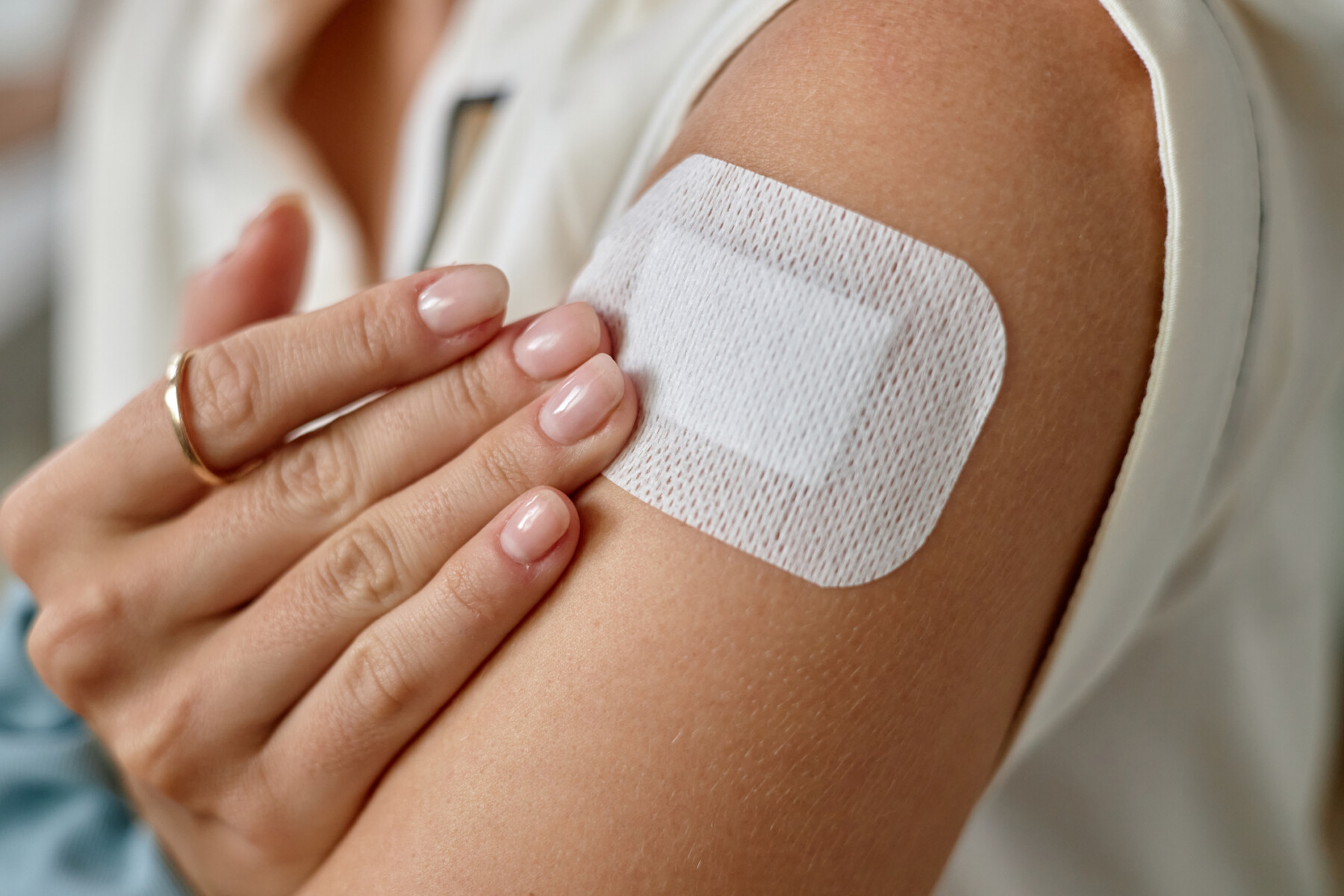
Researchers in Germany are developing a skin patch aimed at promoting myelin repair in people with MS. (Image from iStock)
- Researchers in Germany will use more than $1 million in new funding to advance a novel skin patch for multiple sclerosis that promotes myelin repair.
- The experimental transdermal patch delivers theophylline, an asthma medication, to help rebuild the protective sheath surrounding nerve fibers.
- The grant will support the treatment's development toward a planned early trial testing its safety in healthy volunteers.
Researchers in Germany have been granted more than $1 million to support the development of a novel skin patch designed to promote myelin repair in people with multiple sclerosis (MS) — funding that brings the experimental treatment closer to clinical testing, according to the team.
The patch contains theophylline, a drug long used to treat respiratory conditions such as asthma. In preclinical studies, use of the medication helped repair myelin, the protective coating around nerve fibers that aids nerve cell communication.
The funding — totaling €1.1 million (nearly $1.3 million) — was awarded by ForTra gGmbH for Research Transfer, a subsidiary of the nonprofit Else Kröner-Fresenius Foundation. The monies will support the development of the patch to meet pharmaceutical manufacturing standards and advance the treatment toward an early clinical trial in healthy volunteers.
Claire Jacob, PhD, a professor at Johannes Gutenberg University Mainz (JGU), leads the team that developed the patch.
“With this funding, we are taking a decisive step toward our goal of translating our research findings into a potential treatment for people with MS,” Jacob said in a university news story.

MS is caused by the immune system mistakenly attacking the myelin sheath, a protective coating around nerve fibers in the brain and spinal cord that helps them to send electrical signals more efficiently. The loss of myelin, or demyelination, disrupts the transmission of nerve signals and leads to a range of symptoms, including fatigue, pain, movement problems, and cognitive changes.
Available disease-modifying therapies primarily work by reducing inflammation and preventing disease flares, known as relapses. However, there is no approved treatment specifically designed to boost remyelination, or the process of repairing myelin that’s already been damaged.
A skin patch for MS 2 decades in the making
Jacob’s team has spent more than 20 years investigating the mechanisms by which the nervous system repairs damaged myelin. This research has demonstrated that increasing the activity of histone deacetylase 2 (HDAC2), an enzyme that regulates gene activity, could promote molecular processes involved in remyelination, according to the scientists.
The team later identified theophylline — a type of bronchodilator, an oral medicine that relaxes airway muscles in the lungs — as a potential activator of HDAC2. In mouse studies, low-dose theophylline increased HDAC2 activity and promoted myelin rebuilding in the nervous system.
To deliver the low theophylline dose needed for remyelination, the researchers worked with a team led by Peter Langguth, PhD, a professor at JGU. Together, the scientists developed a transdermal patch that continuously delivers a small amount of theophylline through the skin over several days.
Preclinical testing of this approach was previously supported by €140,000 (more than $160,000) in funding from the Mainz Science Foundation, the researchers noted.
Our long-term goal is to develop a therapy that not only slows the progression of the disease, but also helps the nervous system repair damage that has already occurred.
The new funding from ForTra will allow the patch to be transferred to a German manufacturer for further development and large-scale production that meets Good Manufacturing Practice (GMP) standards, a set of quality control requirements that must be met before a medication can be tested in humans.
Thereafter, the plan is to test the patch in a Phase 1 clinical trial involving healthy volunteers. That study will mainly assess whether the patch adheres to the skin properly, is well tolerated, and delivers theophylline through the skin as intended.
If the approach successfully passes this stage, Jacob’s team plans to conduct a multicenter Phase 2 trial involving people with MS in Germany. The researchers are seeking additional funding for that study, which could provide the first opportunity to determine whether the treatment boosts remyelination in people with MS.
“Our long-term goal is to develop a therapy that not only slows the progression of the disease, but also helps the nervous system repair damage that has already occurred,” Jacob said.




Annemarie Chapin Smith
What is the timeline for when Phase 2 will begin in Germany? Would it be possible for an American with secondary progressive MS to be a patient in that study and if so, how yo aoply?
Dawn Clarke
I would like to follow this research as it progresses
Thank you.
Trudy Exon
I’ve had ms for 23 years now still just about getting around in doors with a walker but use a electric wheelchair outside
Mags Kehoe
Living with MS since 1994 looking forward to good news
scott freideman
i have P.P. MS wil this work for me