
Thriving with MS: Finding joy and purpose after my diagnosis
MS changed my career path, but opened up a new way forward
Written by |
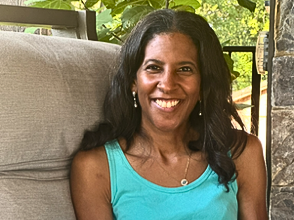
Dawn Morgan enjoys the start of a new day. (Courtesy of Can Do MS)
This article was provided by our partner, Can Do MS. It has been reviewed by Bionews for accuracy and relevance. The views and opinions expressed are those of the author and do not necessarily reflect the views of Bionews or Multiple Sclerosis News Today.
There’s a moment when you realize the life you planned is no longer the life you can sustain.
For me, that moment came when living with multiple sclerosis (MS) began to reshape not just my health, but my ability to continue in a career I had built over years. I had spent years working in education as a teacher, a role that brought structure, purpose, and a clear professional path. What I didn’t expect was that stepping away from that path would force me to confront a deeper question: If I can’t do what I was trained to do, then what does meaningful work look like now?
After graduating from college, I made the leap to our nation’s capital to pursue my graduate work and begin my career as a teacher. Being new to a bustling city was exhilarating. I was experiencing adulthood and independence for the first time — freedom paired with responsibility. What I didn’t realize was that my body was also preparing for something I hadn’t planned.
Within the first few months of working, I knew something was off. I went from being a new teacher to becoming an MS patient in the same year.
Career disruption is not just logistical — it’s emotional. It’s the quiet devastation of acknowledging the time, money, energy, and identity you invested into something that no longer fits. It’s grieving the version of yourself you thought you would keep becoming.
And yet, change, whether we welcome it or not, is inevitable.
At some point, I realized I had a choice. I could sit in that loss, watching time move forward without me, or I could take an honest inventory of what remained. What were my strengths now? What skills had I built that could transfer into something new? What did I still have to offer? That shift from loss to inventory changed everything.
Choosing to move forward
Starting over can feel like standing at the edge of a cliff. On one side is what you knew: structure, familiarity, and a sense of control. On the other side is uncertainty. It’s easy to stop there, to stay rooted in what’s comfortable, even if it no longer serves you. But I didn’t want to stand at the edge and wonder what could be on the other side. I wanted to move toward it.
What I found was not a replacement for what I lost, but something entirely different. I found work grounded in lived experience, MS advocacy, research, and storytelling. I chose this path because I began to see that MS and midlife transitions were not just happening to me; they were shaping a direction I hadn’t considered, and one I ultimately chose to pursue.
Instead of staying frustrated, I became curious. I wanted to ask better questions of my healthcare team, to understand what was changing in my body, and to learn how to live well with MS. Today, that curiosity has evolved into a deeper commitment to patient-led research and women’s health, where lived experience is not just acknowledged but used to inform better care. Through my partnership with Can Do MS, I have been able to share that journey, further lending my voice through articles, podcast interviews, and video content to help others living with MS feel less alone in their own transitions.
This kind of reinvention is rarely discussed honestly. We tend to frame it as inspirational, but the reality is more complex. It requires grief. It requires letting go of timelines and expectations. It requires stepping into uncertainty without a clear map. And it requires challenging something deeply human: our resistance to change.
Research suggests that resistance to change is not only common but expected. Estimates indicate that 30% to 80% of people resist change, depending on the context, while only a small percentage actively embrace it. The brain is wired for safety. It prefers what is known, even when what is known no longer aligns with who we are or what we need.
Living with MS doesn’t always give you the option to stay comfortable. It often forces you out of it.
The question then becomes: Are you willing to meet that moment?
Are you someone who prefers predictability, or are you open to challenge, even when that challenge wasn’t chosen?
For me, choosing to move forward — to learn something new, to engage my mind in different ways, and to build something from experience — has been more than a professional shift. It has supported my cognitive health, renewed my sense of purpose, and allowed me to remain actively engaged in my own life.
Redefining your career or life goals after MS is not about replacing what was lost. It’s about recognizing that your value did not disappear with your previous path. It evolved. And while the path forward may not look the way you once imagined, it can still be meaningful, impactful, and entirely your own.
If you are living with MS or caring for someone who is, Can Do MS offers free education, resources, and programs to help you navigate every stage of the journey. Visit www.cando-ms.org to learn more.




Leave a comment
Fill in the required fields to post. Your email address will not be published.