
MS and restless leg syndrome
Last updated March 3, 2025, by Agata Boxe
 Fact-checked by Inês Martins, PhD
Having multiple sclerosis (MS) means that you are more likely to develop restless leg syndrome (RLS).
RLS causes a constant urge to move your legs due to uncomfortable sensations such as cramping or crawling in the lower legs and feet. These sensations more commonly occur after being still or sitting for a long time. Sleep issues often accompany RLS.
Since RLS can be relieved by movement, you may find you want to keep moving your legs.
Finding ways to manage RLS, whether through medication, exercise or lifestyle changes, can help you relieve symptoms and ease sleep-related fatigue.

How RLS affects people with MS
Managing MS can be difficult due to intense fatigue, pain, and other MS symptoms and an RLS diagnosis will likely add to the challenges. People with MS are especially susceptible to RLS because both conditions involve issues with the nervous system.
MS causes demyelination, where the immune system mistakenly attacks the myelin sheath, which helps protect nerve fibers. The attack ultimately leads to areas of lost myelin and nerve damage, called lesions, in the brain and spinal cord.
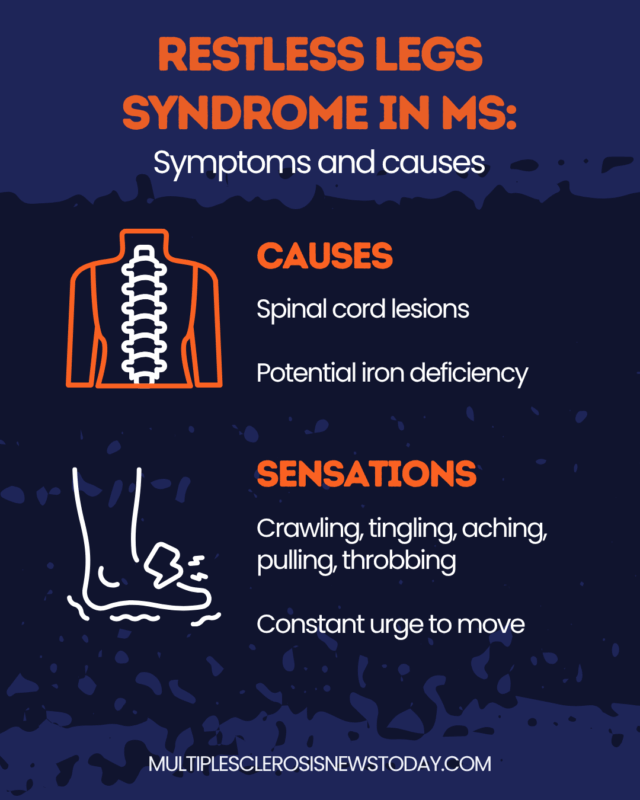
While the exact mechanisms that cause someone with MS to develop RLS are not fully clear, spinal cord lesions, particularly those in the upper or cervical part of the spinal cord, are believed to play a role.
Iron deficiency also may be involved in RLS development by interfering with the metabolism of dopamine, a brain signaling molecule involved in movement control. RLS symptoms tend to intensify at night, which is when the blood levels of iron are lowest. However, it remains unclear if iron deficiency has a role in the development of RLS in people with MS.
RLS is considered a sleep disorder because it can make it difficult to fall and stay asleep. By interfering with your sleep, it may leave you exhausted during the day, further contributing to MS fatigue and potentially worsening other MS symptoms.
What does RLS feel like?
The main RLS symptoms include discomfort in the legs that cause an urge to move. You may find your symptoms begin or worsen when you are trying to fall asleep.
RLS can trigger the following sensations in your legs and feet:
- crawling
- tingling
- itching
- pulling
- throbbing
- aching.
These uncomfortable sensations often go away by moving or stretching, but then usually come back when you stop.
If you think you have RLS, talk to your doctor.
Treatment and management of RLS
RLS treatment options include medication and lifestyle changes, such as exercise and improving your sleep. Your doctor can tell you how to best address your RLS symptoms based on the specifics of what you are experiencing and severity.
First, let your doctor know about your symptoms. They may decide, for instance, to treat them with RLS medication or other RLS remedies. They may also recommend testing your iron levels as iron deficiency is a common cause of the condition.
If your blood iron levels are low, your doctor may prescribe iron supplements. However, do not self-medicate with any supplements or natural remedies because they may have unexpected effects when taken without medical supervision.
Lifestyle changes, including exercise, diet, and getting better sleep, can also help relieve symptoms of MS and RLS.
Research suggests physical activity can ease the symptoms of RLS in people with MS, improving sleep and quality of life. But exercising with MS can be challenging as MS fatigue, reduced mobility, and other symptoms can make you feel exhausted and overwhelmed. You should consider working with a physical therapist who can design a safe exercise program tailored to your symptoms, preferences, and fitness level.
Your diet can also help you manage both RLS and MS. Avoid alcohol, caffeine, and nicotine products because they can worsen symptoms of MS and RLS. Also make sure your diet is healthy and well balanced.
Both MS and RLS can cause serious sleep disturbances that can contribute to fatigue. Trying to prevent and address them can help you feel more rested and restored during the day, improving your overall well-being.
Sleep tips for MS and RLS:
- Go to bed and get up at the same time every day to establish a regular sleep schedule.
- Massage your legs or use a heat pack on the affected areas whenever you start experiencing tingling or other sensations, especially around bedtime.
- Distract yourself from worrying about RLS symptoms by doing something relaxing before bed, like reading or puzzles.
- Do not drink too much liquid three to four hours before your bedtime to make it less likely that you’ll wake up because you need to use the bathroom.
- Get black-out blinds or curtains to make your bedroom completely dark at night.
- Consider gentle stretching in the evening if your physical therapist approves.
Is RLS dangerous for people with MS?
Although RLS does not cause physical damage to the body, it can worsen MS fatigue by interfering with sleep. It can also impact your overall quality of life and mental health.
The best way to prevent RLS from worsening MS fatigue and other MS symptoms is to discuss your RLS symptoms with your healthcare provider and have a treatment plan that works best in your particular situation.
It is equally important to manage the potential effect of RLS and MS on your mental health. Talk to a therapist, ideally one who has treated people with chronic diseases; ask your neurologist for recommendations.
Joining support groups for people with MS can be a source of comfort and social connection, and be essential for your emotional well-being. Multiple Sclerosis News Today’s Facebook page and forums are a good place to start.
Multiple Sclerosis News Today is strictly a news and information website about the disease. It does not provide medical advice, diagnosis, or treatment. This content is not intended to be a substitute for professional medical advice, diagnosis, or treatment. Always seek the advice of your physician or other qualified health provider with any questions you may have regarding a medical condition. Never disregard professional medical advice or delay in seeking it because of something you have read on this website.
Related content
-
-

-

-

-
 Discussion
-