
FDA OKs first human trial of oral MS remyelination therapy PTD802
New US study to evaluate treatment's safety, tolerability in healthy volunteers
Written by |
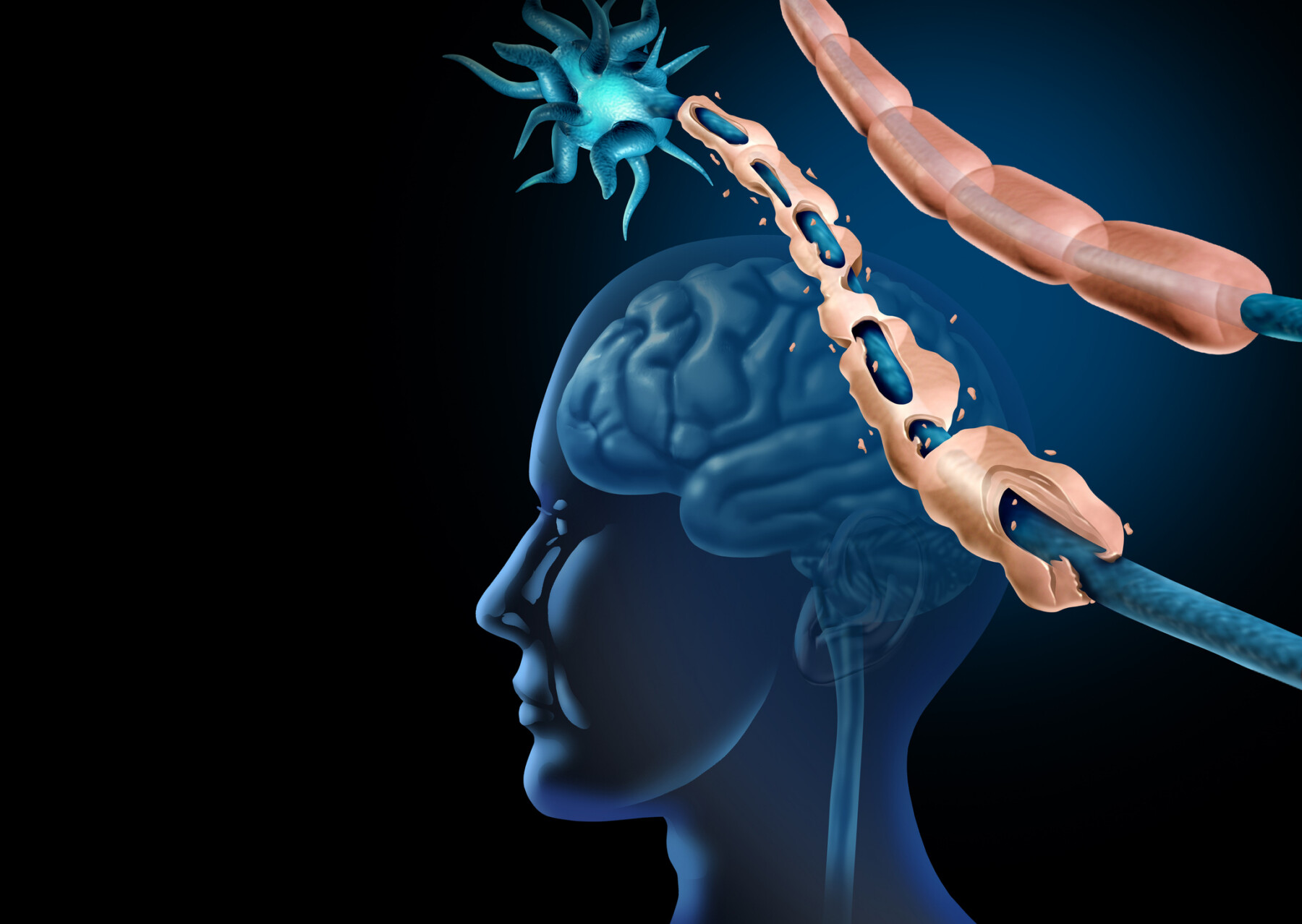
Damage to the myelin sheath, the protective coating surrounding nerve fibers, is at the core of multiple sclerosis. (Image from iStock)
-
The FDA has given the green light for a first-in-human trial testing PTD802, an oral remyelination therapy for multiple sclerosis.
-
The treatment candidate from Pheno Therapeutics is designed to boost repair of myelin, the protective coating surrounding nerve fibers.
- PTD802 aims to potentially restore lost function for people with MS and other neurological conditions.
The U.S. Food and Drug Administration (FDA) has given Pheno Therapeutics the green light to begin clinical testing of PTD802, the company’s oral lead treatment candidate for boosting myelin repair in people with multiple sclerosis (MS) and other neurological diseases.
The experimental remyelination therapy aims to potentially restore lost function in MS patients and those with conditions marked by loss of myelin, the protective coating surrounding nerve fibers.
With the FDA’s clearance of its investigational new drug (IND) application, Pheno will now move forward with a first-in-human U.S. Phase 1 clinical trial. Such testing will first evaluate PTD802’s safety and tolerability in healthy volunteers, according to a company press release announcing the regulatory agency’s decision.
“FDA IND clearance is an important milestone for our PTD802 programme, and a step further toward our ultimate goal of providing an effective treatment for neurological diseases associated with demyelination,” said Fraser Murray, PhD, CEO of Pheno.
The developer received a similar authorization from U.K. regulators early last year.

In MS, the immune system launches inflammatory attacks against myelin, the fatty coating that insulates nerve fibers and helps electrical signals travel efficiently. As myelin is lost, nerve fibers become damaged, disrupting communication between nerve cells and contributing to a wide range of MS symptoms.
While existing disease-modifying therapies can reduce inflammation and prevent or slow further damage, no approved therapy can directly restore myelin that has already been damaged or lost.
Given this, researchers have long sought therapies capable of promoting remyelination — essentially, the repair of damaged myelin and production of new myelin — as a way to reverse damage and possibly restore lost function.
PTD802 aims to stimulate body’s own myelin repair processes
PTD802 was designed as such a therapy, to address this unmet need. Developed by Pheno under an exclusive worldwide agreement with Belgium-based UCB, PTD802 is a selective small molecule antagonist, or inhibitor, of the GPR17 receptor protein.
This receptor acts as a brake on the maturation of oligodendrocytes, the cells responsible for producing myelin in the brain and spinal cord.
By releasing that brake, the therapy is designed to stimulate the body’s natural myelin repair processes and promote remyelination. According to Pheno, PTD802 may ultimately be used alongside existing MS treatments to better control disease progression. Also, by reversing demyelination, it may help patients potentially regain some lost function.
Pheno called the FDA decision a “milestone.”
Added Murray: “As the first company to gain approval to begin clinical trials for a selective GPR17 antagonist, we are proud to be leading the way, and believe this approach has the potential to offer real patient benefit, in MS and beyond.”



ELAINE M NERLAND
Are they recruiting volunteers? How to connect?
Loretta Moyer-Beaver
How do I see if I can get my husband in the clinical trial
Debra Guysky
How exciting to see that there is finally a drug in development to address a terrible, unmet need for ALOT of MS patients. This could be a game changer and give us a life back.
Alisa J Rabine
Pheno Therapeutics: This sounds like a phenomenal breakthrough for people with MS. This IND may boost repair of myelin to restore loss function in MS patients. How & where can a healthy volunteer sign up for PTD802 remyelination therpy trials?
JoDee Bryant
I have MS. I would participate in testing.
Kerri Harris
Would it be used for both RRMS and PPMS, or only RRMS?
Asim Tariq
Remyelination therapy will indeed be a major breakthrough in multiple sclerosis and other neurological conditions.
Mary Morgan
Very exciting news I've been living with multiple sclerosis for the past 30 something years I've been on beta seron injections every other day I seem to be doing okay but if there's something better out it's worth giving a shot or a try.
Sandra Lee Bryant
Oh thank God. I am 68 years old and was diagnosed in my early 30s.
Though I’m not having significant ms disability the disease shorten my working life and certainly has robbed and lessened my quality of life. repairing cannot be realized too soon -
And just maybe ……. Thank you.
Andrew Coburn
Is this available in Canada yet? After 30 years of MS any hope of remyelination helping 90% of body numbness?
Tom Field
We need to get more people in this in this trail. I'm 61 and l don't have years to wait for these trials l would definitely try it.
Rajiv Roger Bajaj
I am keen to volunteer for any trials.
Cyrus Dastoor
Hoping that ptd802 will hold promise for MS patients as a game changer treatment after completion of all human trials phases.
Michael Frohlich
I have secondary progressive multiple sclerosis and biggest complaint is gate ataxia. I'm not on any MS therapies. I'm 67 years old and be interested in clinical trial participation for remyelination only.
Russell Stumman
How can I participate?
i'm long term m.s.er....would love to
Kathleen C. Theibert
Can cerebral palsey benefit from this
Carol Chambliss
At 83. I’m interested in any that will make me better to reverse the MA effects
Nancy Lotman
I am interested in this trial. My husband was recently diagnosed. Need any info on joining this trial.
Rocío Batista
Quisiera participar como paciente en el estudio. Muchas gracias
Maria Alessandrini
Will this be available in the UK?
Kirt Evans
Wowza.. Ms. Miche.La.. This is more than just fantastic ..? Have been now waiting since May 25 1985 .. Five of my farm fam all died.. New def as to now being Roundup ready .. Got to even love your Job.. Please share your latest .. I.have been quality eng .. So go t to love your Job .. please if u could y.. /would share your latest science . Have a wonderful summer.. kirtevans [email protected]. Thanx more than always kjevans
Debbie Mitchell
I am interested in participating in the clinical trial for PTD802.
Giovanni Nasillo
Search
Are you kidding me. You say searching for healthy volunteers!! Who the hell with MS is healthy
Bill Murphy
What are the known side effects ?
Mark Collins
Hope all goes well with the trial
Neel Zadh
I have SPMS, and happy to volunteer.
Jeff Rathbun
I have CIPD,
I would like for info about this drug
Rodney O White
Would love to do trials
Michael
Does this mean a possible 'cure' for my daughter, a paralyzed 52-year-old MS sufferer? If so, WHEN will the product be commercially available in South Africa and under WHAT name?
A response would be greatly appreciated.
Best wishes. Michael.
Judy Costanzo
I’d be interested in the study
Priyanka Hegde
Kindly keep me updated about the remyli ation studies
Waleska j. Bostos Nunez
My daughter Waleska is in the early stage of ms however, lately She may be starting to develop some signs of it? As a mother I am terrified but at the same time looking the smart way how successfully I can objectively help her. ? I deeply need your help, Please feel free contacting me at any time, My direct telephone number is, 917 797 2189, Thanks, Lady Gonzalez Halevi
Dianne Pymble-Ward
This will eventually be life changing for us with MS. I’m incredibly grateful for the work these people do. The potential advances are amazing.
Stephanie Billings
I would also like to be in the trials. How do we go about getting acceptance into the trials. Is there someone we can contact?
Mary
Any remylination trials looming for volunteer canditates?
Mehmet gönülcan
İnşallah birgün Umut olur
Jeri Broadwater
I have been on a dmt for over 10 years with stable MRI’s. Sign me up for the next step!!!