
New MS criteria may speed diagnosis but reshape future clinical trials
Experts say modern studies need better markers of progression and disability
Written by |

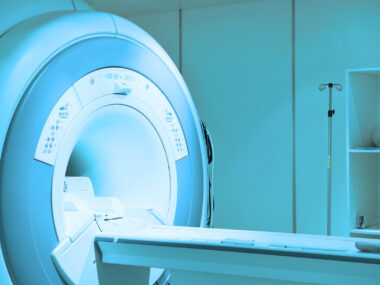
Brain MRI scans are commonly used alongside clinical findings and other tests to help diagnose multiple sclerosis under the McDonald criteria. (Photo from iStock)
- Updated McDonald criteria aim to support earlier, more accurate MS diagnosis, including in some people without typical symptoms.
- The changes carry risks of misdiagnosis and overdiagnosis, underscoring the need for better biomarkers.
- MS clinical trials may need major changes to reflect the updated criteria and evolving understanding of the disease.
Recent updates to the McDonald criteria — the internationally recognized guidelines used to diagnose multiple sclerosis (MS) — may support earlier and more accurate diagnoses. But the changes are also expected to require researchers to rethink how clinical trials testing new MS therapies are run, and better biomarkers for predicting the disease course are urgently needed, researchers said in a new paper.
The paper, “Challenges and future directions for multiple sclerosis after the 2024 McDonald diagnostic criteria,” was published in Nature Medicine.

How the updated MS criteria work
MS is a chronic disorder in which the immune system mistakenly attacks myelin, the protective coating around nerve fibers in the brain, spinal cord and optic nerves. The McDonald criteria were first published in 2001 to provide clinicians with a unified, systematic framework for diagnosing the disease. Because an accurate diagnosis is essential for guiding appropriate care, diagnosis “is the cornerstone of clinical care for MS,” the researchers wrote.
In the more than two decades since they were first published, the McDonald criteria have been revised several times as scientific understanding of MS has advanced. The most recent revision was developed in 2024 and formally published in 2025.
“The 2024 revisions to the MS diagnostic criteria ensure that the most fundamental set of clinical criteria in the field incorporate the latest scientific evidence, with the ultimate goal of improving patient outcomes,” the researchers wrote.
The 2024 update includes several key changes intended to support earlier, more accurate diagnosis, including in some people who may not have met earlier versions of the criteria.
For example, earlier versions generally required evidence that MS-related damage had occurred at different points in time, a concept called dissemination in time. Under the new criteria, MS may be diagnosed without that evidence in certain circumstances, as long as sufficient clinical and test findings point to MS and other possible causes have been ruled out.
The 2024 criteria also allow MS to be diagnosed in some people without typical symptoms when MRI scans and other tests meet specific requirements and other possible causes have been excluded.
“The inclusion of asymptomatic and atypically symptomatic MS in the diagnostic spectrum is due to the recognition that MS starts biologically well before typical onset of clinical symptoms, and it gives those who have subclinical disease the opportunity to receive appropriate intervention early in the disease course, with the long-term goal of preventing clinical disability,” the researchers wrote.
Although these changes are expected to benefit many patients, they also carry risks, particularly misdiagnosis, meaning an incorrect diagnosis, and overdiagnosis, which means diagnosing a disease that would not have caused harm if left undetected and untreated.
Better biomarkers needed to guide care and trials
In light of these risks, better biomarkers are needed to predict future MS activity and help identify which patients are most likely to benefit from treatment. This is especially important because many MS therapies can be costly and carry safety risks, the researchers said.
One of the most notable changes in the 2024 criteria is the creation of a unified framework for diagnosing MS. Historically, MS has been divided into two main categories: relapsing MS, which involves flares when symptoms appear or worsen, followed by periods of partial or complete recovery, and progressive MS, in which disability gradually worsens over time.
Prior versions of the McDonald criteria used different frameworks to diagnose each of these forms of MS. But research increasingly suggests that they are not entirely separate categories, but overlapping parts of a disease spectrum. People with progressive MS can experience relapses, while those with relapsing MS can experience disability progression even without relapses.
To reflect this evolving understanding, the 2024 criteria propose a single framework for diagnosing MS across the disease spectrum. This change “acknowledges the growing recognition that MS is a disease spectrum (rather than a collection of distinct diseases or disease subtypes) and that the [disease-driving] mechanisms of both relapsing disease and progressive disease are present simultaneously in most people with MS across the disease course,” the researchers wrote.
Although the diagnostic criteria now better reflect the current understanding of MS, the researchers noted that clinical trials testing new MS therapies will need to evolve, because trials are often designed differently for relapsing and progressive MS. In addition, disease activity and severity in modern trials are generally lower than in older trials, likely for several reasons, including earlier diagnosis under evolving criteria. This can make it harder to detect meaningful differences between treatment and placebo groups.
“A major overhaul of clinical trial design will require input and endorsement from all relevant stakeholders, including people living with MS, as well as clinicians, scientists, industry and, notably, regulators,” the researchers wrote. “Concerted efforts in this direction are urgently needed to identify treatments that can repair, protect and definitively alter the biological mechanisms underlying the biology of progressive disease.”



Leave a comment
Fill in the required fields to post. Your email address will not be published.